 SDJ
GOOD FRIDAY · ALICANTE
Royal and Most Illustrious Guild of Our Lady of Solitude of St Mary
RELIGIOUS SCULPTURE
Principal Sacred Images
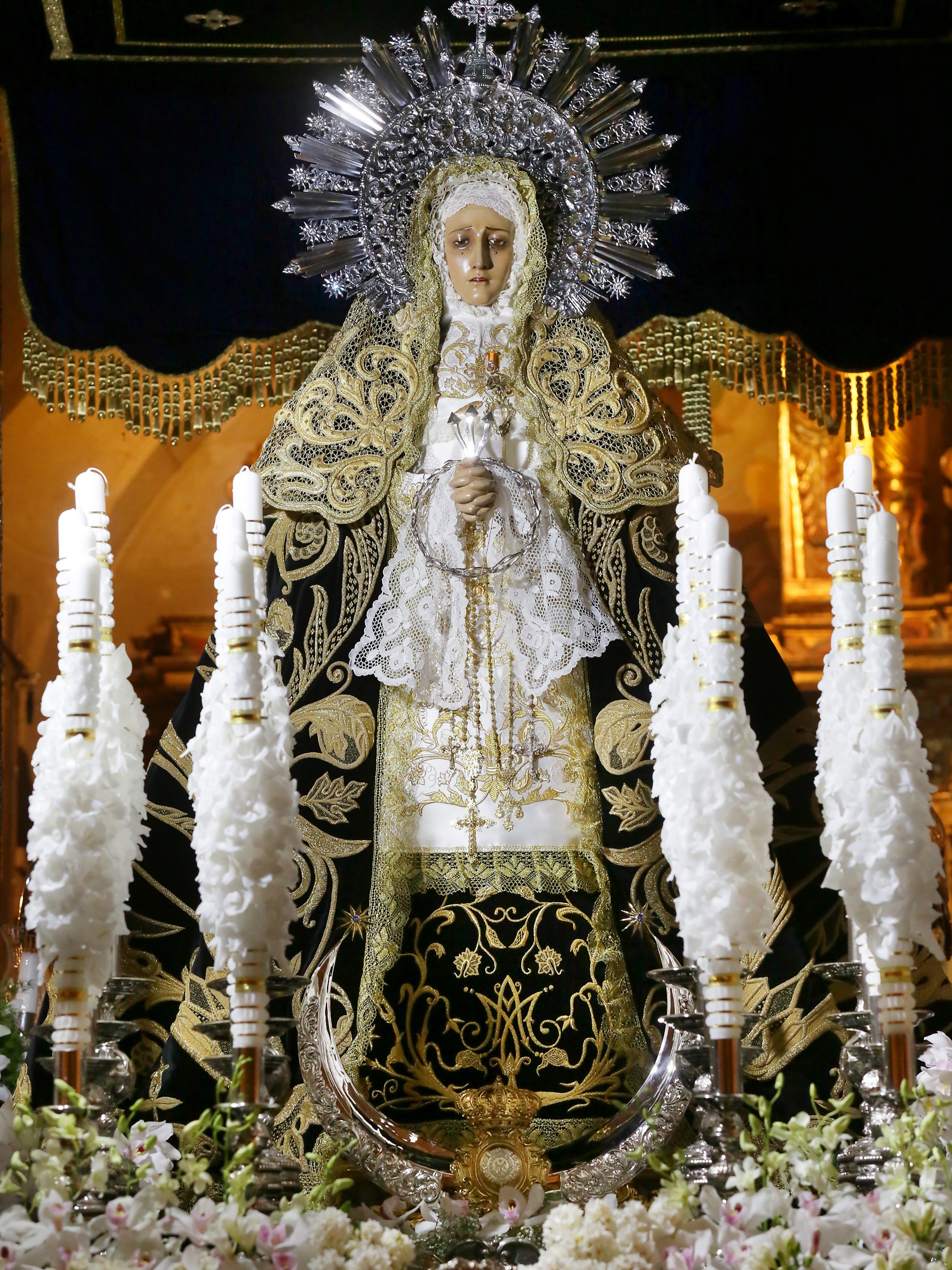
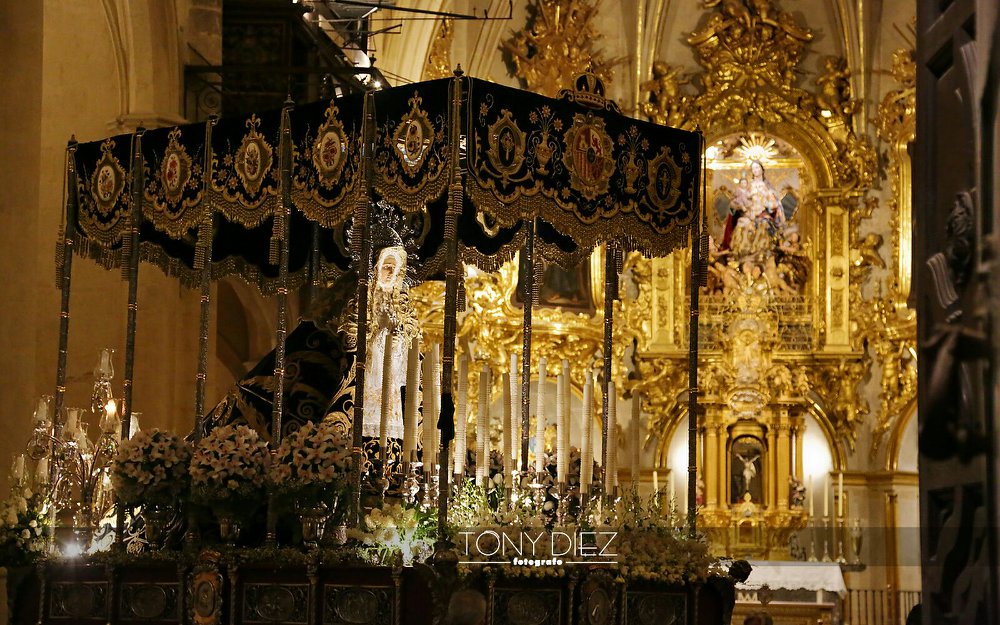
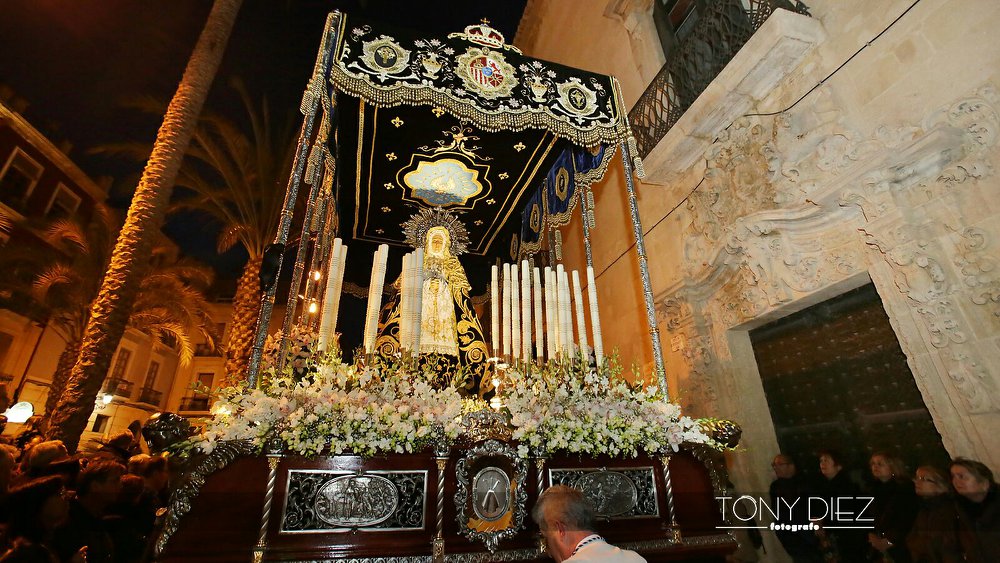
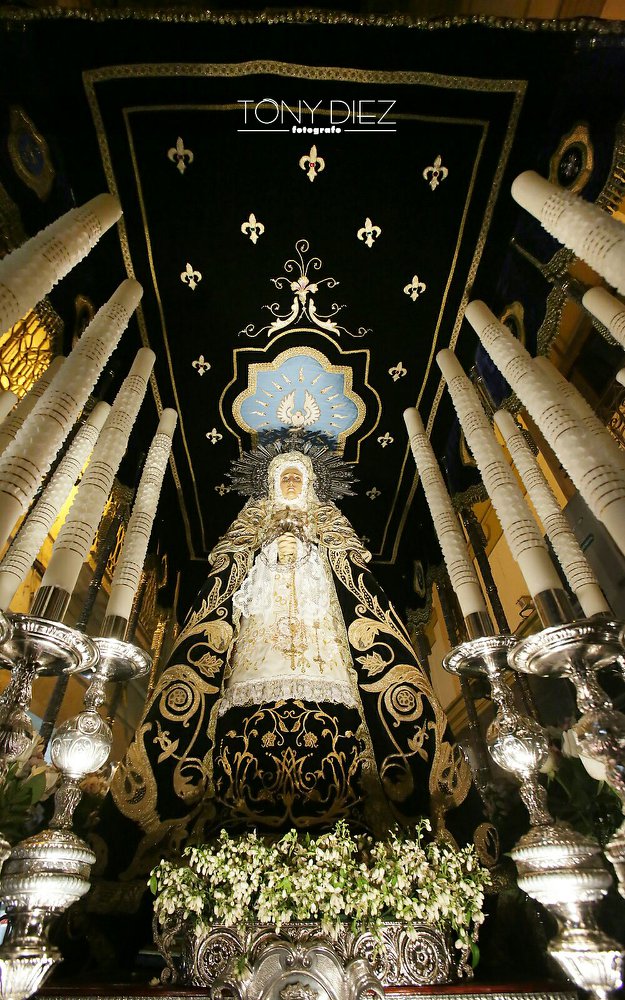
Our Lady of Solitude of St Mary
Anonymous
IDENTITY AND SYMBOLISM
The Coat of Arms
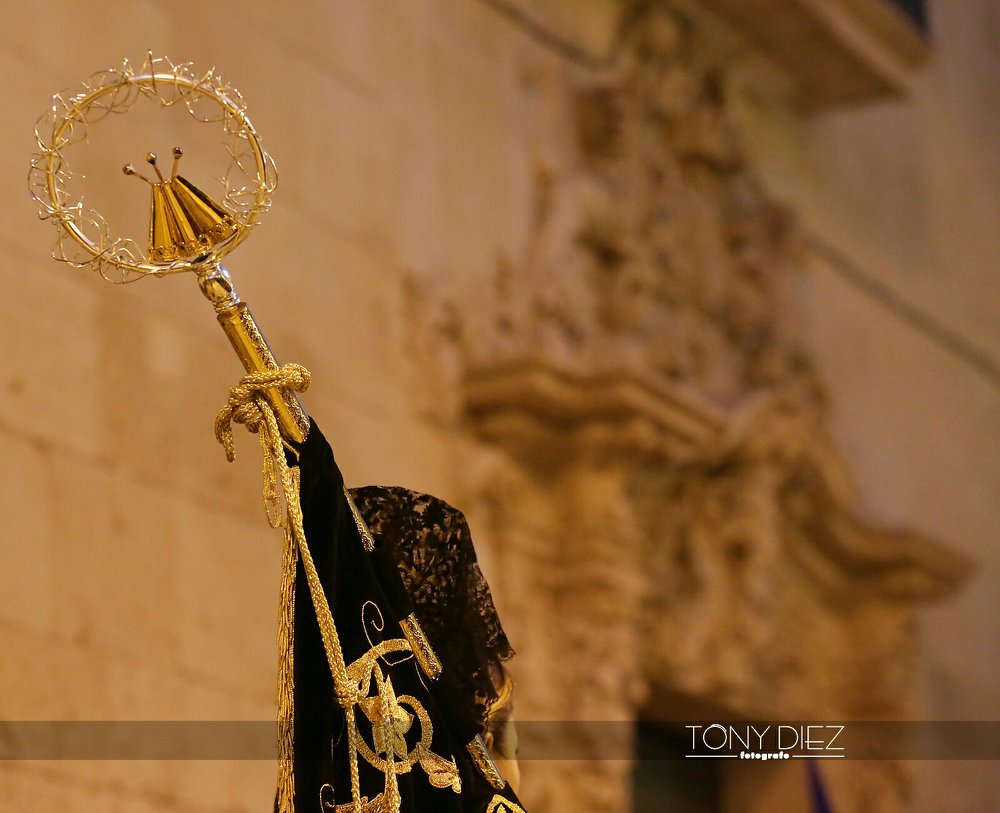
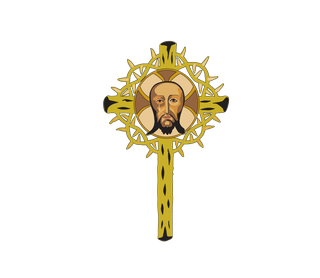
At the centre of the coat of arms is a handkerchief bearing the three nails of Christ, surrounded by a crown of thorns, symbolising the solitude of the Virgin Mary after Christ's burial. The whole design is framed by the Golden Fleece and the Royal Crown, alluding to the titles bestowed upon the Guild.
PROCESSIONAL ATTIRE AND GUILD IDENTITY
Processional Attire
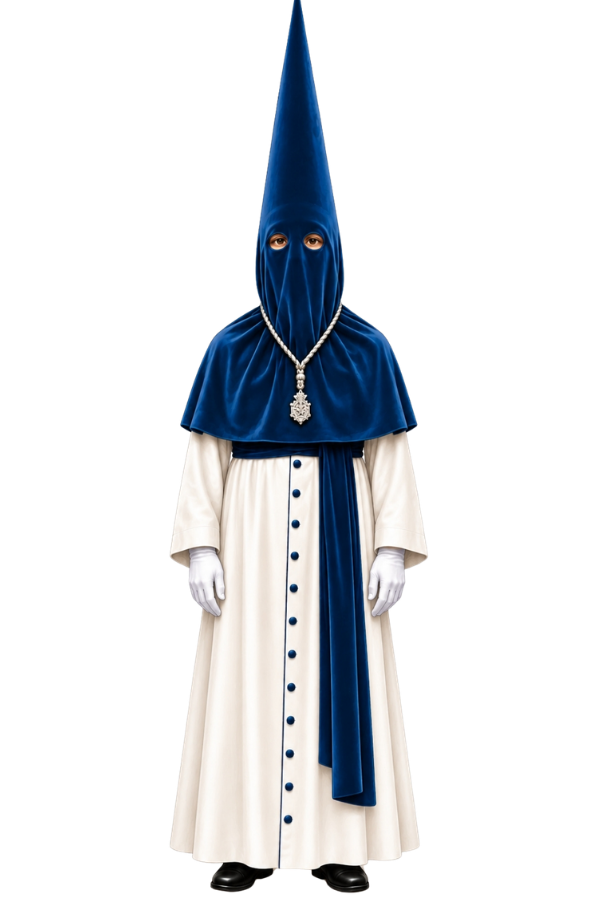
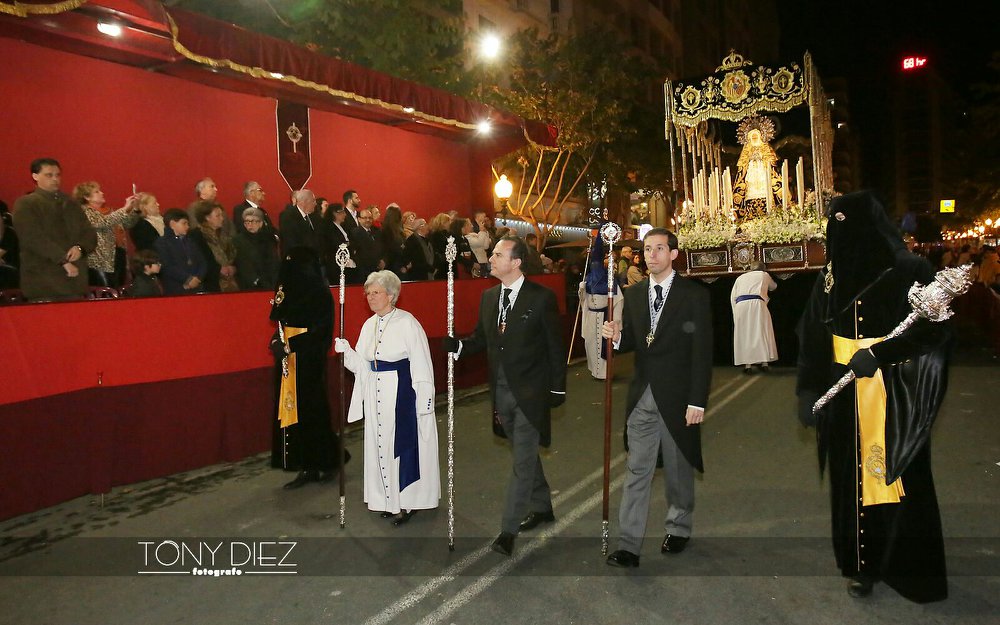
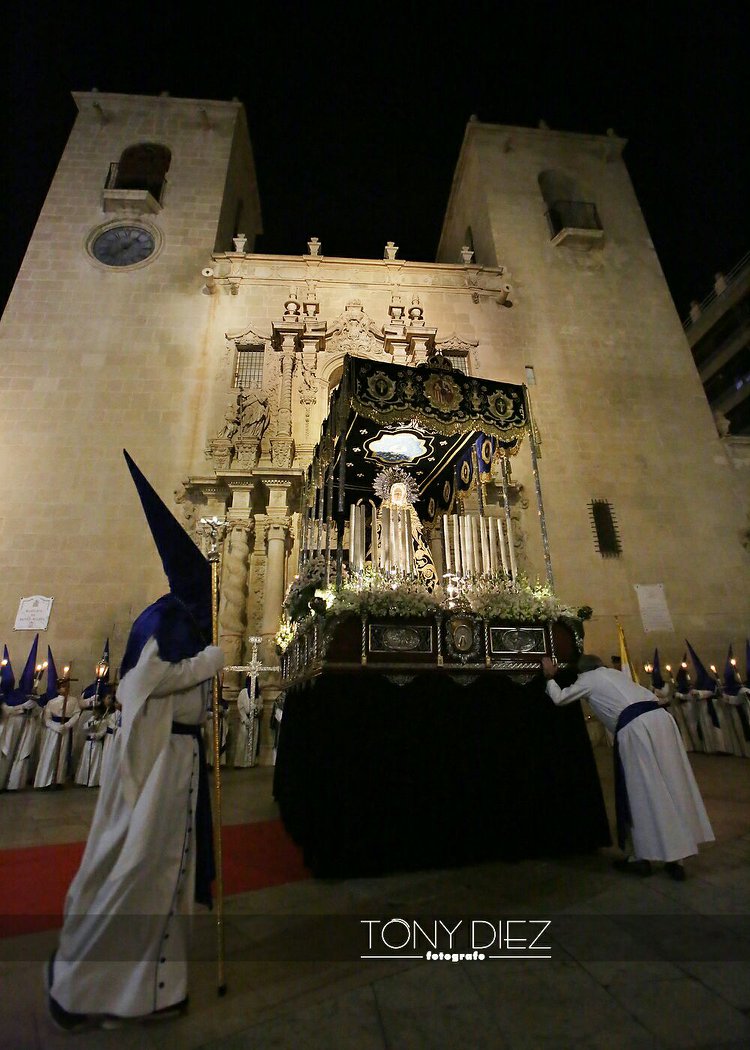
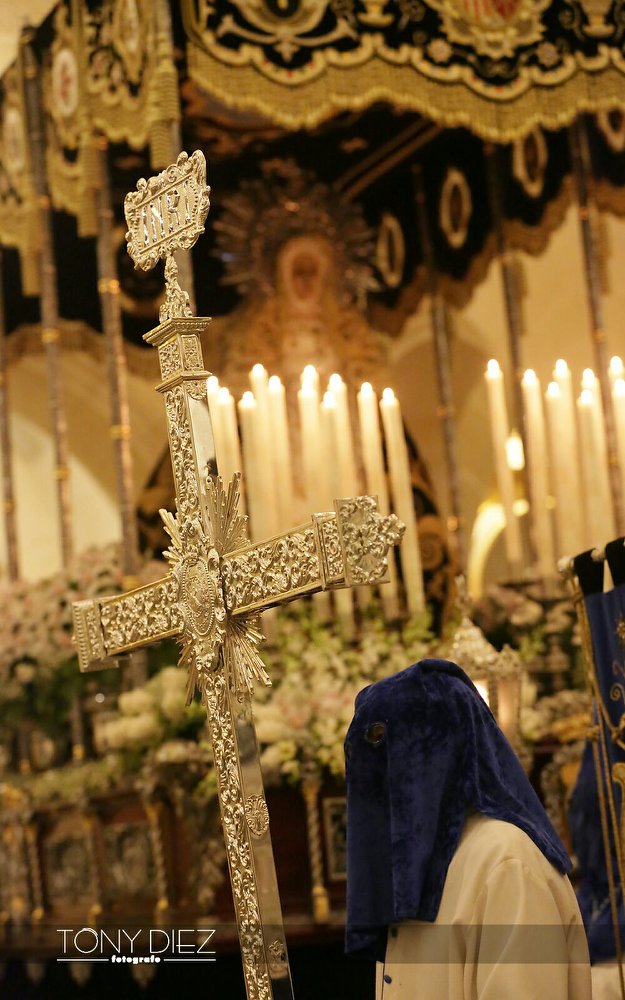
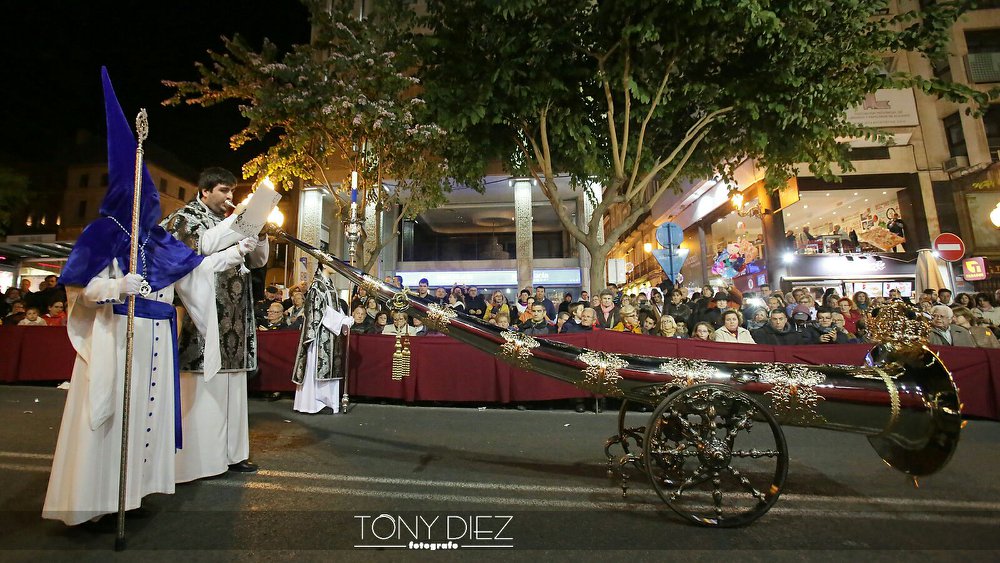
The traditional attire worn by members of this Guild consists of a blue tunic with buttons, a blue velvet face covering and sash. It is complemented by white gloves, black footwear and the Guild's medal.
ORIGINS AND HISTORY
History of the Guild
The origins of the Guild of Our Lady of Solitude, canonically established in the Parish Church of St Mary in Alicante, now a Basilica, date back to the 17th century. In the 18th century, coinciding with the church's expansion works, the Baptistery Chapel became the Guild's principal chapel, according to the account given in the chronicle by Mr Rafael Viravens. There, members of the Guild kept vigil over “the deceased before an altar that had been erected”, until 1897, when the image was moved beside the high altar, whose decoration was entrusted to the painter Mr Lorenzo Pericás Ferrer.
Following the suppression of the Maundy Thursday and Good Friday processions towards the end of the 18th century, the parish clergy obtained official permission in 1819 to organise “a devout Procession representing the burial of Our Redeemer Jesus”. Following the austere float bearing Our Lady of Solitude of St Mary came the Municipal Corporation, the Civil Governor, the military commanders and officers, and State officials. The military band and the garrison troops brought the procession to a close.
Over the years, coinciding with the decline of Holy Week during the 1970s, the Guild went through a period of decline.
After being lent for many years to accompany the image of the Holy Sepulchre in the Holy Burial procession, the image of Our Lady of Solitude, owned by Mrs Natividad Serrano Rovira, was donated to the Basilica of St Mary following her death in 1956.
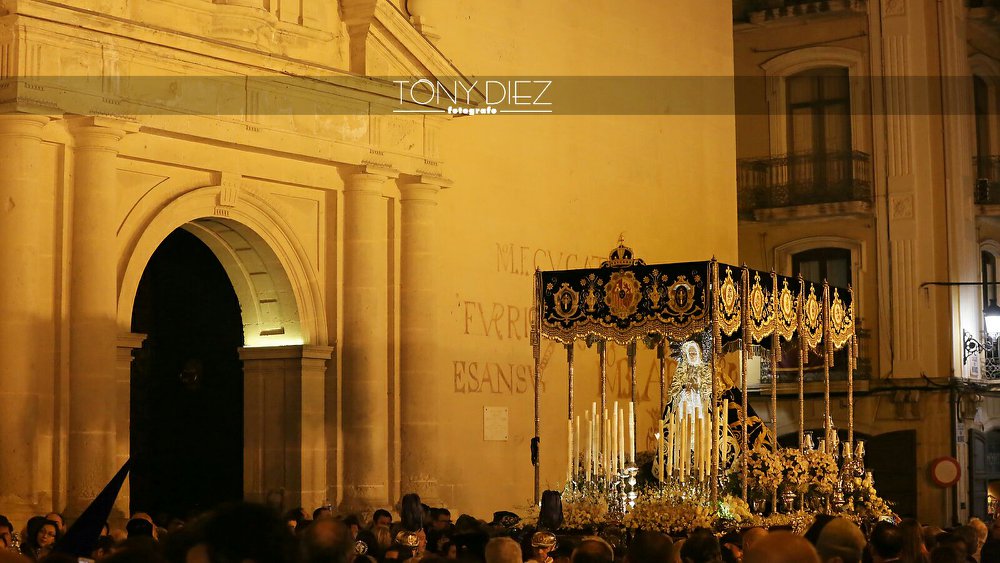
After several years of absence, the Guild was re-established on 29 June 1982 and, one year later, it was able to process through the streets of Alicante once again. In keeping with longstanding tradition, the Guild of Our Lady of Solitude is responsible for bringing the Official Holy Burial Procession to a close. Our Lady of Solitude is accompanied by the Town Hall's Full-Dress Escort and the Knights Custodians. Bringing the Holy Burial Procession to its conclusion is the Official Presidential Delegation, headed by the Bishop and the Municipal Corporation.
The Guild has the honour of counting Her Majesty Queen Sofía of Spain and Her Royal Highness Infanta Margarita de Borbón among its members.
Musical Contributions to Alicante Holy Week
- Soledad Alicantina · Funeral march. Music by José Garberí Serrano and lyrics (prayer) by José Serriama. Date handwritten on the score: January 1996.
- Maire de la Soledat d´Alacant · Francisco Grau Vegara. “Solemn march. A composition dedicated to the Royal Guild of Our Lady of Solitude of Alicante, a city where it has taken part in the Holy Burial procession on Good Friday for almost a quarter of a century. Madrid, 9 February 2007.” Premiered on 23 March 2007 by the Alicante Municipal Symphony Band at the Co-Cathedral of St Nicholas.
- Soledad de Santa María, Madre de los Alicantinos · José Vicente Asensi. “Solemn march. Dedicated to the Royal and Most Illustrious Guild of Our Lady of Solitude of St Mary. Holy Week 2019”.
- Camino de Soledad · Bugle piece by Juan Palacios and Enrique Muñoz.
Website:
Royal and Most Illustrious Guild of Our Lady of Solitude of St MaryIN PICTURES
Photo Gallery
The procession, its sacred images and the traditions of Good Friday.