 SPA
PALM SUNDAY · ALICANTE
Royal and Most Illustrious Guild of the Most Holy Christ of Souls and St Peter the Apostle
RELIGIOUS SCULPTURE
Principal Sacred Images
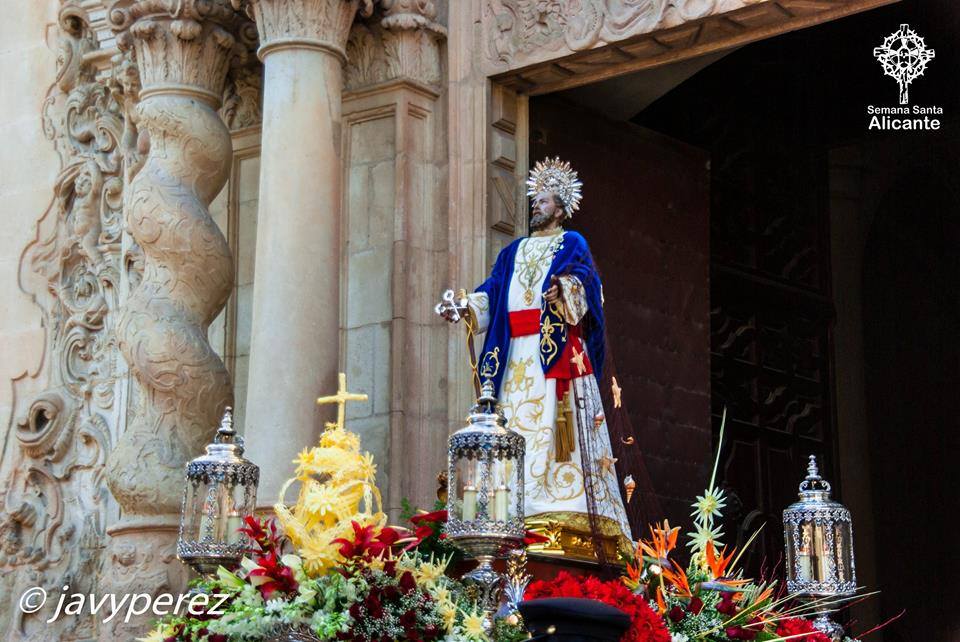
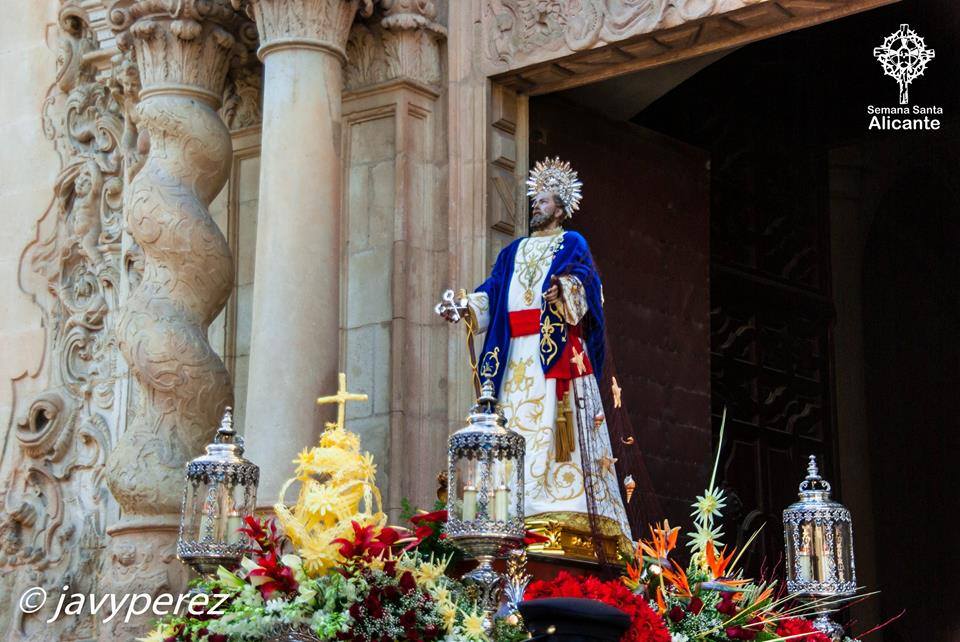
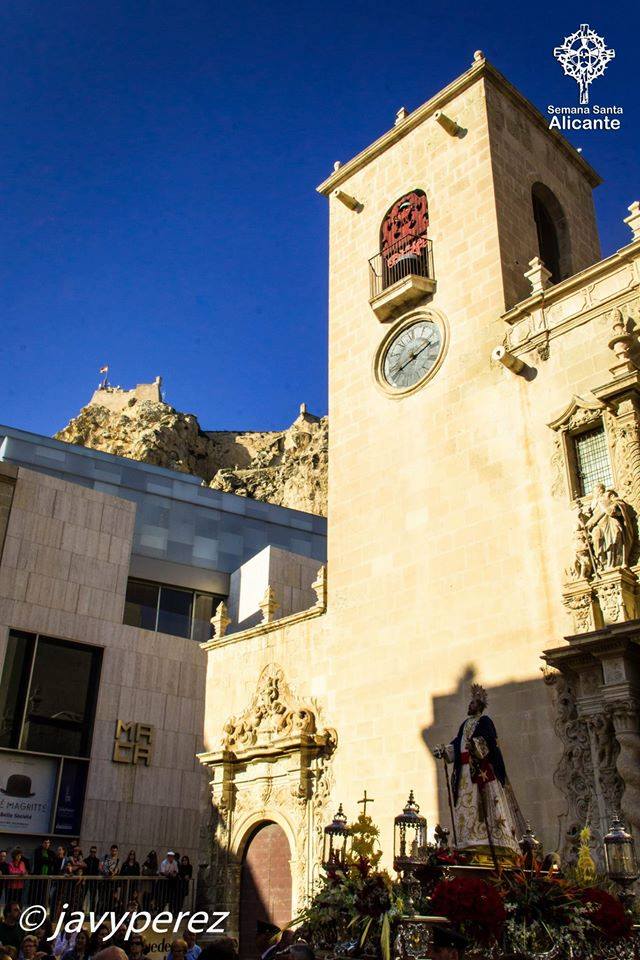
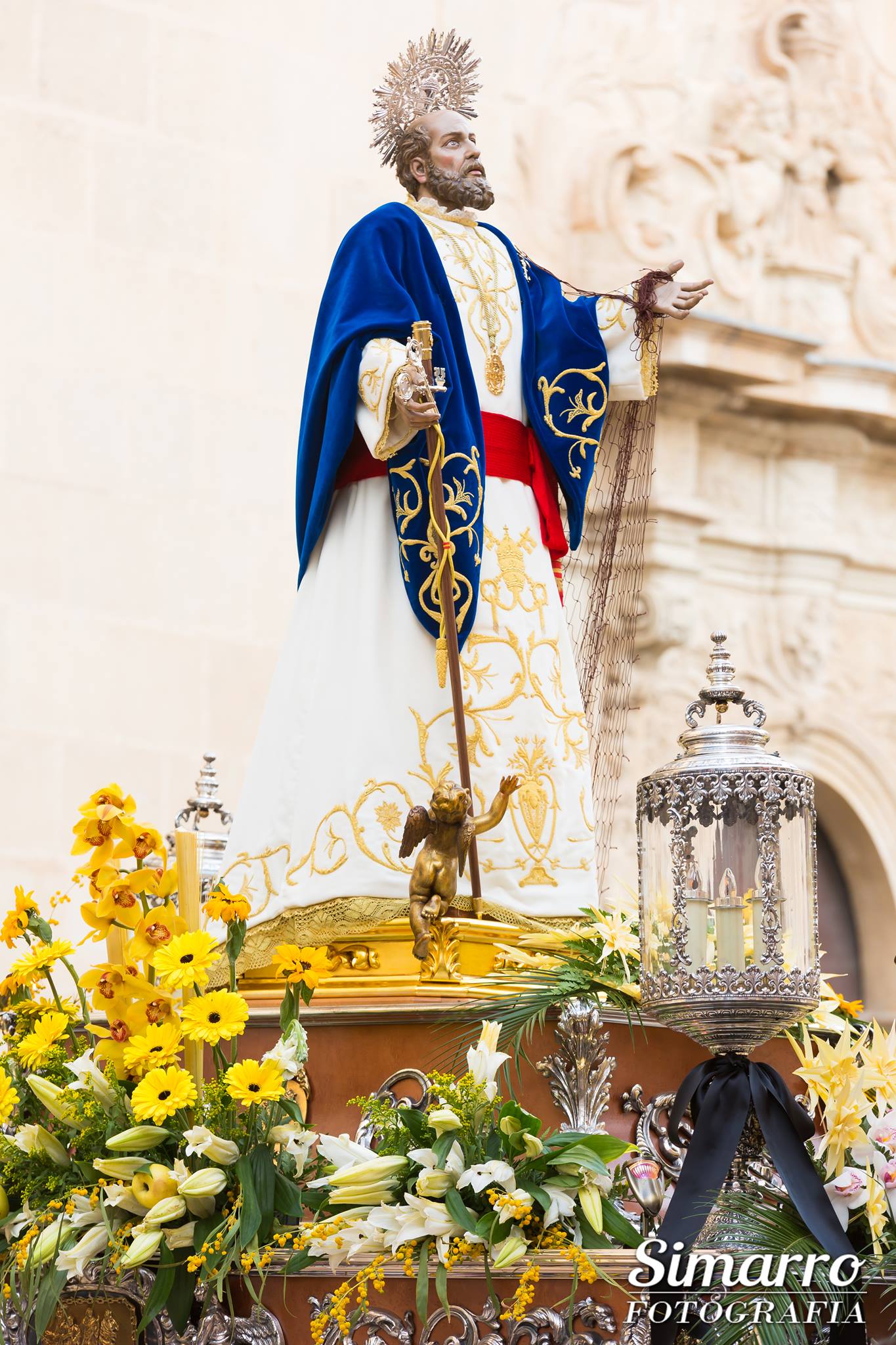
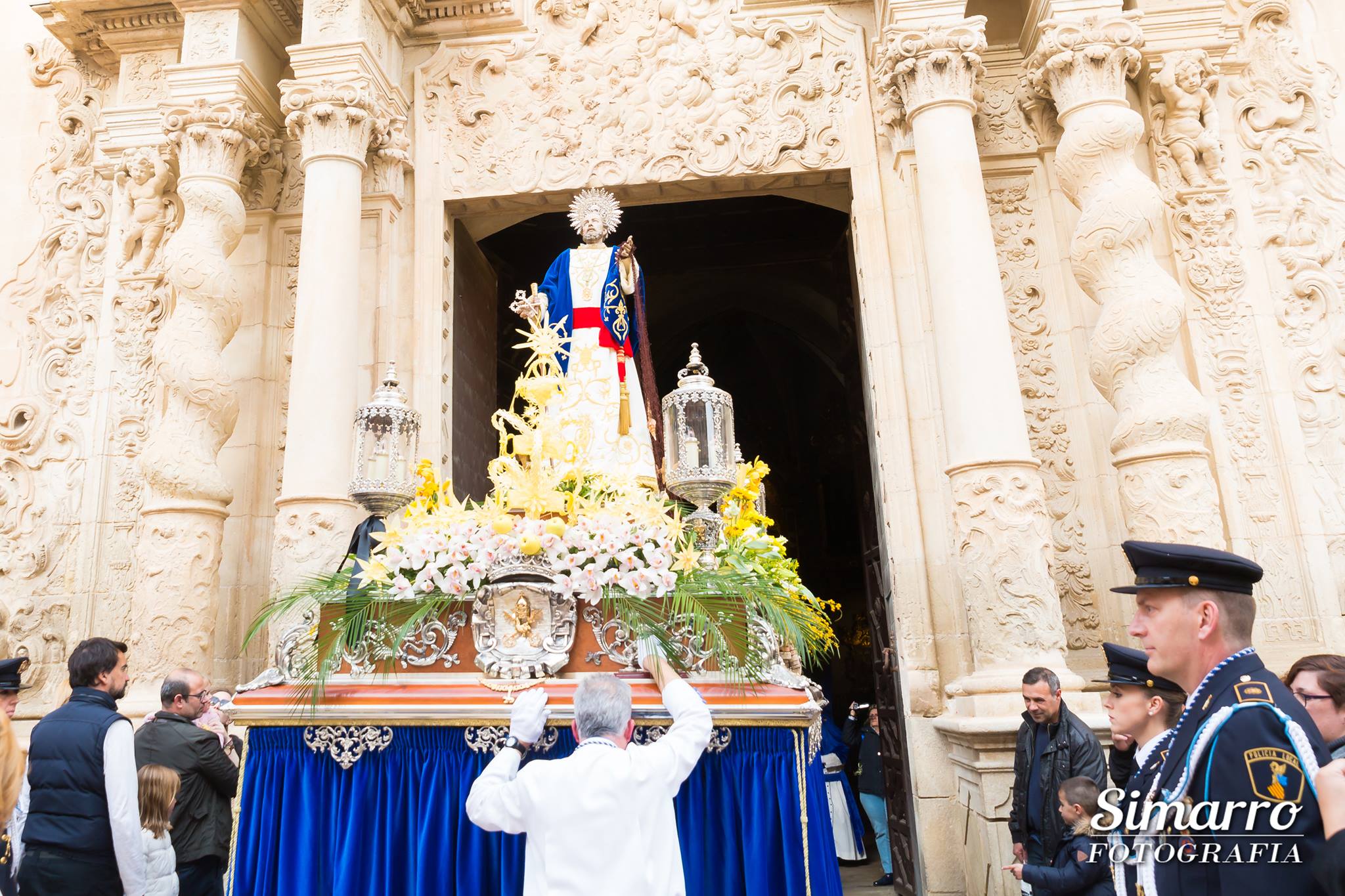
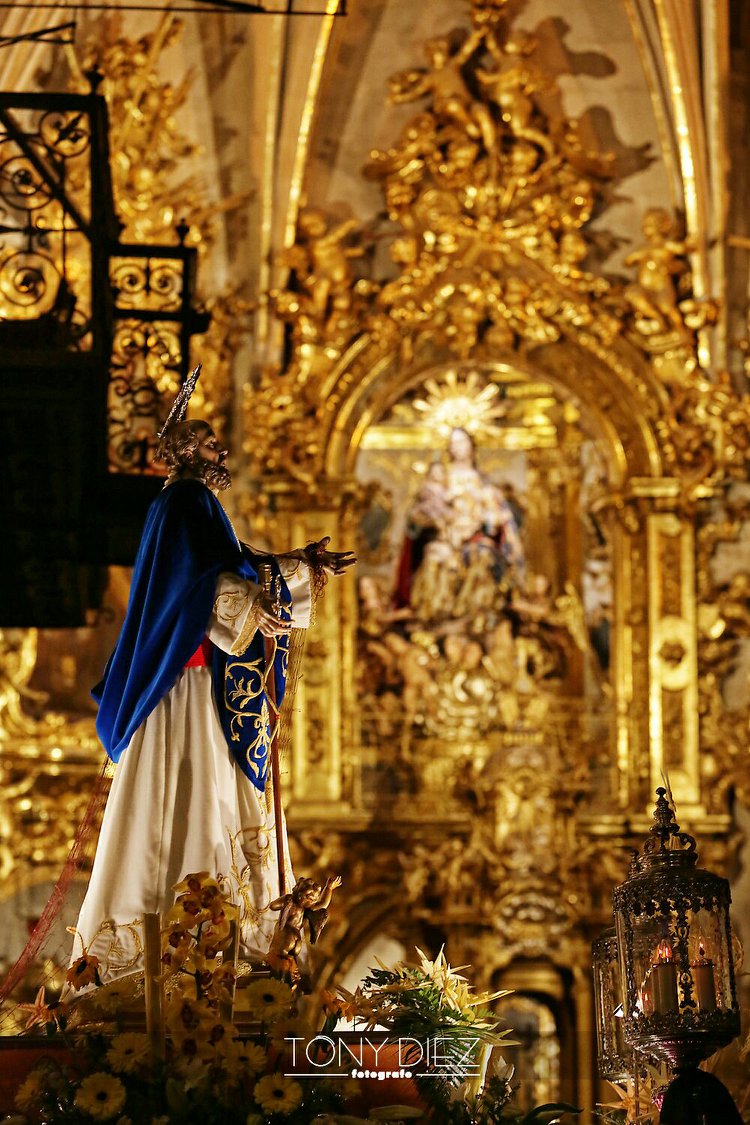
St Peter
José Antonio Hernández Navarro, 1997
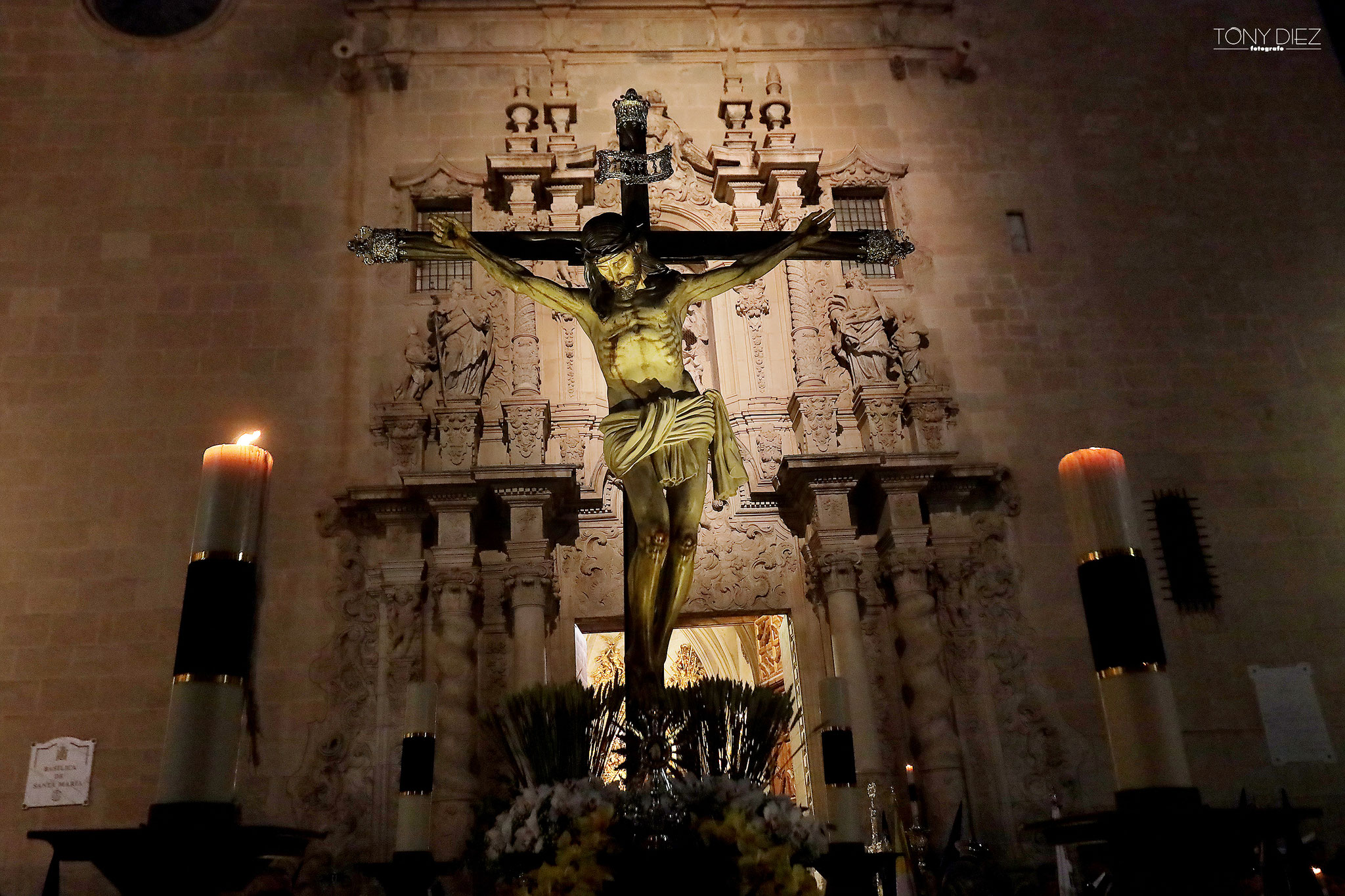
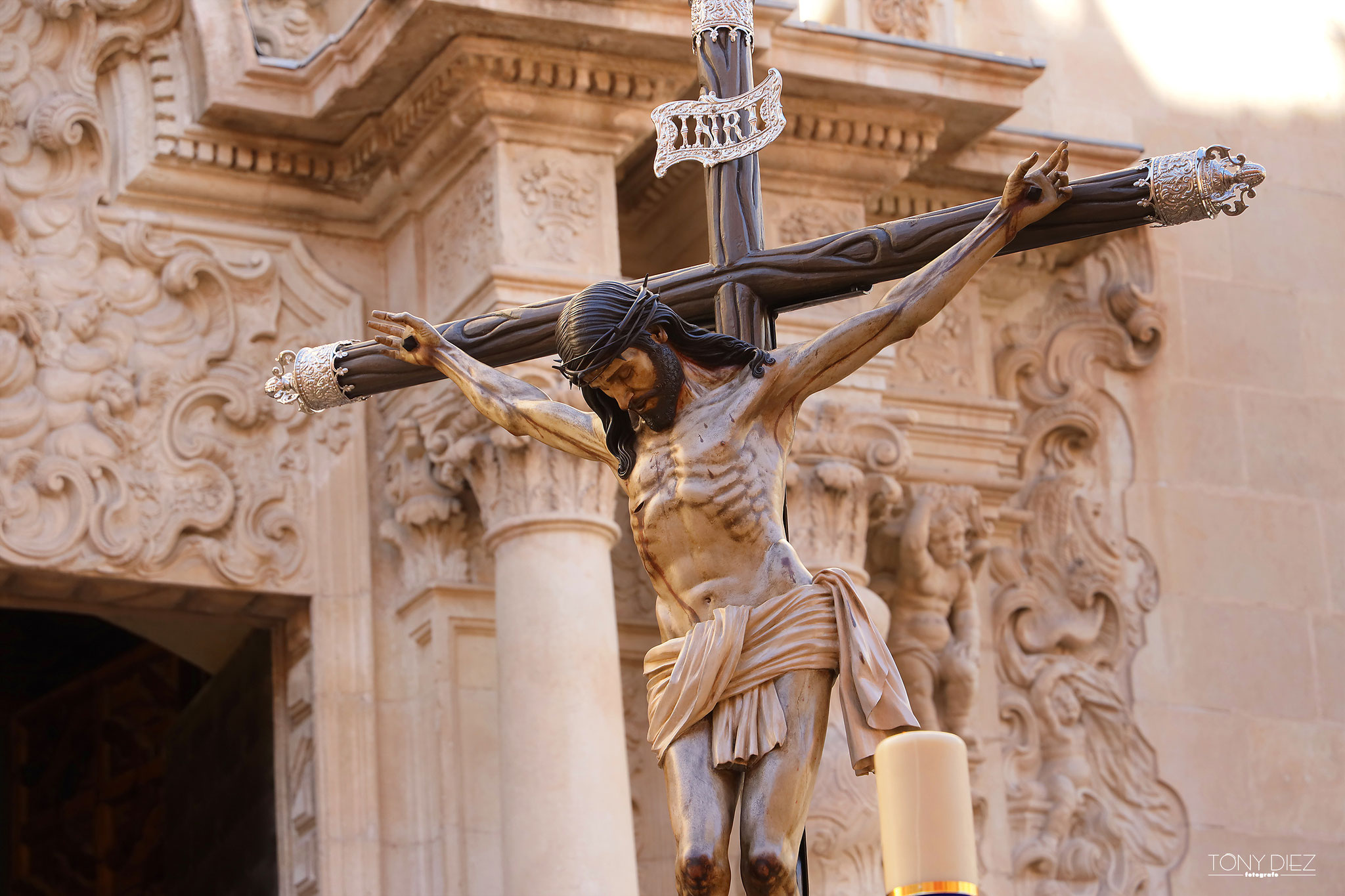
Most Holy Christ of Souls
Bautista Vera Morelló, 1735
IDENTITY AND SYMBOLISM
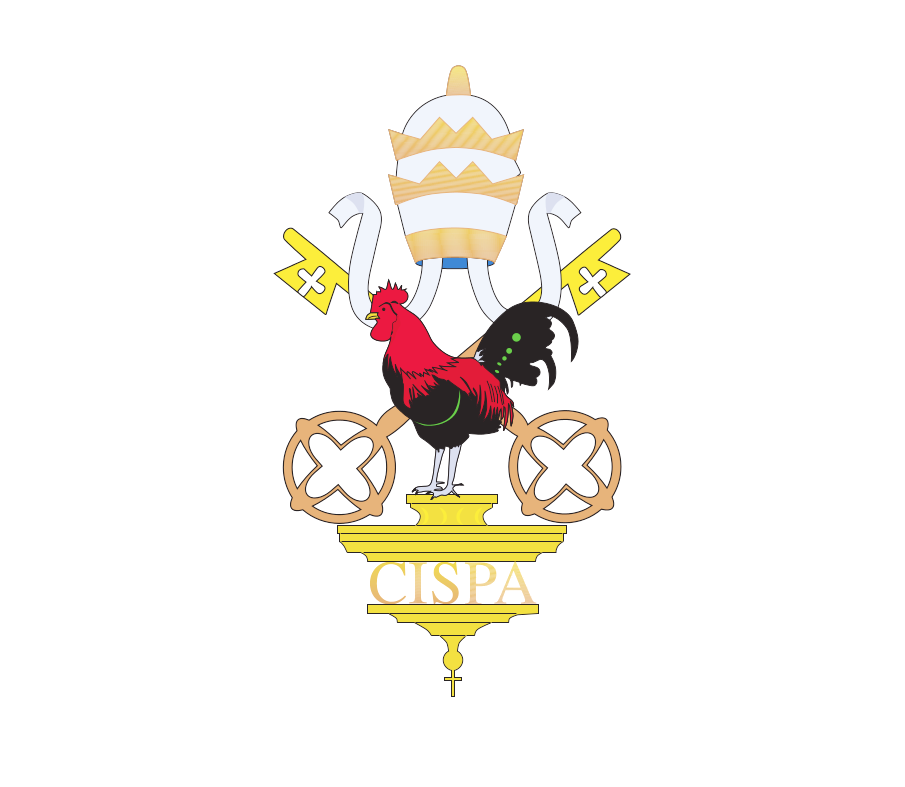
The Coat of Arms
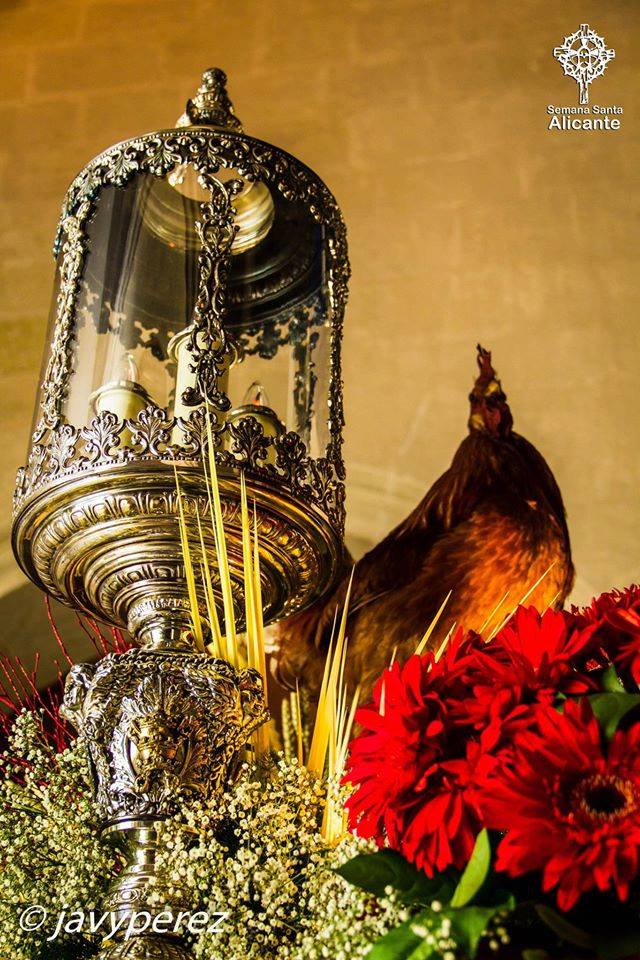
The coat of arms, designed by the Guild's founding senior sister, Mrs Balbina Oncina Alemañ, contains the symbols associated with the devotion under which the Guild was established. The insignia consists of the papal tiara, from which hang the infulae supporting two crossed keys, together with a representation of the rooster that bore witness to the Apostle Peter's denial. The choice of these distinctive elements is inherent to the very dedication of the Guild. The papal tiara represents the tall, rounded mitre, closed at the top and encircled by three crowns (triregnum), worn by the Pope of Rome as a symbol of his authority. The mitre symbolises the royal, imperial and priestly dignities of the Holy Father. It is a pontifical symbol representing St Peter the Apostle as the first Vicar of Christ ("You are Peter, and on this rock I will build my Church"). The infulae, or broad woollen ribbons hanging from the back of the mitre, symbolise theological and canon law, the disciplines associated with prelates. They also serve to connect the keys of the Kingdom, belonging to the Apostle as a symbol of his spiritual authority to govern and guide the faithful.
The keys are among the oldest Christian attributes and are depicted crossed in the shape of an X, symbolising the power to bind and loose, to absolve and condemn, which Christ conferred upon the Prince of the Apostles ("I will give you the keys of the kingdom of heaven; whatever you bind on earth will be bound in heaven, and whatever you loose on earth will be loosed in heaven"). The bows of the keys are depicted with cross-shaped notches.
The image of the rooster, through its crowing three times, represents the Apostle Peter's betrayal of Christ, in accordance with the Gospel passage according to St Matthew: "Jesus said to him: Truly I tell you, this very night, before the rooster crows, you will deny me three times."
(Excerpt from the heraldic study published in José Iborra Torregrosa's book, "Heritage, Identity and Holy Week: The Guild of St Peter the Apostle of Alicante", Alicante, 2018, pp. 49–51)
BROTHERHOOD ATTIRE AND IDENTITY
Processional Attire
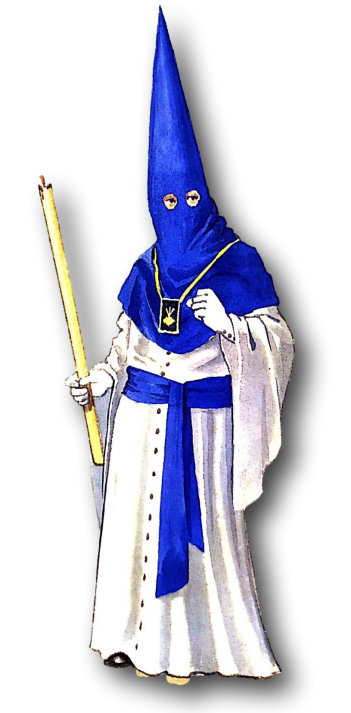
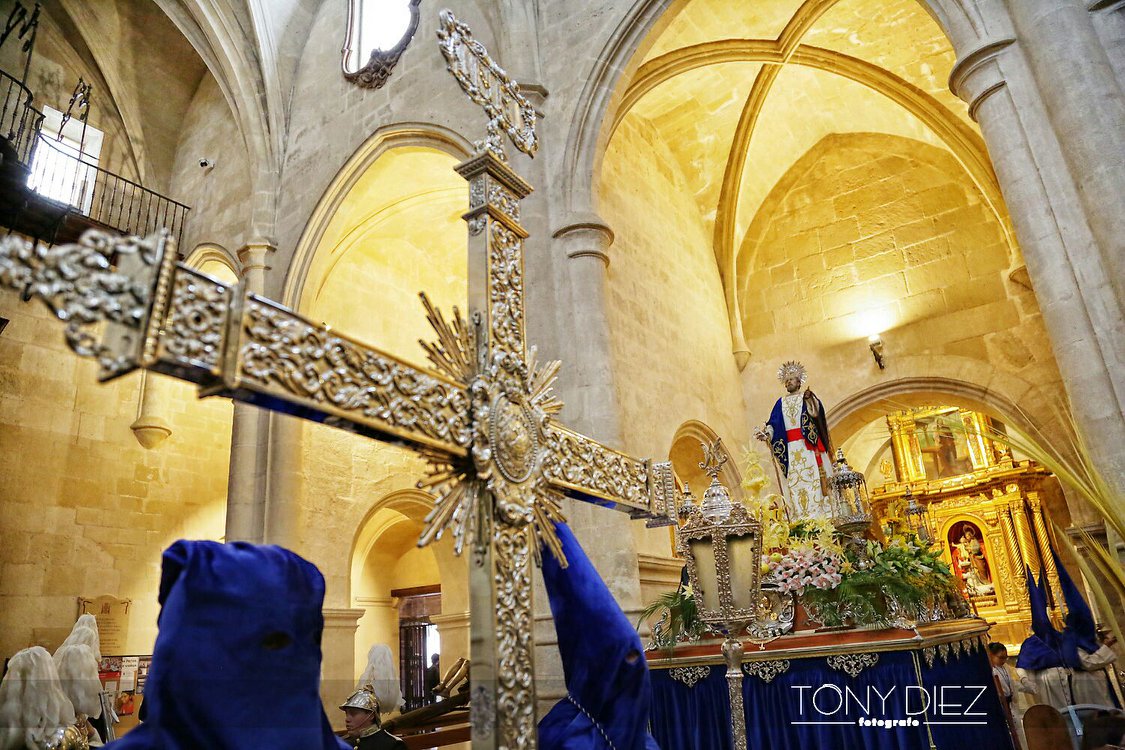
The traditional attire of this Guild consists of an ivory-coloured tunic, a hood and a navy-blue velvet sash. Members wear white gloves, black footwear and the medal of the Royal and Most Illustrious Guild of the Most Holy Christ of Souls and St Peter over their hoods.
ORIGINS AND HISTORY
History of the Brotherhood
The earliest records referring to the existence of the Guild of St Peter the Apostle of Alicante date back to the 17th century. It was a guild established in the former Convent of St Francis, run by the Franciscan Fathers. According to the documents preserved in the Municipal Archive of Alicante, this "guild of the fishermen of the Raval" enjoyed periods of prosperity throughout the 18th century. It was during the first half of that century that it emerged as a firmly established association. It had no "Bull of establishment, but only indulgences", and at that time it had 160 members, who covered its annual expenses through a contribution known as the "tacha".
The 19th century was a turbulent period for guild associations, and the Guild of St Peter was not spared their decline. One of the last records concerning the Guild refers to its financial contribution in 1859 towards the restoration of the Convent of St Francis.
Over time, this emblematic Guild fell into oblivion until 1997, when its founding sister, Mrs Balbina Oncina Alemañ, together with a group of fellow members, re-established it under the same dedication. It was founded as an affiliated organisation of the Royal and Most Illustrious Guild of Our Lady of Solitude of St Mary. Its founding Statutes were approved on 21 July 1997.
On 27 February 1999, the Guilds of Our Lady of Solitude and St Peter the Apostle signed a Perpetual Twinning Agreement at the high altar of the Church of the Triumphs of the Most Holy Sacrament in Alicante. Since then, and by decision of their respective assemblies, both organisations have shared the same members.
It was established as a Guild made up exclusively of children and young people. In 2000, its Statutes were amended to remove this restriction and allow anyone wishing to join to become a member.
Over the years, numerous decorations have been bestowed upon the image of St Peter. In 2012, the Spanish Navy, represented by the Alicante Naval Command, awarded St Peter the "Admiral's Sash". During an official ceremony, the Naval Commander, Mr Javier Yohn Zubiría, presented this highest distinction of the Navy in the presence of numerous civil and military authorities.
During Holy Week 2014, and in its capacity as Honorary Custodian, the General Air Academy, represented by its director, Colonel Mr Emilio Gracia Cirugeda, presented the "Command Baton" of the Spanish Air Force. This unprecedented ceremony sought once again to commemorate the unique historical significance of this Guild within Alicante Holy Week.
On the occasion of the celebration of the first centenary of the Royal Academy of Valencian Culture, its Dean, Mr Enrique de Miguel Fernández-Carranza, awarded the images of Our Lady of Solitude and St Peter the Apostle the "Gold and Silver Medal of Academicians" in 2015. These were the highest distinctions ever granted by the distinguished Valencian institution.
Coinciding with the 25th anniversary of its founding, the Guild members saw their wish fulfilled to incorporate an image of the crucified Christ as one of the principal images of the religious organisation. Following the request submitted by the members and supported by the rector and parish priest of St Mary, the Diocese of Orihuela-Alicante granted the Alicante Guild diocesan permission in 2022 to offer public worship and veneration to the ancient image of the Most Holy Crucified Christ (1735), by sculptor Bautista Vera Morelló, located in the first chapel at the foot of the parish church.
In response to the request of the Guild members, His Excellency and Most Reverend Monsignor José Ignacio Munilla Aguirre, Bishop of Orihuela-Alicante, authorised the Guild to take responsibility for the care and protection of the devotional image and the chapel of the Most Holy Christ of Souls. This dedication was bestowed by the religious organisation itself following a proposal by the Guild member and senior sister president, Mrs Carmen Iborra Torregrosa. Palm Sunday, 2 April 2023, was a historic day for the Guild members. For the first time in the history of Alicante Holy Week, they witnessed the procession of the revered image of the Most Holy Christ of Souls, accompanied by its members and custodians. Shortly before the procession departed, the rector, parish priest and spiritual adviser blessed the artistic float arranged at the entrance to the church, in the presence of Guild members, authorities and guests.
In 2023, the Royal Household and the Diocese of Orihuela-Alicante granted the Guild the titles of "Royal" and "Most Illustrious". Today, the public association of the faithful is known as the "Royal and Most Illustrious Guild of the Most Holy Christ of Souls and St Peter the Apostle", as stated in its diocesan Statutes approved on 16 February 2024.
(Excerpt from the historical study published in the book "Sancta Maria", by José Iborra Torregrosa, 2024, pp. 53–83)
Musical Contributions to Holy Week
- "Tu es Petrus" · José Vicente Asensi. Slow march. Dedicated to the Guild of St Peter the Apostle of the City of Alicante. Holy Week 2017.
- "The Tears of St Peter", a poetic-musical piece · José Iborra Torregrosa. Performance by the Passion Association of Callosa de Segura. Holy Week 2017.
Website:
Royal and Most Illustrious Guild of the Most Holy Christ of Souls and St Peter the ApostleIN PICTURES
Photo Gallery
The procession, its sacred images and the traditions of Palm Sunday.