 HPSC
HOLY THURSDAY · ALICANTE
Penitential Brotherhood of Forgiveness
RELIGIOUS SCULPTURE
Principal sacred images
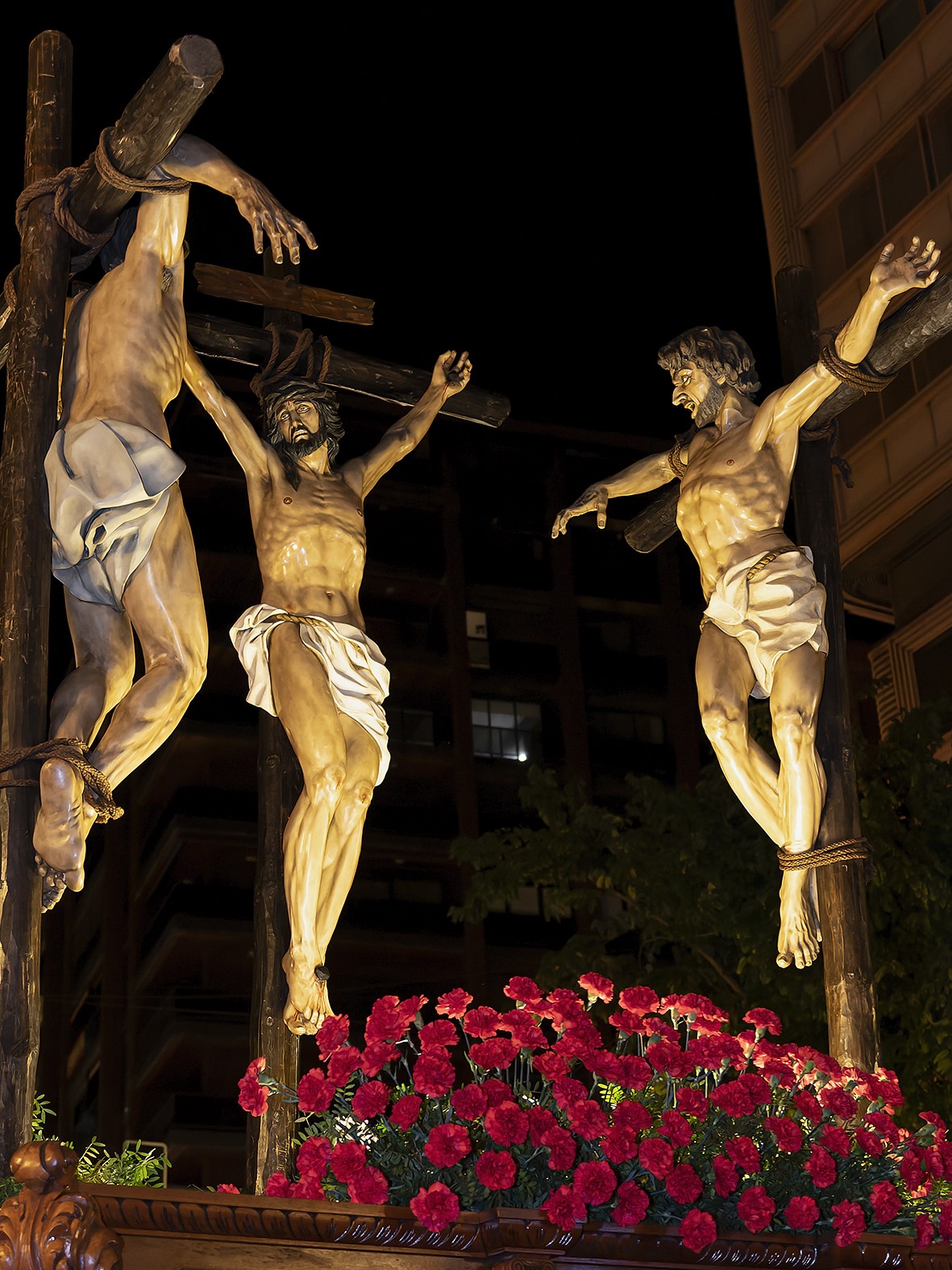
Sculptural group
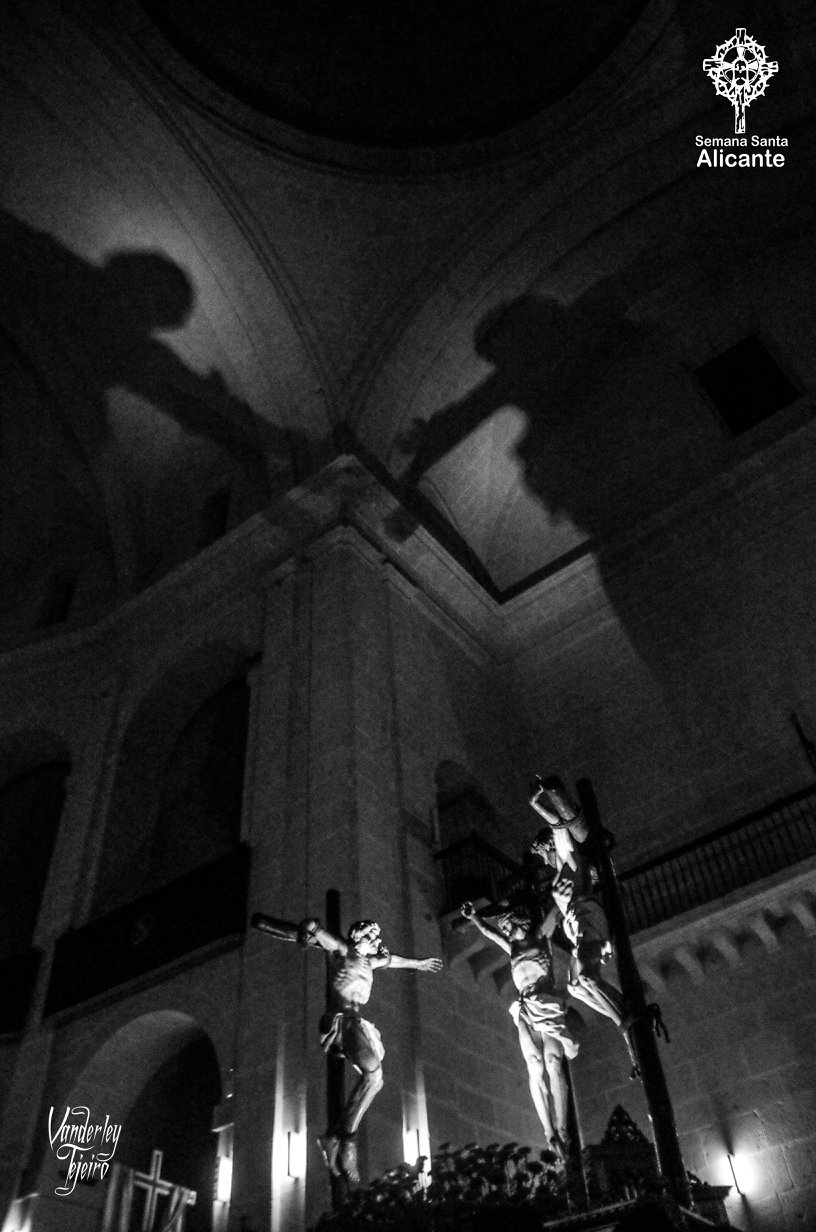
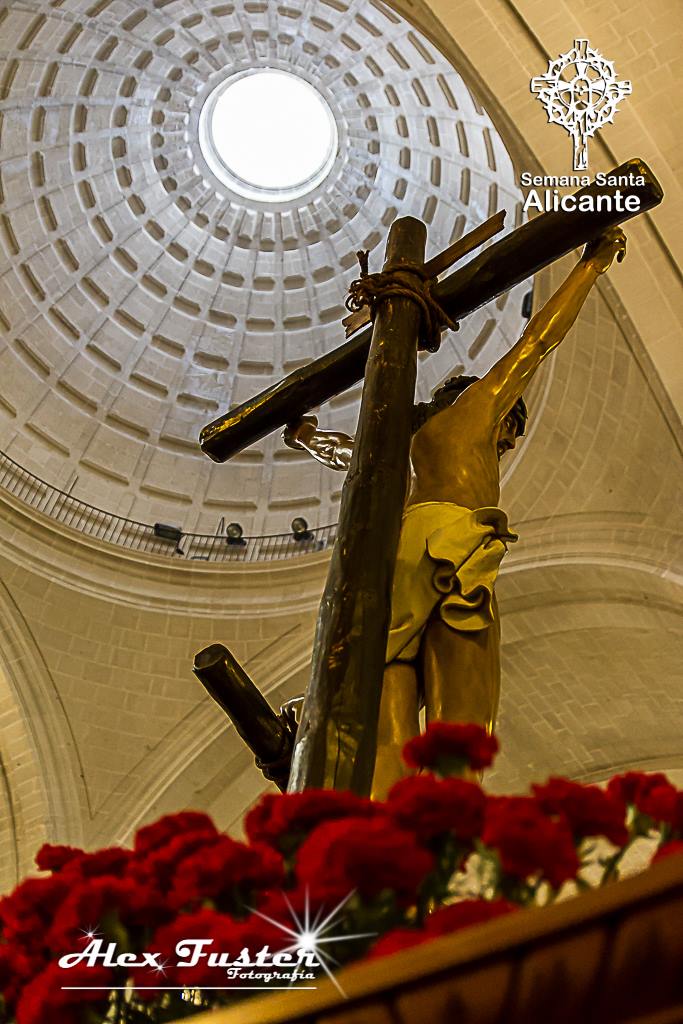
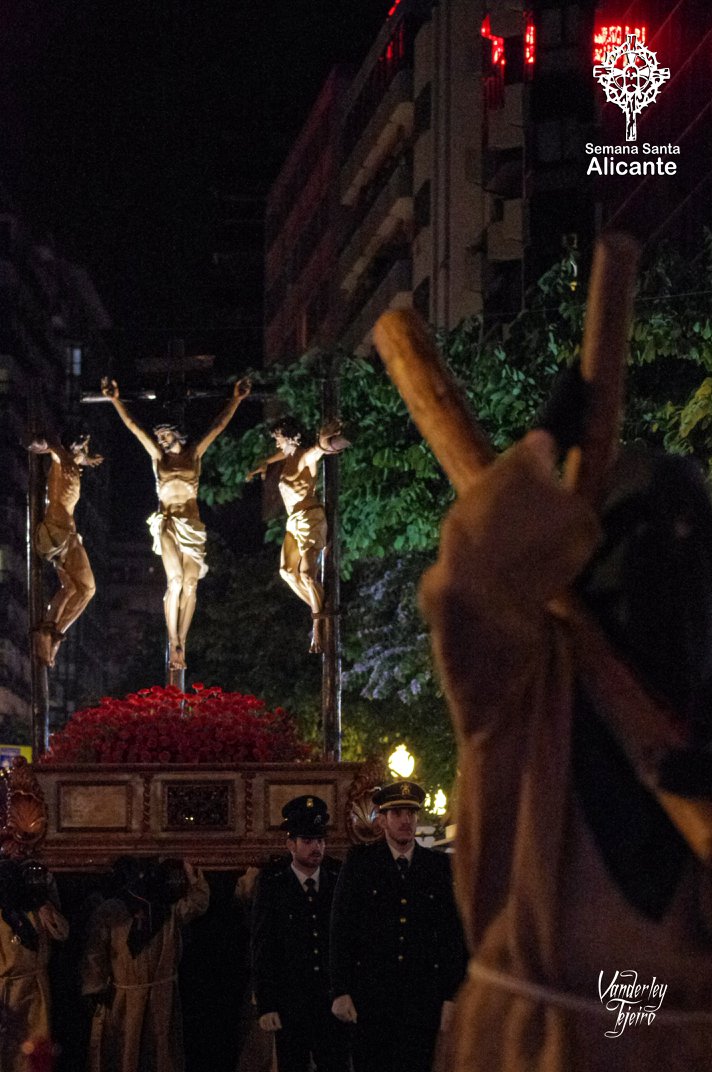
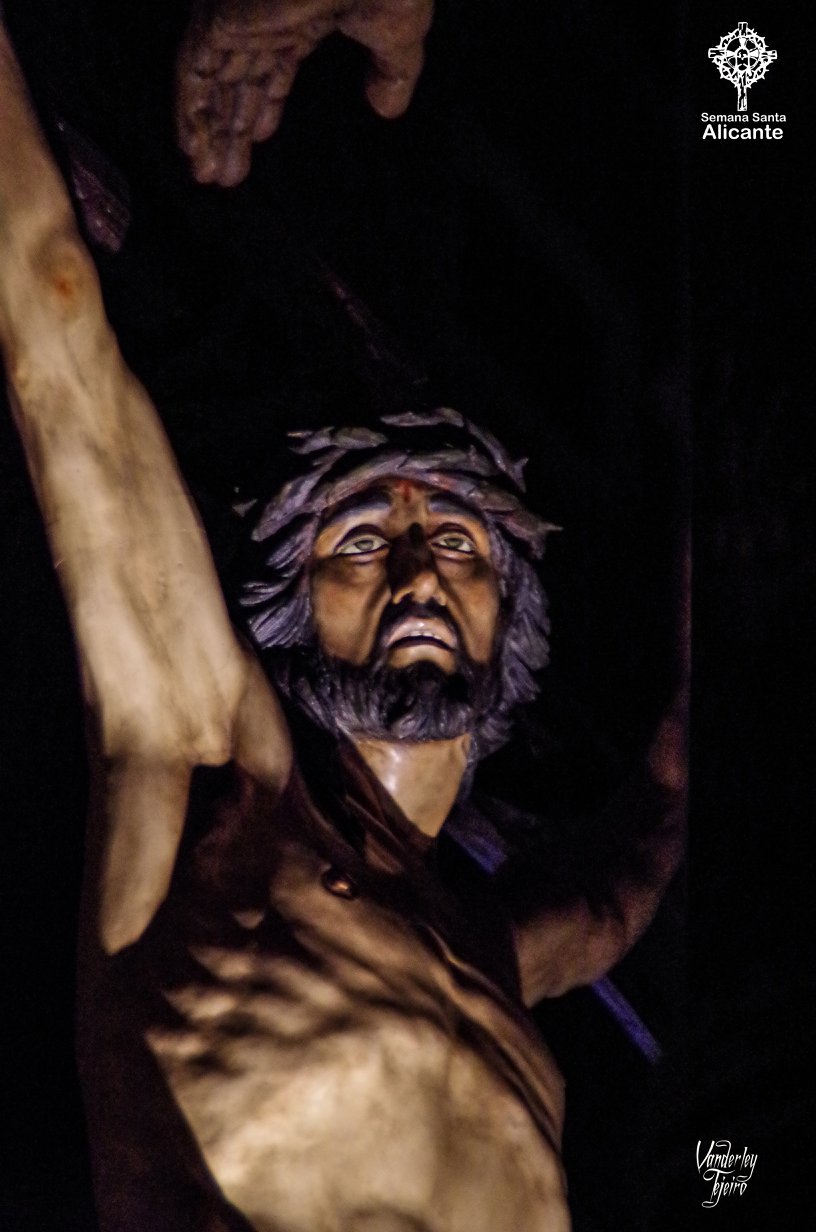
Most Holy Christ of Forgiveness · Blanco Brothers, 1956
Thieves Dismas and Gestas · Blanco Brothers, 1957
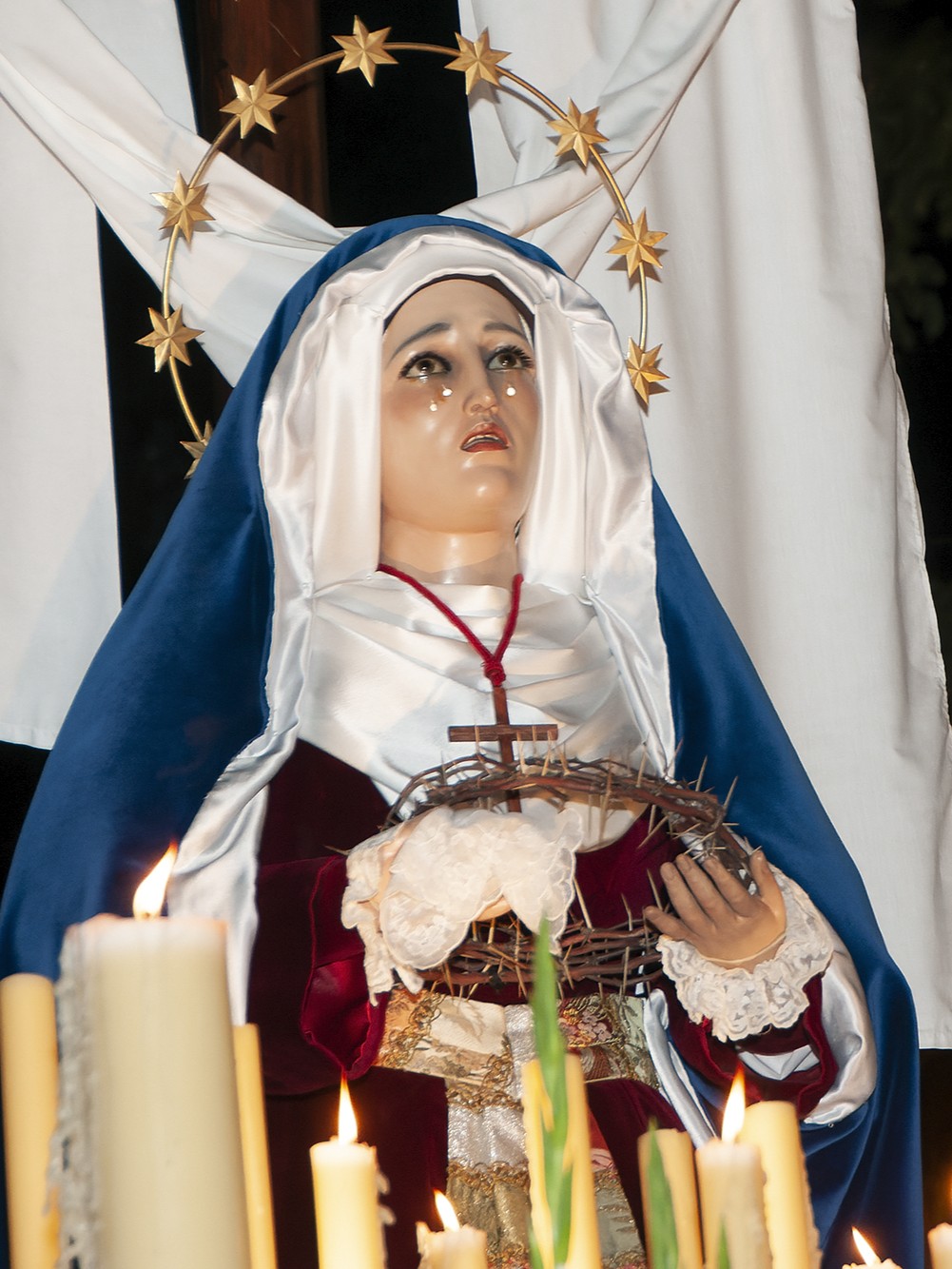
Marian image
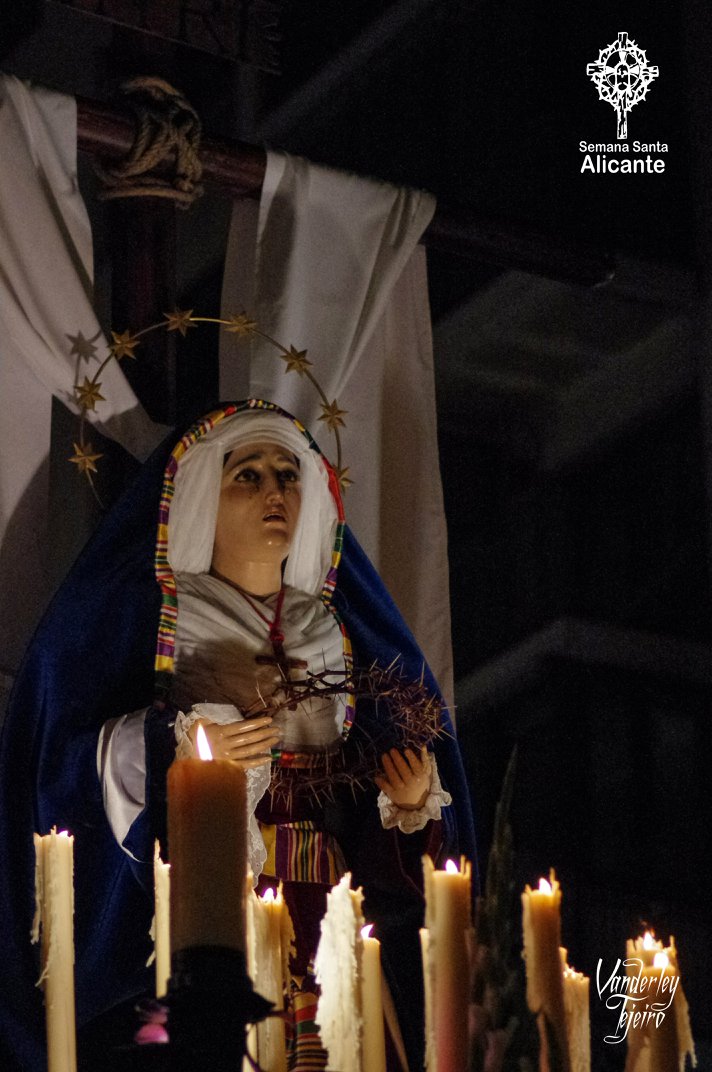
Mary, Mediatrix of All Graces · Anonymous, 1957
IDENTITY AND SYMBOLISM
The coat of arms
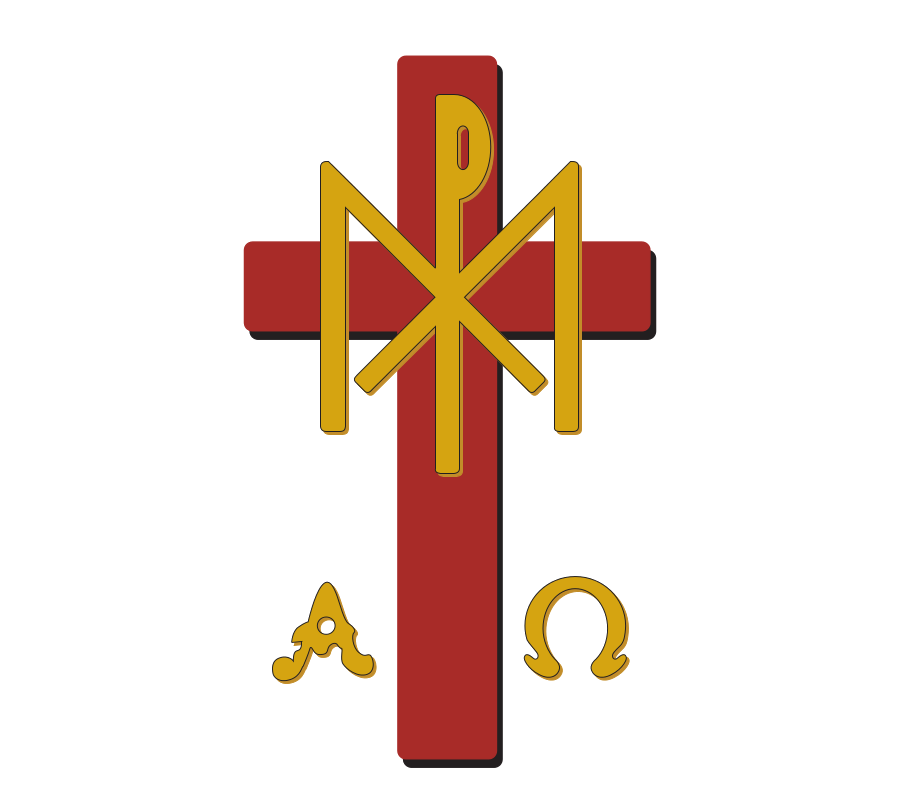
At its centre is the Holy Cross. Above it is a Chi-Rho, a monogram formed by superimposing the first two letters of Christ's name in Greek –Χριστος–, chi (X) and rho (P), symbolising His victory over death and sin. On either side are the Greek letters Alpha and Omega, signifying that Christ is the beginning and the end of all things.
BROTHERHOOD ATTIRE AND IDENTITY
Processional attire
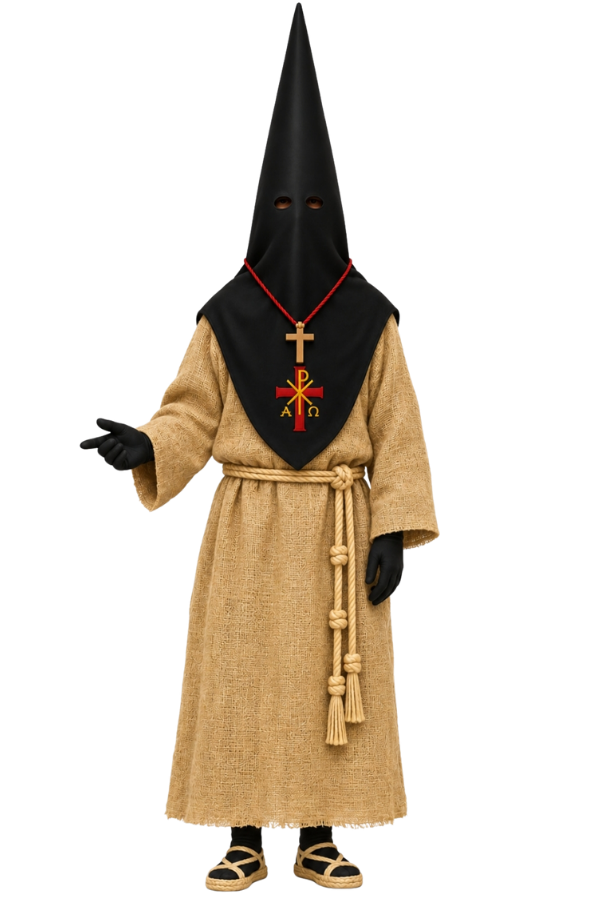
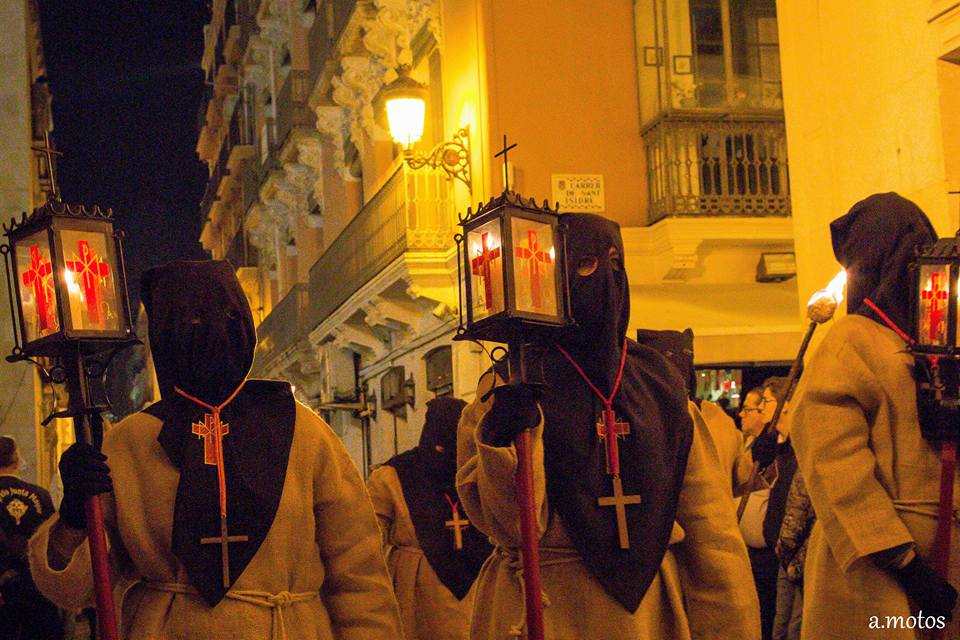
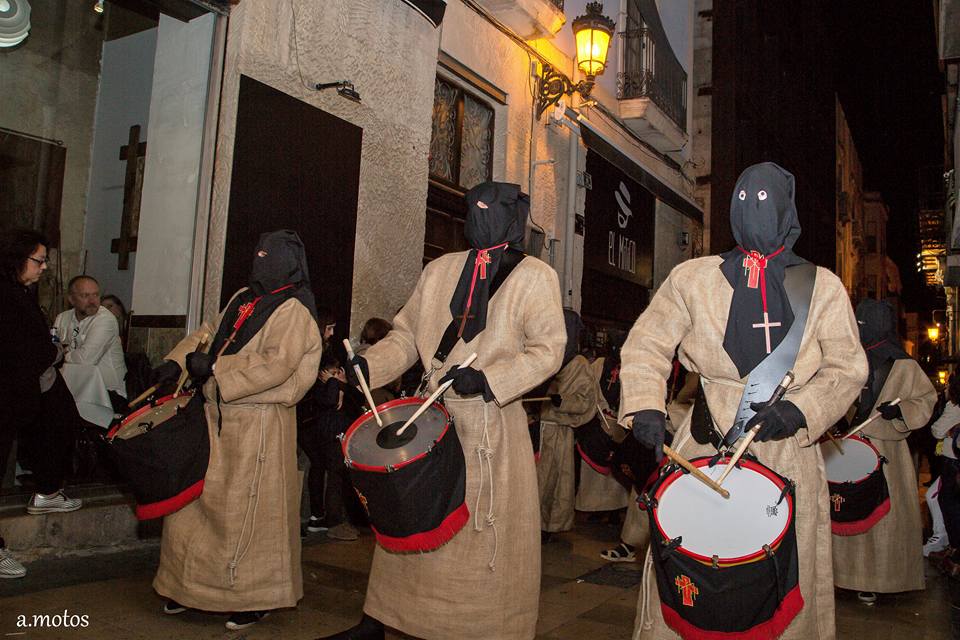
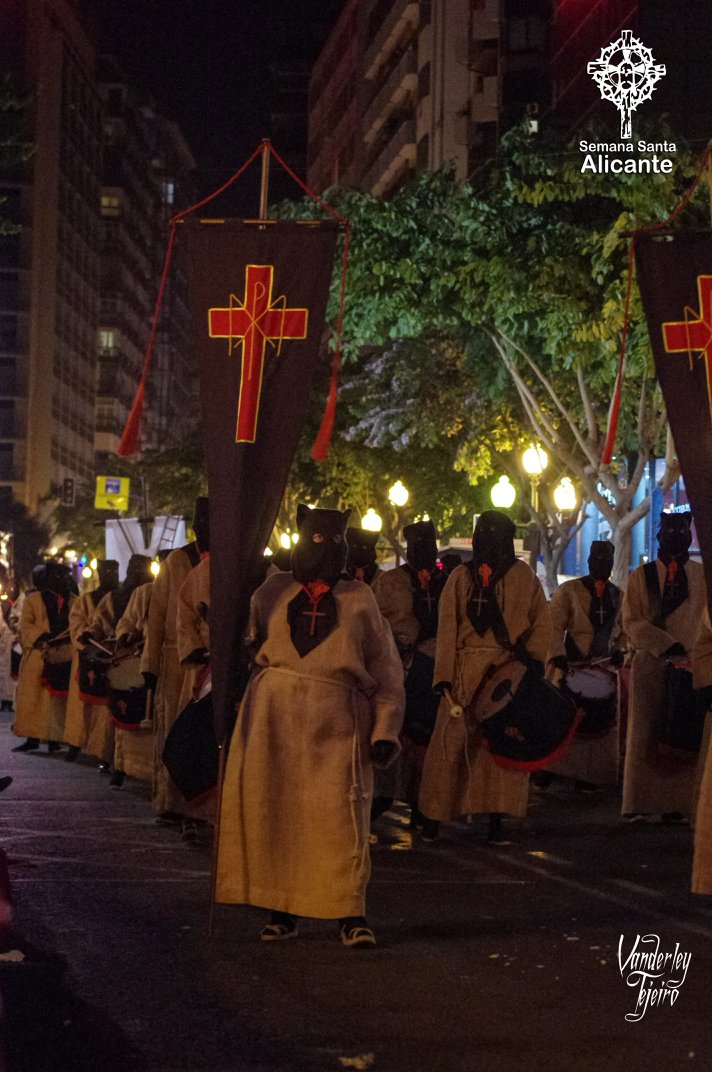
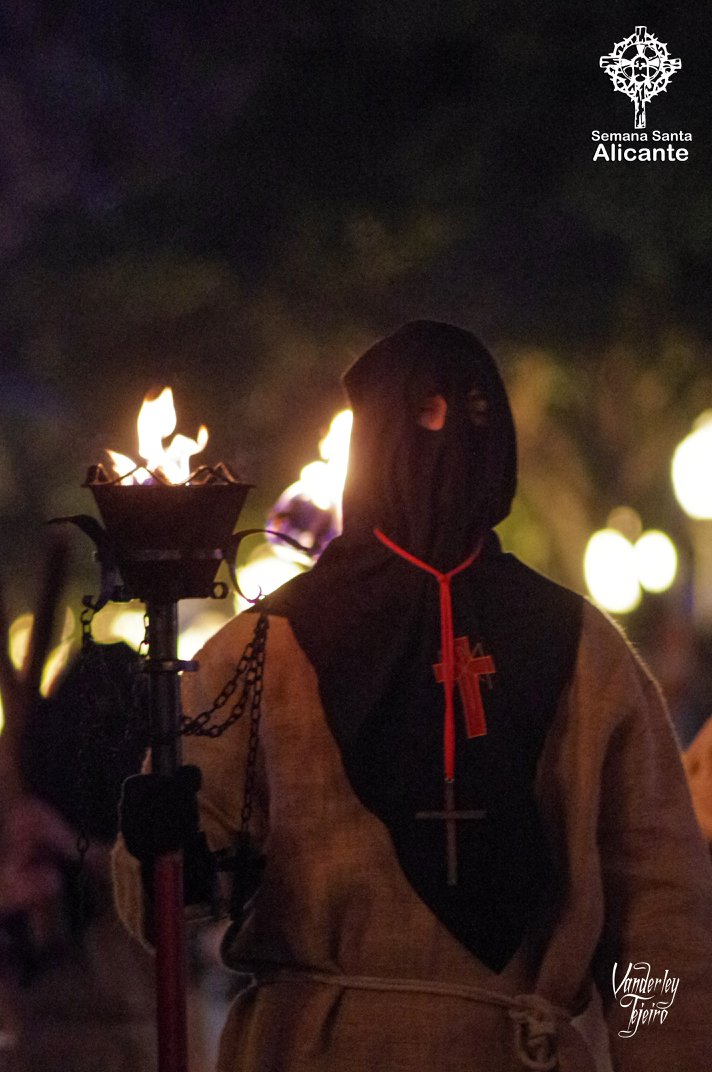
The austere, penitential attire consists of a coarse jute tunic tied at the waist with an esparto grass cord, a black hood covering the head, from which a wooden cross hangs on a red cord, black gloves and crossed jute sandals. Some members perform their penitential procession barefoot.
ORIGINS AND HISTORY
History of the Brotherhood
This Brotherhood was founded in 1956 within the Marian Congregation of Alicante, at the initiative of the much-loved and fondly remembered Father Fontova. In 2000, the city of Alicante honoured him by naming a landscaped square in the San Blas neighbourhood after him.
Its Statutes were approved on 17 April 1956, stating that the Brotherhood was established to commemorate the Sacred Passion of Our Lord Jesus Christ during the solemn celebrations of Holy Week, through exemplary penitential practice and a genuine Christian spirit, always avoiding vain displays of ostentation. For this reason, together with the Brotherhood of the Good Death, it is one of the most austere and contemplative brotherhoods of Alicante Holy Week.
The image of the Virgin was originally dedicated to Our Lady of the Crown of Thorns and took part in the procession of the Brotherhood of the same name (now known as the Brotherhood of the Great Power and Hope) in 1942, thanks to the Salvetti family. In the late 1950s, the sculpture passed to the Brotherhood of Forgiveness, which decided to change its dedication to Mary, Mediatrix of All Graces.
As the Brotherhood had no premises or church of its own, between 1976 and 1983 it took part in a single procession setting out from the Parish of Mary Help of Christians, alongside the Brotherhood of the Great Power and the Holy Supper of Alicante. From 1983 onwards, it established its canonical seat at the Co-Cathedral of Saint Nicholas of Bari and resumed its independent procession.
During the procession, the brothers and sisters walking in the ranks carry heavy wooden crosses and torches. They pray the Holy Rosary throughout the route, giving the procession a distinctive atmosphere of silence and contemplation. The accompanying drum band also performs a unique and characteristic rhythm belonging to the Brotherhood itself, enhancing the solemnity of the occasion.
Since 1956, the former Armed Police Corps, now the National Police Corps, has accompanied and escorted the floats as the Brotherhood's Honorary Elder Brother. A large contingent of police officers and students from the National Police Academy in Ávila takes part in the procession. The Brotherhood is also closely linked to CEU Jesús María School in Alicante, whose members include many of the bearers who carry the Virgin's float. Since 1987, the Brotherhood, together with the Parish of Saint Nicholas, has organised five Stations of the Cross on the five central Wednesdays of Lent. The stations follow a route through the Santa Cruz neighbourhood and conclude at its Hermitage. These events receive support and participation not only from Brotherhood members, but also from local residents and parishioners of Saint Nicholas.
Particularly noteworthy is the raising and lowering of the sculptures of Christ and the thieves, which are displayed above the altar in the upper section of the Co-Cathedral. This takes place on Wednesday morning and again on Thursday after the penitential procession has ended. The operation is particularly challenging due to the height and limited space, and is carried out using cranes, ropes and the skill and expertise of the Brotherhood members responsible.
IN PICTURES
Photo gallery
The procession, its sacred images and the traditions of Holy Thursday.