 GP
PALM SUNDAY · ALICANTE
Royal, Most Illustrious, Holy and Sacramental Brotherhood of Mercy, Our Father Jesus of Great Power and Our Lady of Hope Crowned
RELIGIOUS SCULPTURE
Principal sacred images
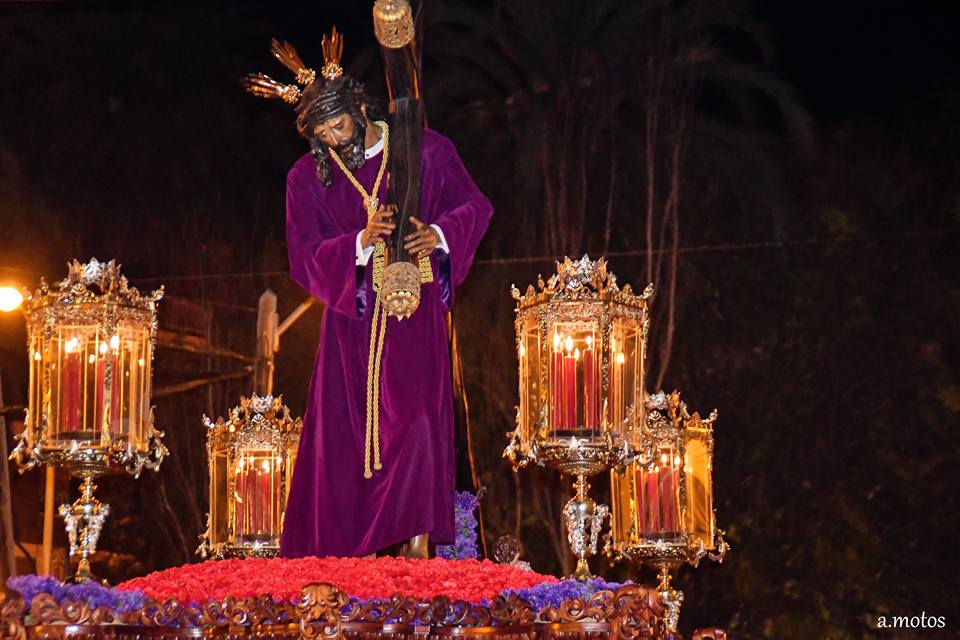
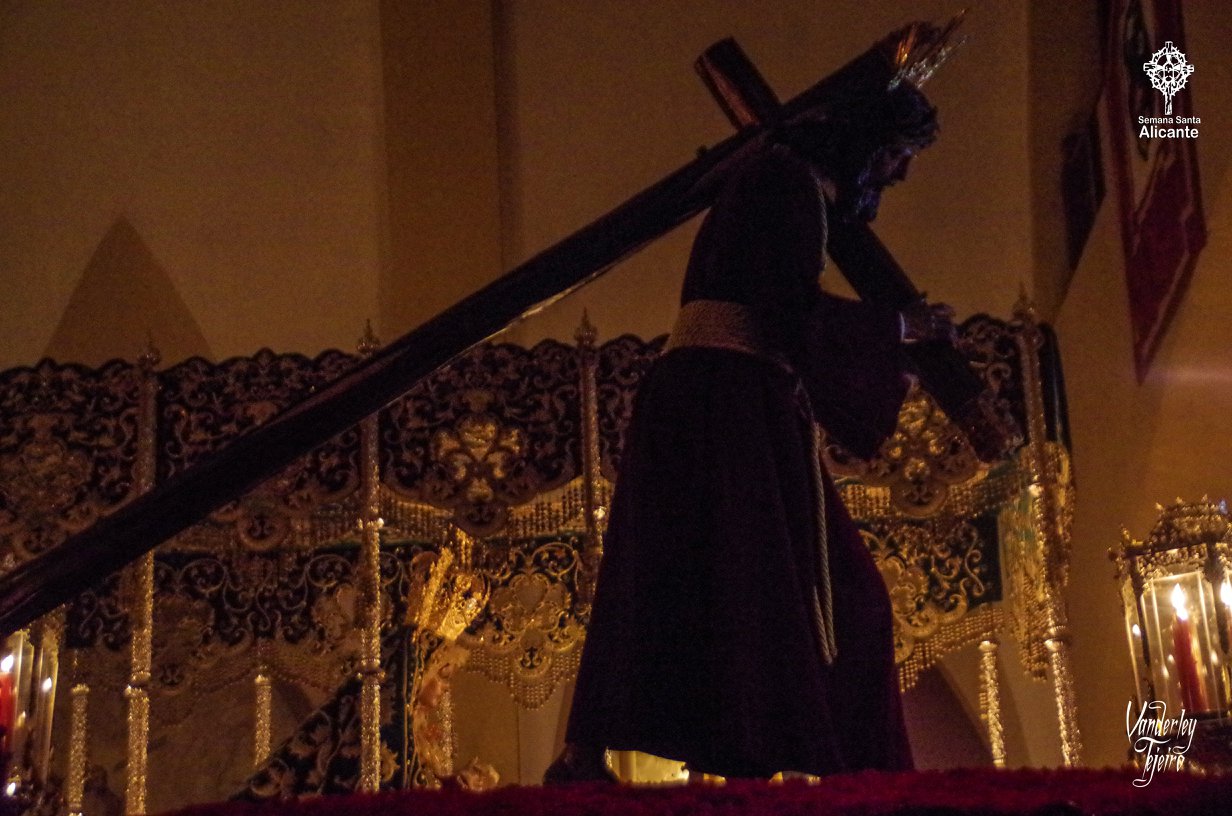
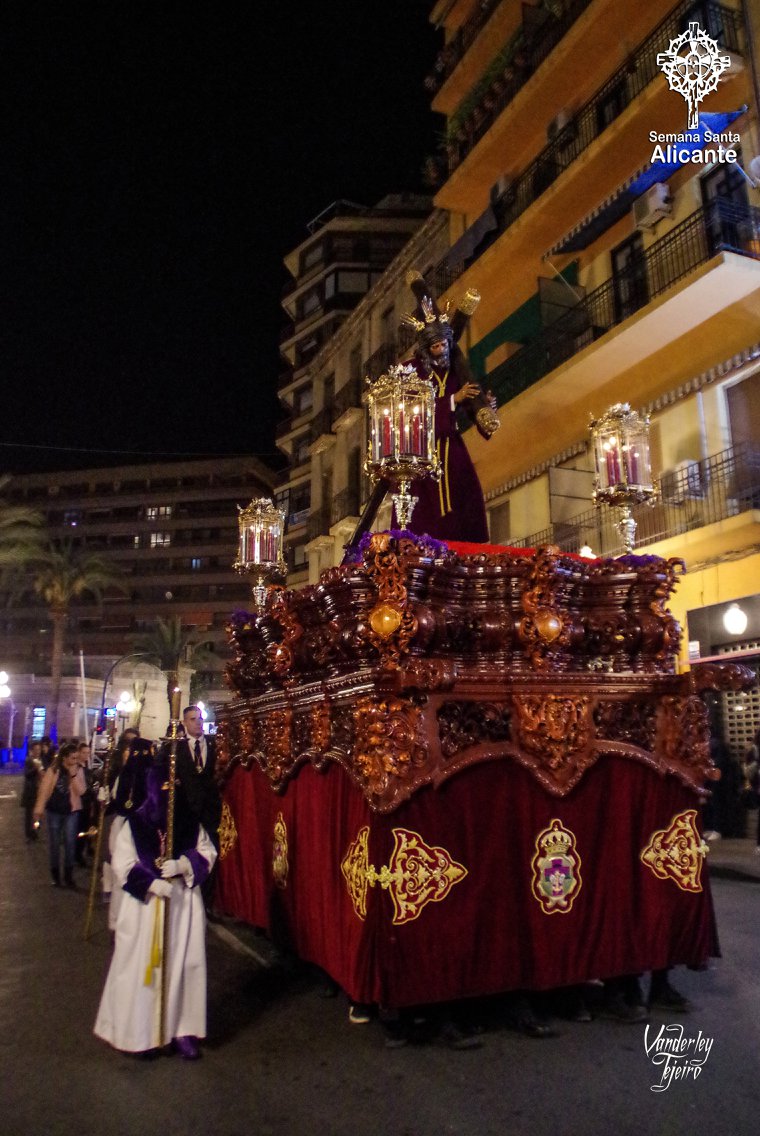
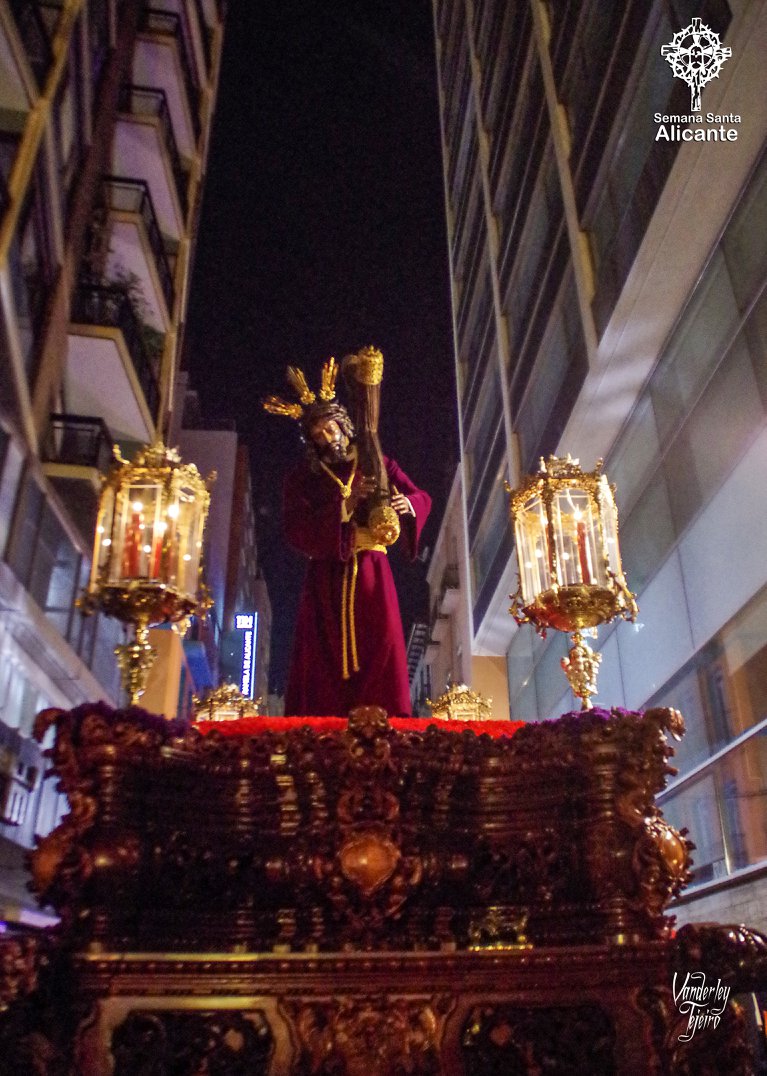
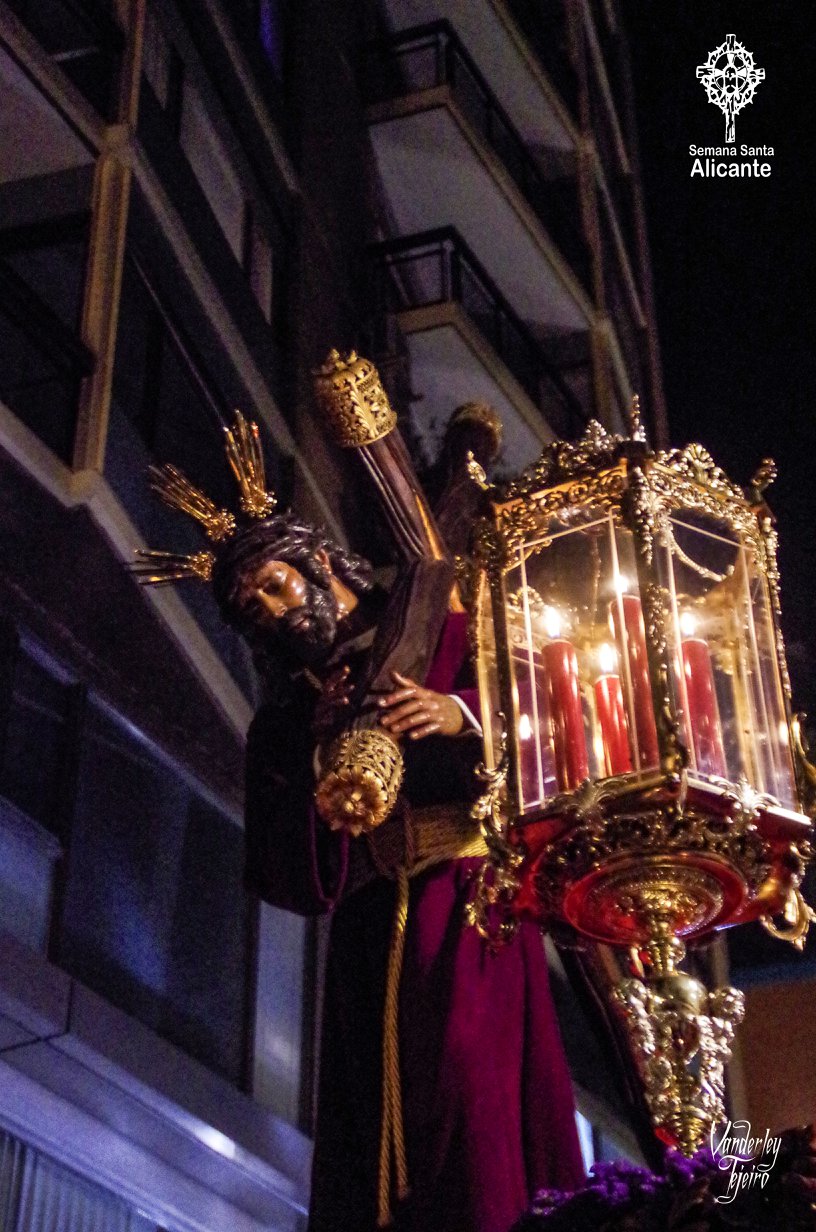
Our Father Jesus of Great Power
Antonio Castillo Lastrucci 1942
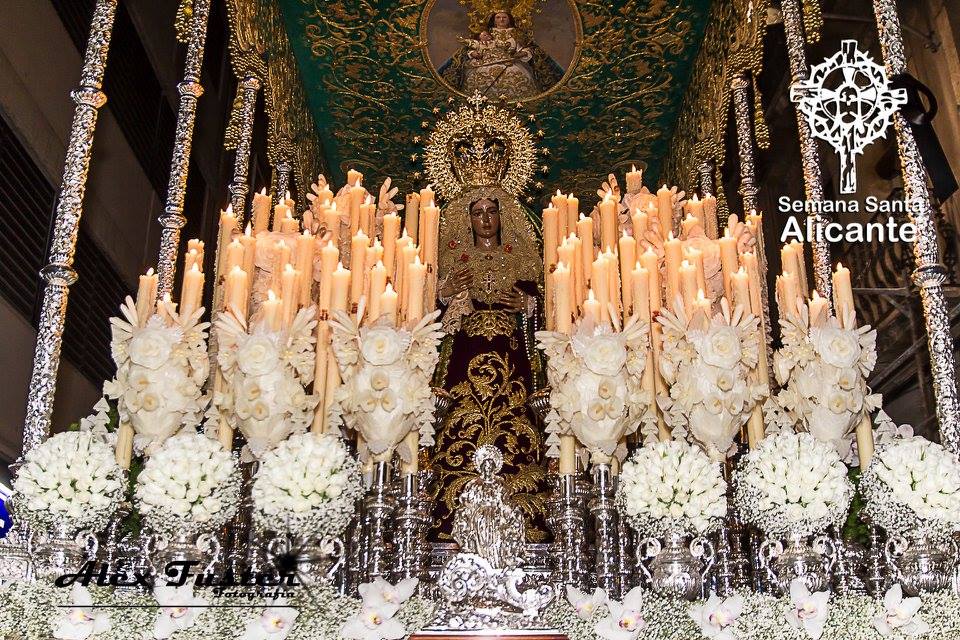
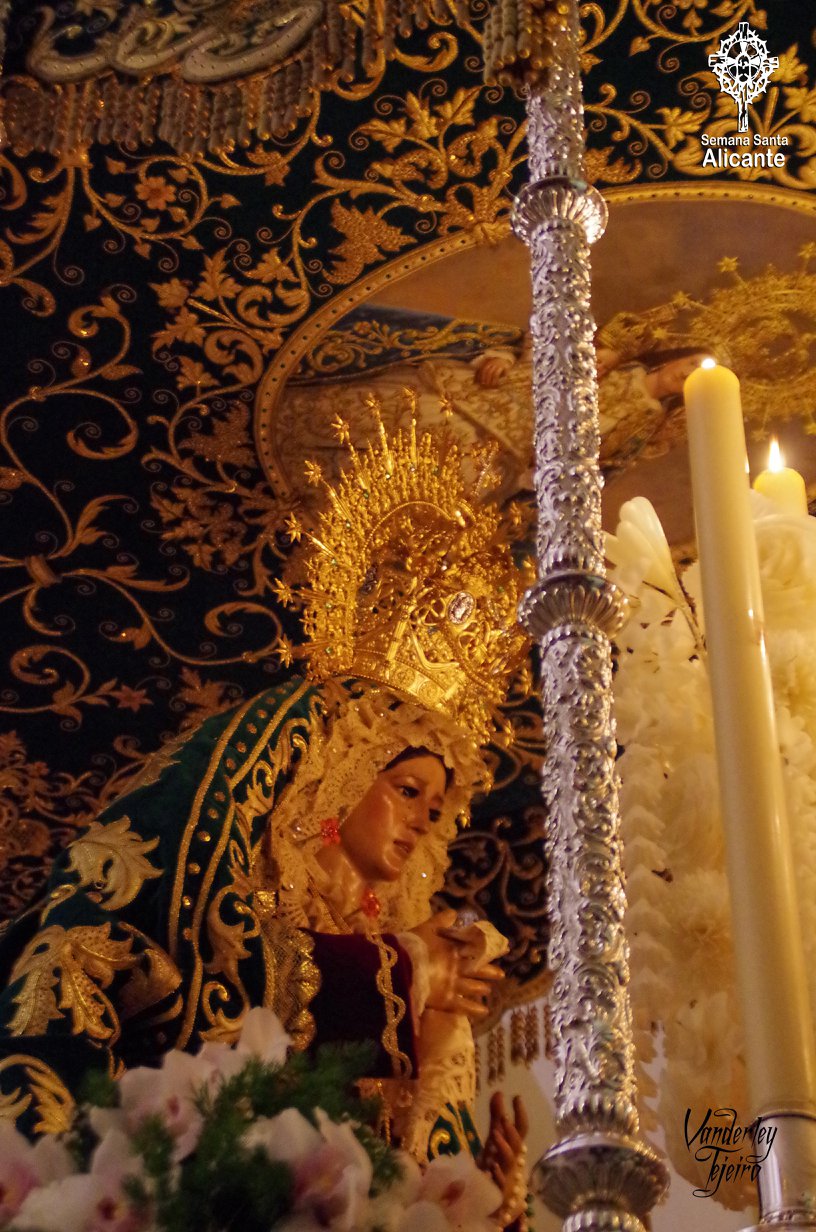
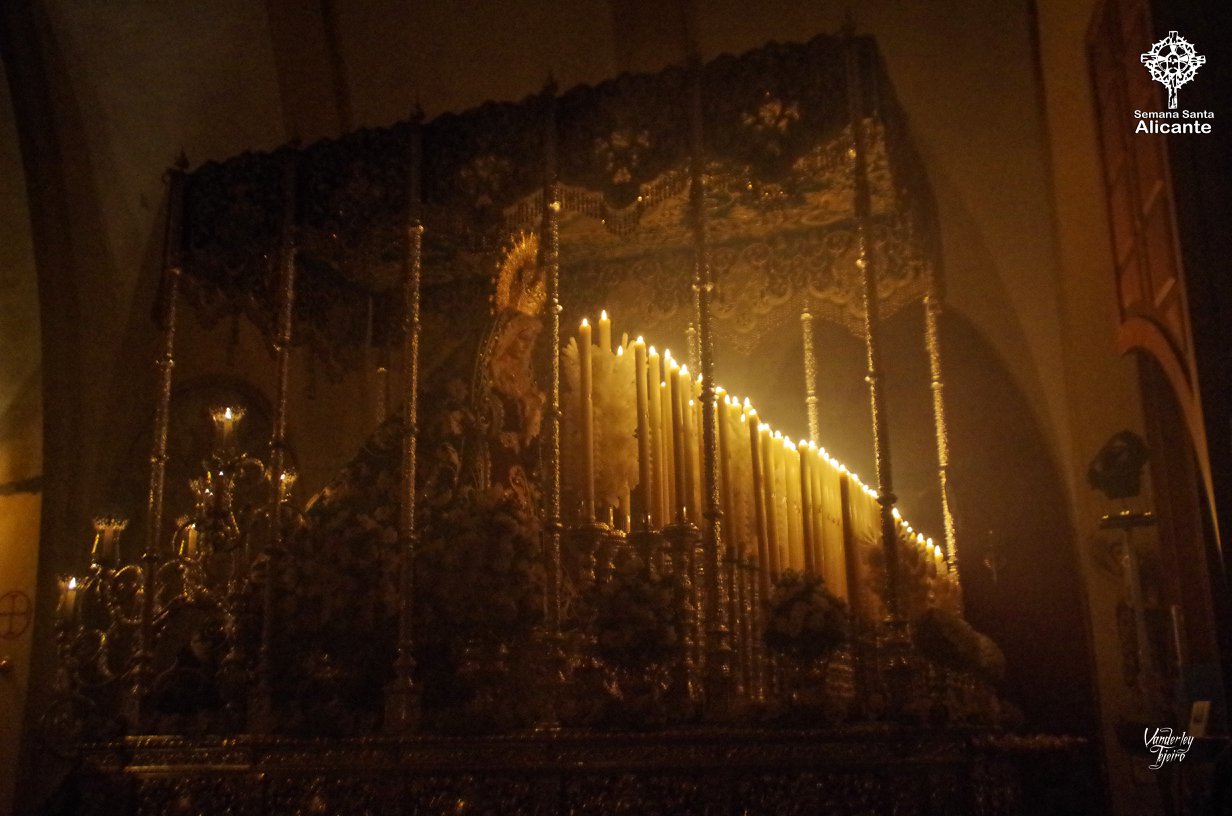
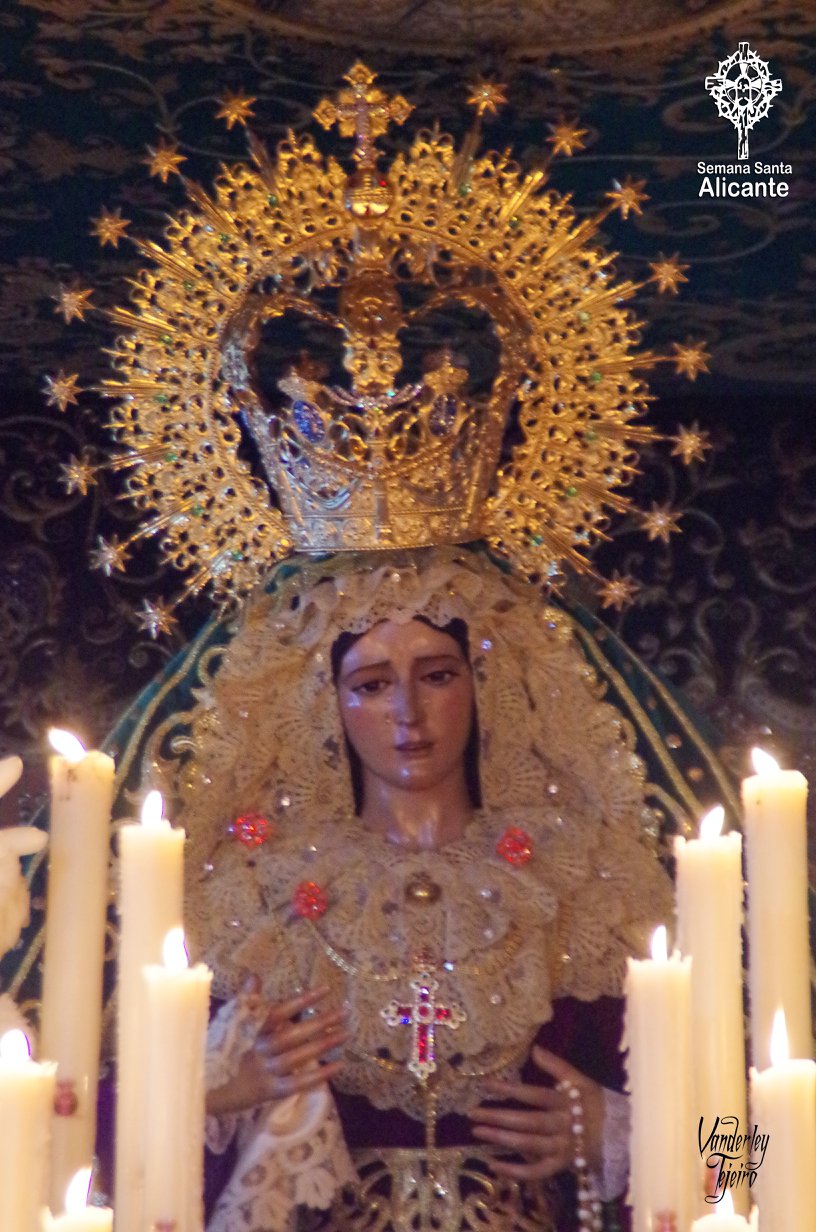
Our Lady of Hope Crowned
Antonio Castillo Lastrucci 1942
IDENTITY AND SYMBOLISM
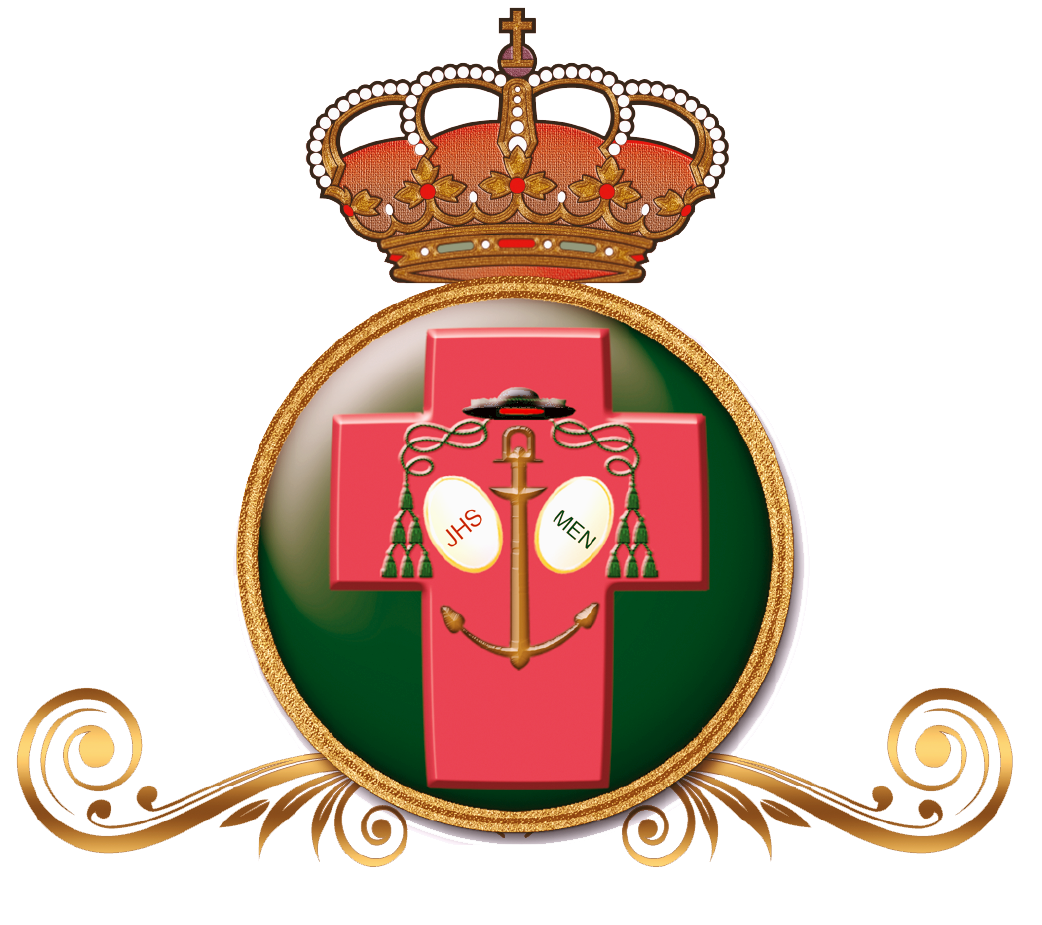
The coat of arms
It consists of a golden anchor with a rope of the same colour wrapped around its shaft, accompanied by two oval shields arranged side by side. The one on the right, set against a white background, bears the initials JHS (Jesus Hominum Salvator); the one on the left, also set against a white background, bears the initials MEN (Mother, Our Hope). Both are rendered in gold and topped by a cardinal's coat of arms, consisting of a hat with two side cords and fifteen tassels of the same colour on each side. The entire design is incorporated within a purple-fuchsia cross, outlined by a green background and a golden border. At the top of the coat of arms is the Royal Crown, with two golden decorative bands along its lower edge.
PROCESSIONAL ATTIRE AND BROTHERHOOD IDENTITY
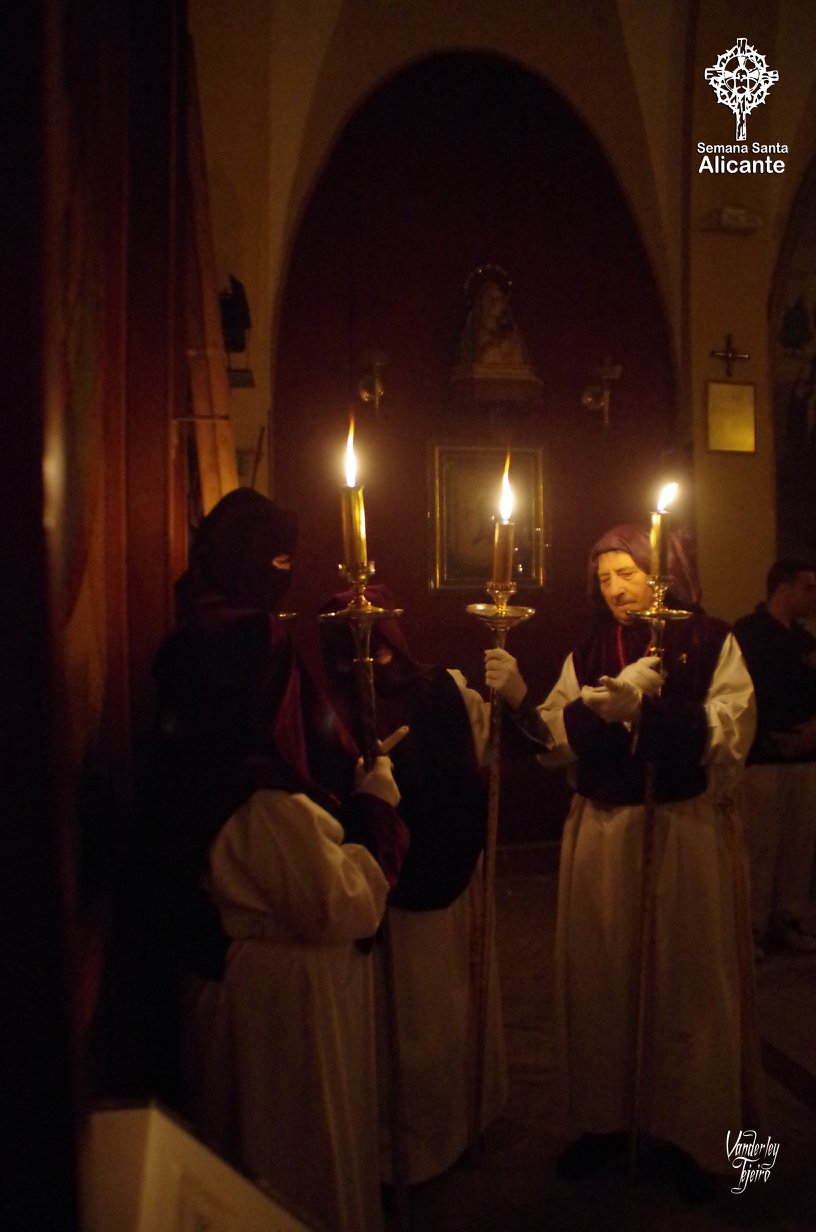
Processional attire

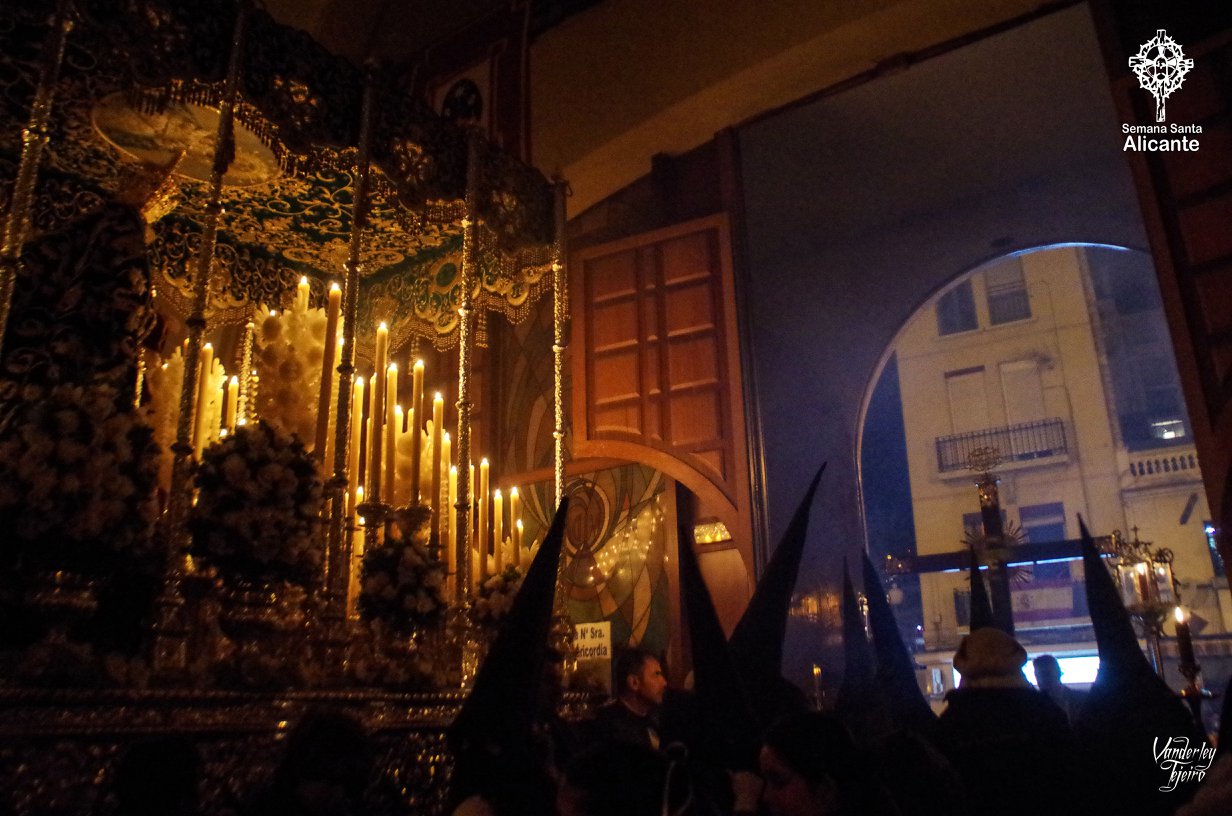
The traditional attire worn by this Brotherhood consists of an off-white or cream-coloured tunic with black satin buttons, together with a black satin hood and cape. The Brotherhood's coat of arms is displayed on the left shoulder of the cape. A golden cord is worn around the waist, finished with two tassels of the same colour. White socks and gloves are worn with black footwear. The Brotherhood's medal completes the attire.
ORIGINS AND HISTORY
History of the Brotherhood
The origins of the Brotherhood date back to 1840, when the Most Illustrious Lord Víctor Cristóbal Salvetti, the Florentine consul in our city between 1838 and 1840, brought an image of Our Lady of Sorrows from his native Florence. The Virgin was depicted holding a crown of thorns in her hands. The image, by an unknown artist and belonging to one of the finest Florentine schools, can be dated to the final decades of the 18th century.
The image was venerated in the chapel owned by the Salvetti family in the now demolished Convent of Saint Francis. The faith and popular devotion inspired by the image led Mr Arturo Salvetti, son of Víctor Cristóbal, together with a large number of local residents and parishioners, to consider founding a Brotherhood whose principal sacred image would be this Our Lady of Sorrows holding the crown of thorns.
Finally, in 1860, the Brotherhood was founded, with Víctor Cristóbal Salvetti appointed as its first president.
The Governing Board would usually meet in the chapter house of the convent, where the Guardian of the religious community, who was responsible for safeguarding the image and the Brotherhood's possessions, would offer guidance, advice and instructions for the members to put into practice. The members paid a monthly contribution of two reales de vellón to support the organisation financially.
In 1878, the first rules were drawn up and approved by Bishop Pedro María de Cubero y López de Padilla, who granted the Brotherhood its first indulgences. It was then known as the “Association of the Solitude Experienced by the Blessed Virgin Mary at the Foot of the Cross”. From 1878 to 1927, all indications suggest that the Brotherhood did not take part in Alicante's Holy Week processions, although the organisation continued to exist, until it was reorganised in 1927. However, on 11 May 1931, the convent where the Brotherhood's possessions and processional float were kept was set on fire amid an anti-clerical atmosphere that had spread throughout Spain. The much-venerated Virgin of the Crown of Thorns was lost forever.
After the Spanish Civil War, the Brotherhood was reorganised once again. In 1942, a new Virgin of the Crown of Thorns processed beneath a canopy, having been lent by the Salvetti family. This sculpture was replaced in 1943 by another work by the sculptor Antonio Castillo Lastrucci, under a new dedication: Our Lady of Hope. In the same year, Antonio Castillo Lastrucci also carved the image of Christ of Great Power.
On 15 October 2011, Our Lady of Hope was canonically crowned by the Bishop of the Diocese of Orihuela-Alicante, Rafael Palmero Ramos. Her Majesty Queen Sofía acted as godmother of the coronation.
In 2017, the Household of His Majesty the King granted the organisation the title “Royal”.
Musical contributions to Holy Week
- Pasión y Gloria · Antonio Carrillos Colomina. Dedicated to Our Father Jesus of Great Power of Alicante. Premiered on 16 March 1991
- Esperanza de la Misericordia · Antonio Carrillos Colomina. Dedicated to Our Lady of Hope of Alicante. Premiered on 16 March 1991
- Nuestra Señora de la Esperanza · Francisco Grau Vegara. For the Simón family. Dedicated to the Brotherhood of Great Power and Our Lady of Hope. A gift from the composer to the family of cardiologist Antonio Simón Martínez. Premiered on 12 March 2005
- Hymn for the Coronation of Our Lady of Hope · José Garberí Serrano. A hymn written for keyboard and solo voice, premiered on 16 October 2011
- Esperanza de Alicante Coronada · Vicente Cerdà i Peris. Dedicated to the Queen of Alicante on the occasion of her Canonical Coronation. @Copyright 2012
- La Chicotá · Elías Ibañez Lax. Composed in 2007
Website:
Royal, Most Illustrious, Holy and Sacramental Brotherhood of Mercy, Our Father Jesus of Great Power and Our Lady of Hope CrownedIN PICTURES
Photo gallery
The procession, its sacred images and the traditions of Palm Sunday.