 SFL
PALM SUNDAY · ALICANTE
Penitential Brotherhood of Jesus Bound to the Column in His Holy Flagellation
RELIGIOUS SCULPTURE
Principal sacred images
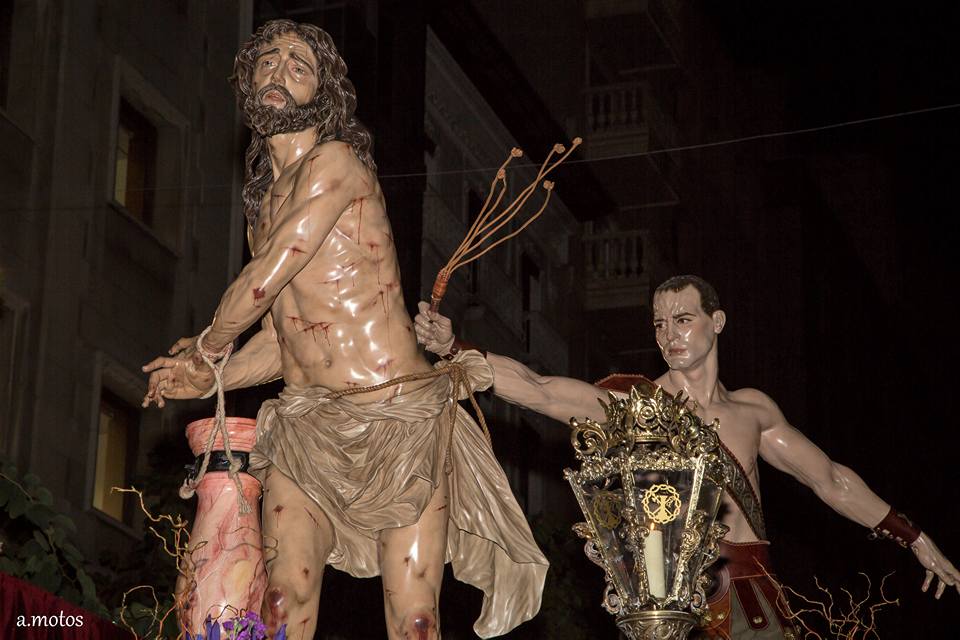
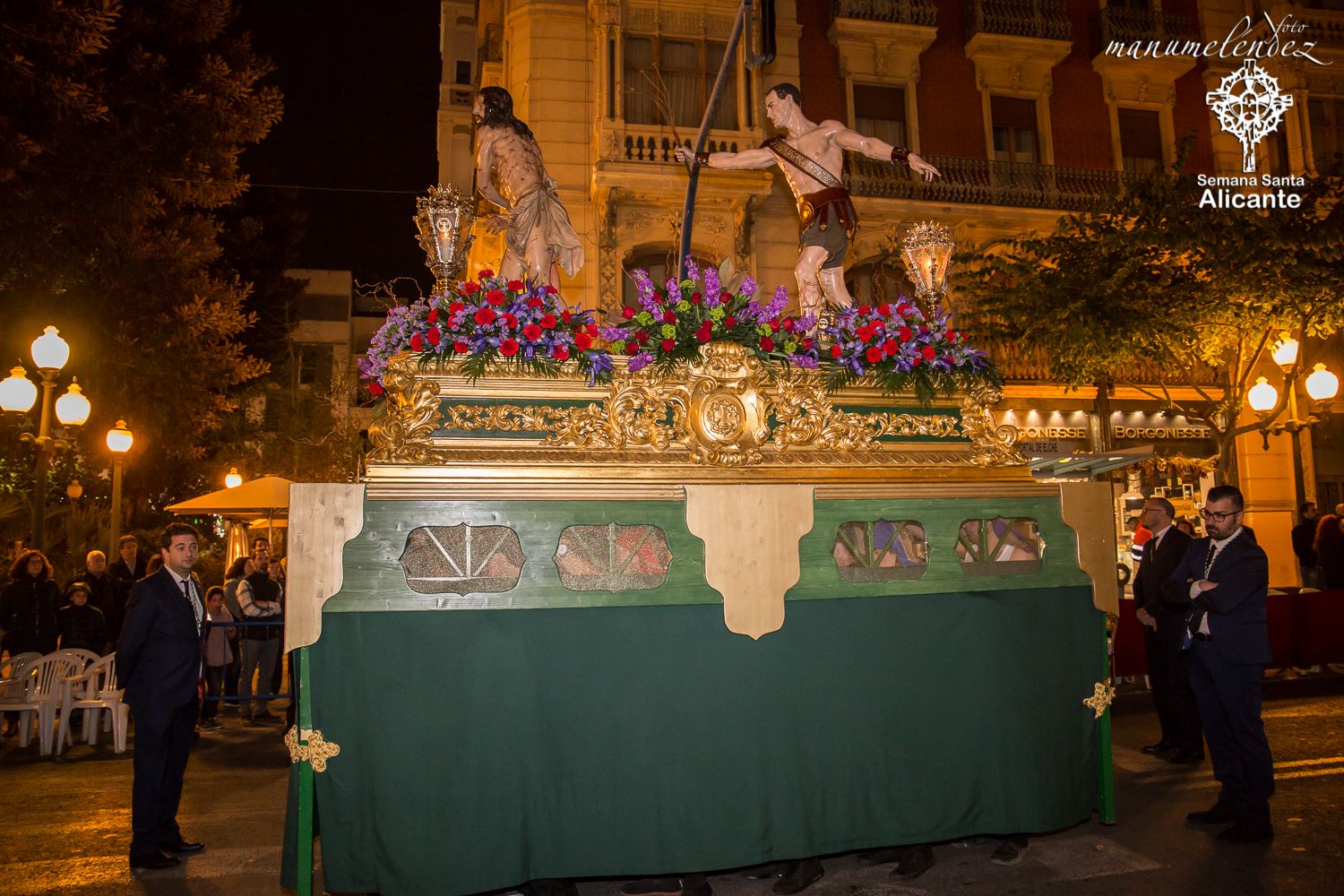
Sculptural group
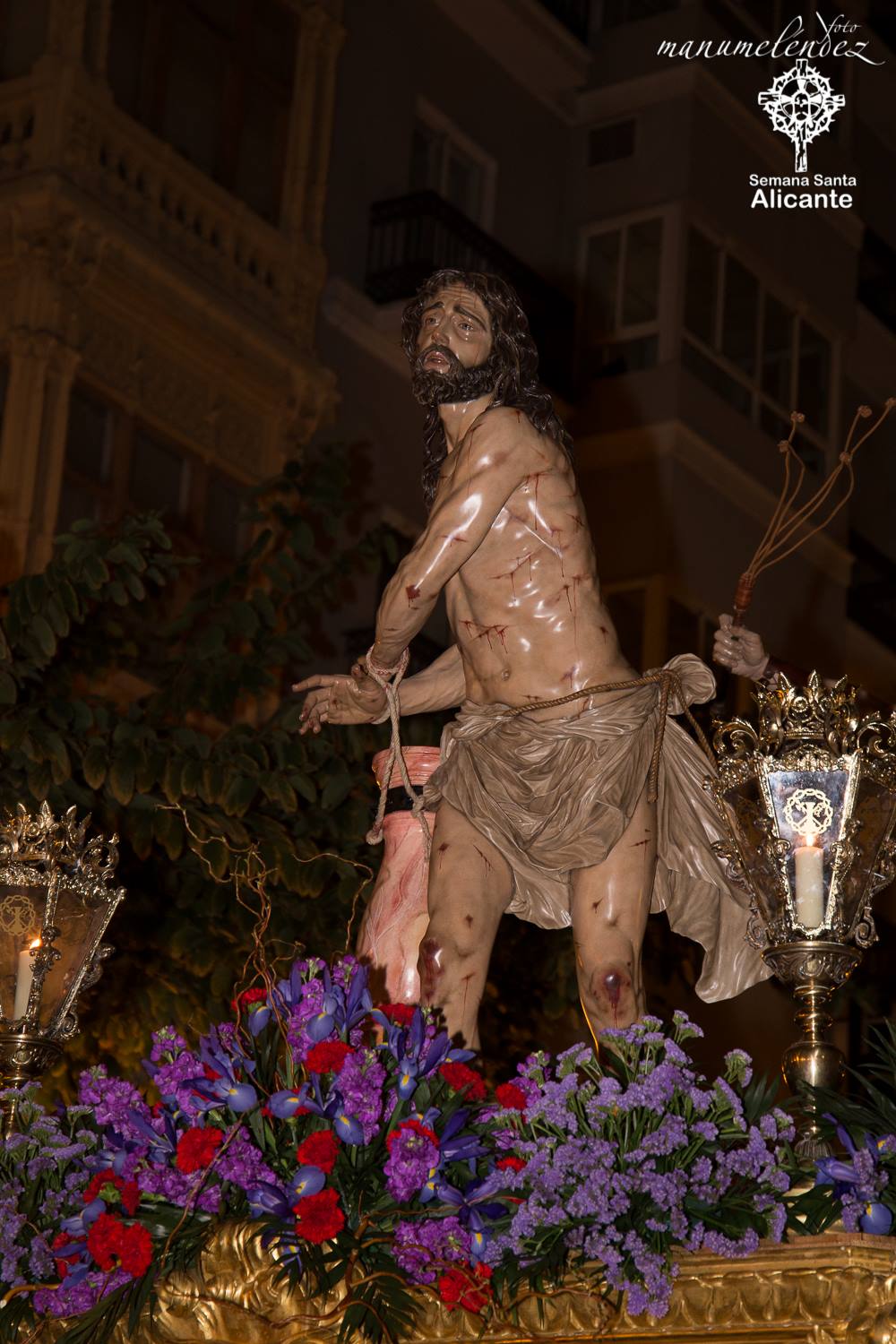
Most Holy Christ of Faith in His Holy Flagellation · Manuel Martín Nieto, 2013
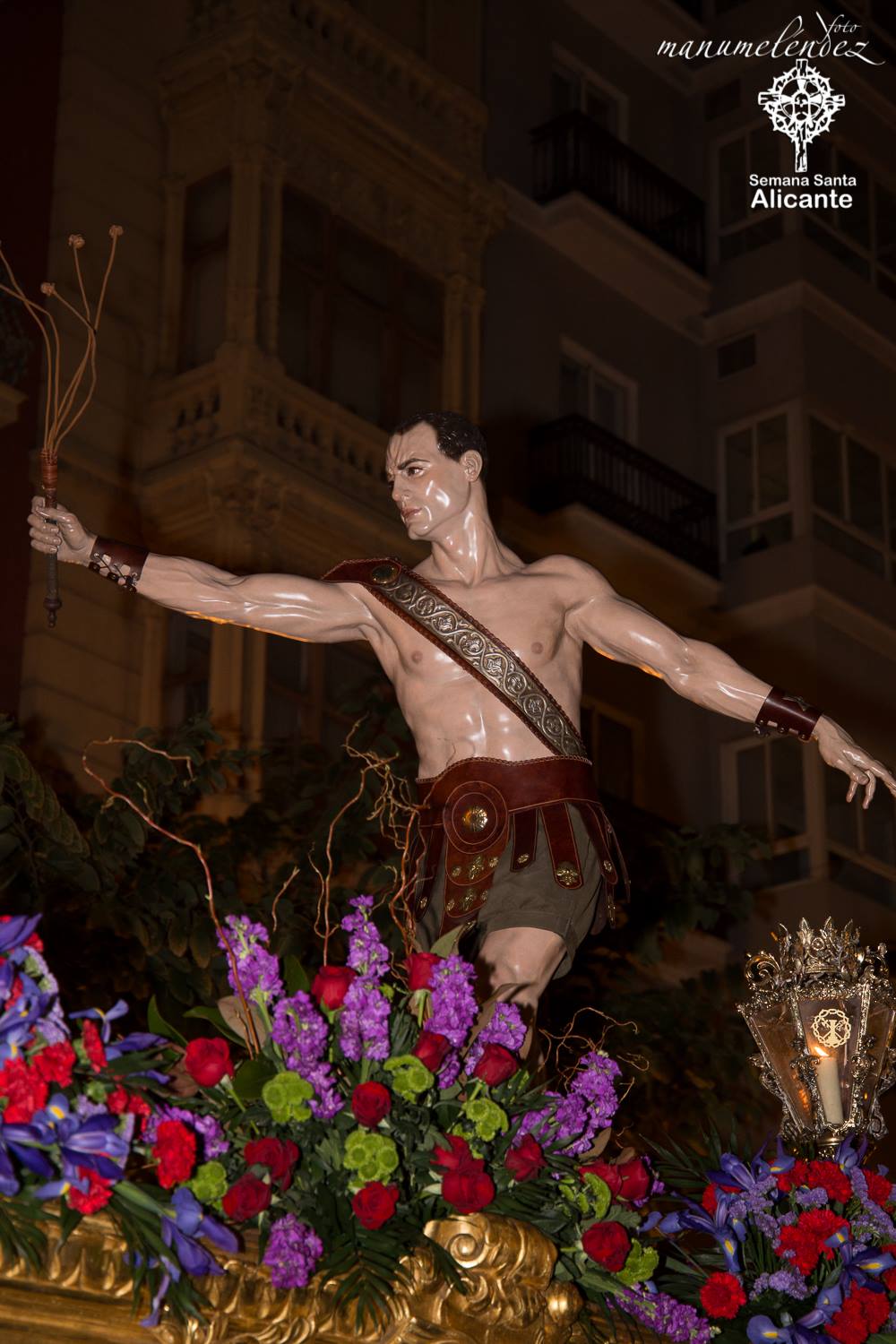
Executioner · Manuel Martín Nieto, 2015
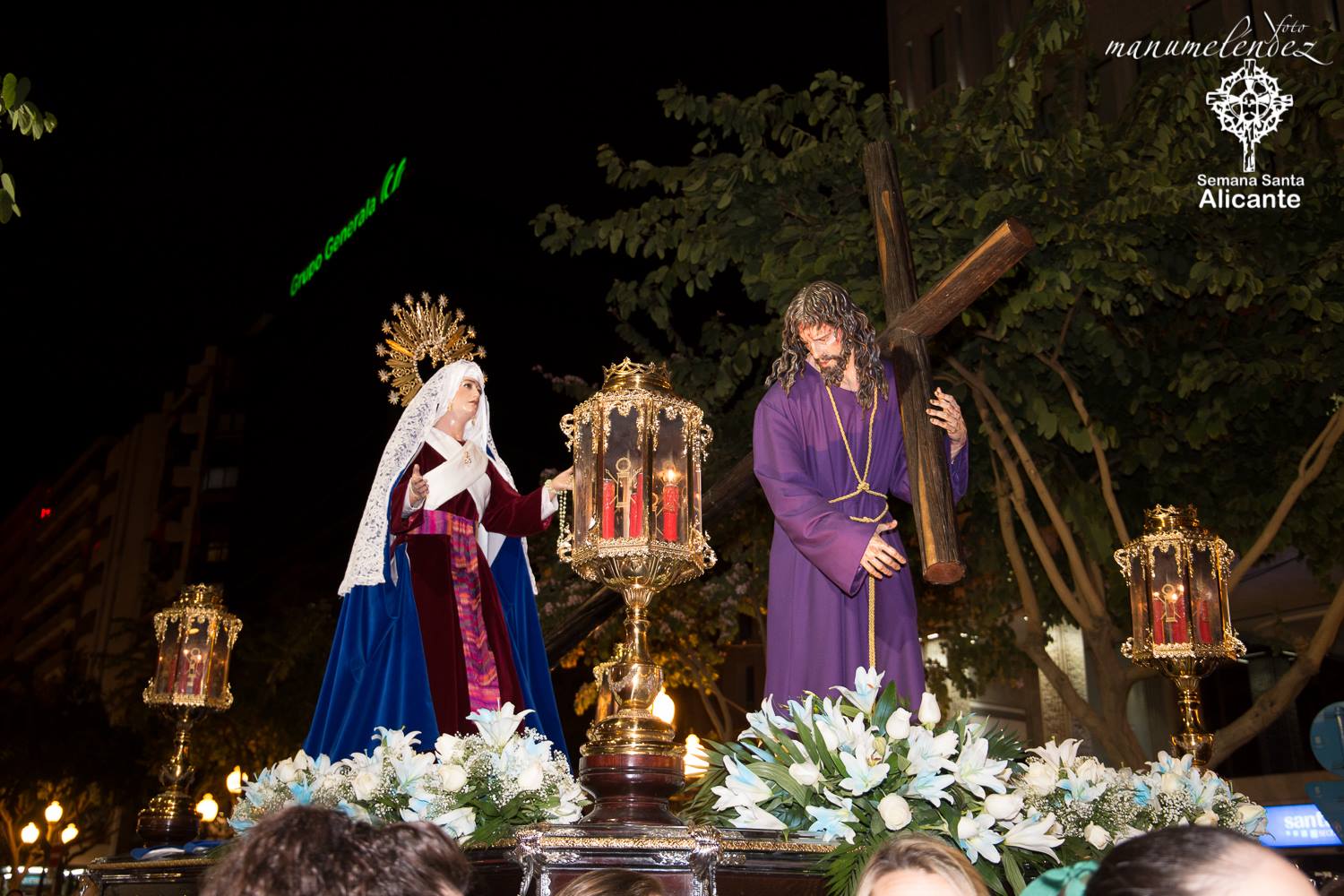
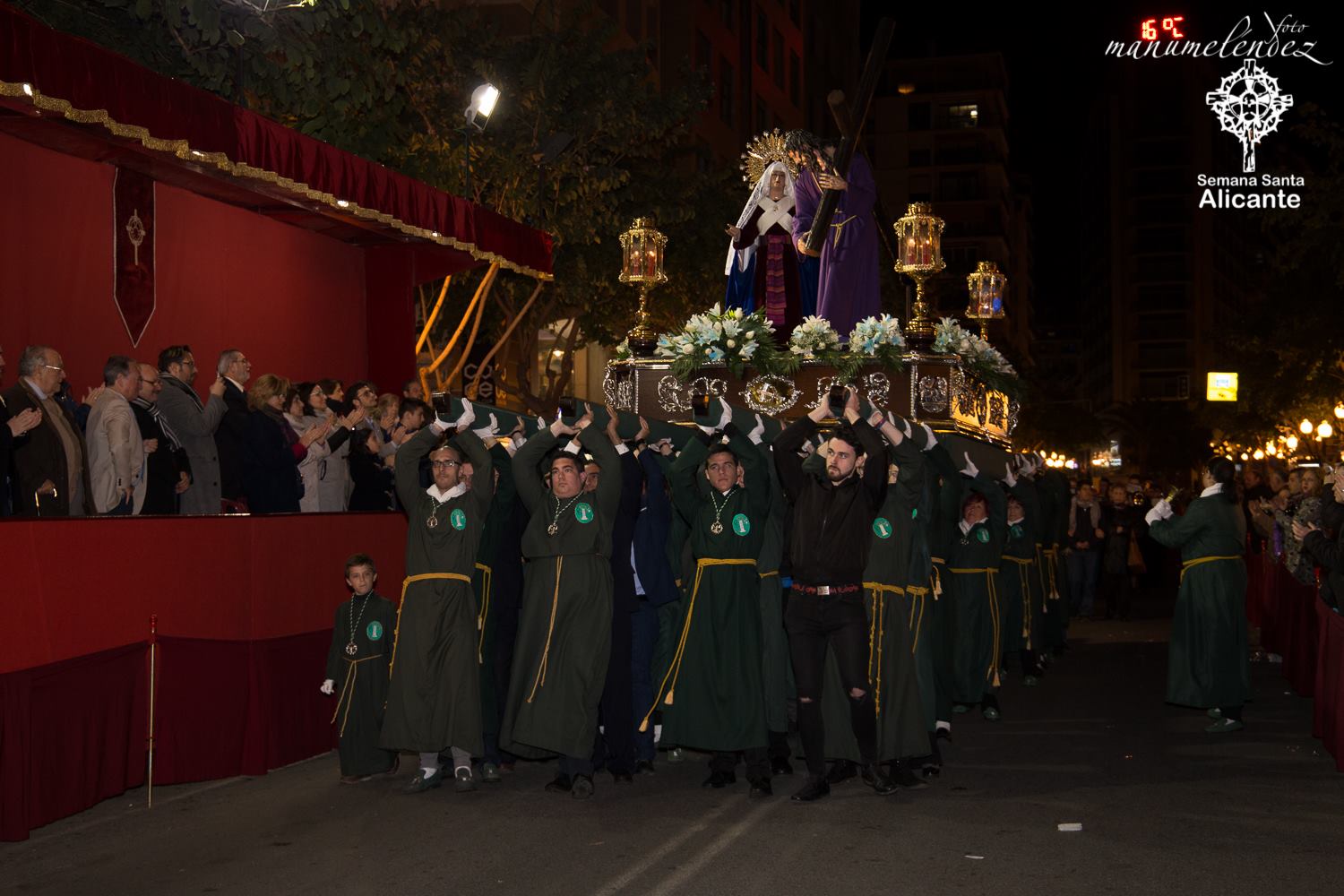
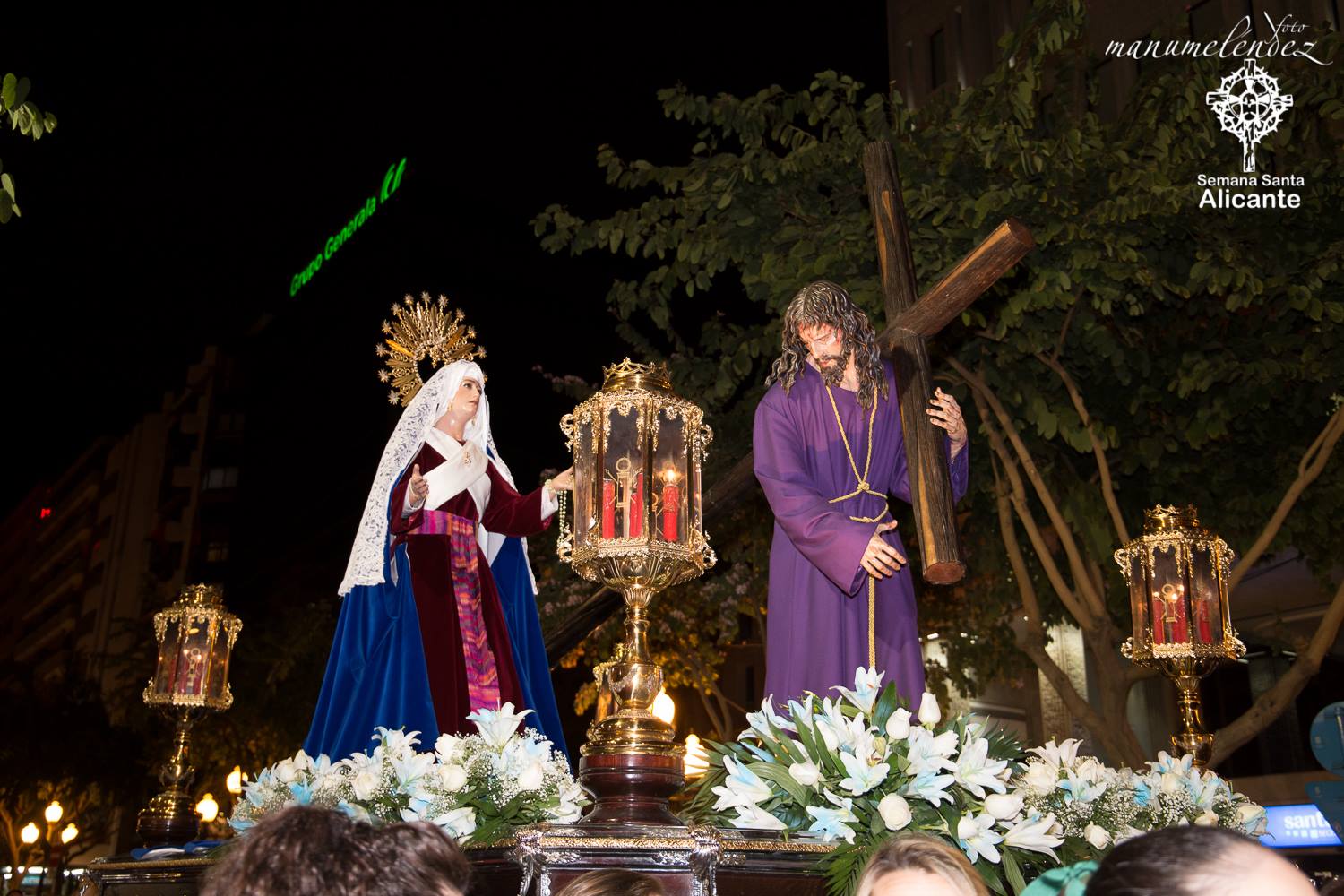
Sculptural group
Most Holy Christ of Health meeting His Mother · Manuel Martín Nieto, 2015
Our Lady of the Rosary · Antonio García Mengual, 1998
IDENTITY AND SYMBOLISM
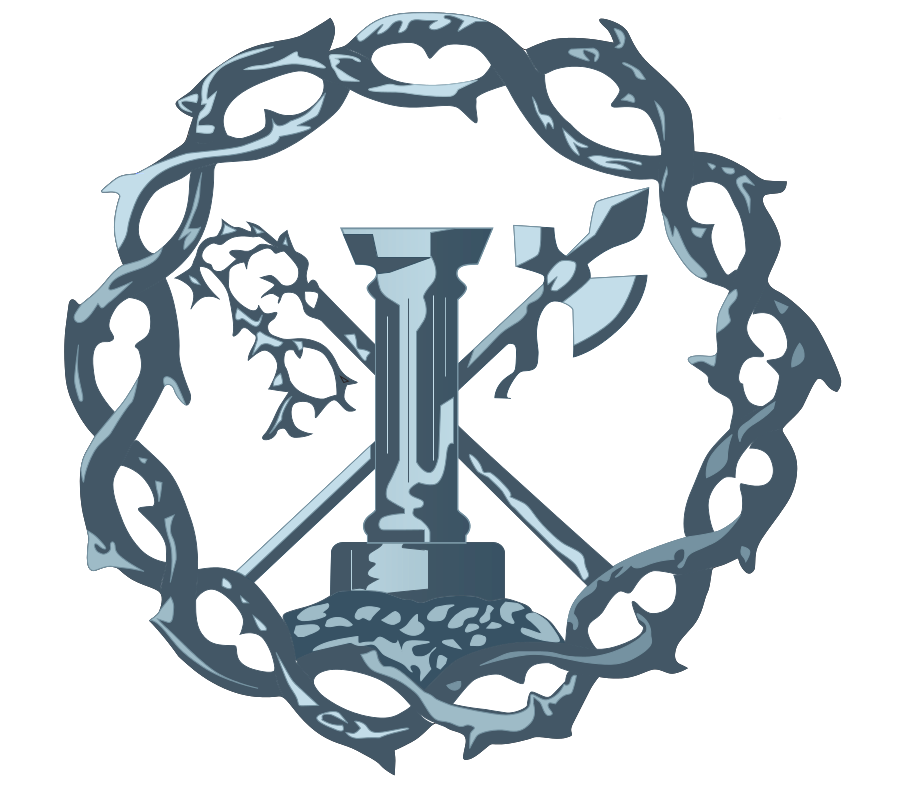
The coat of arms
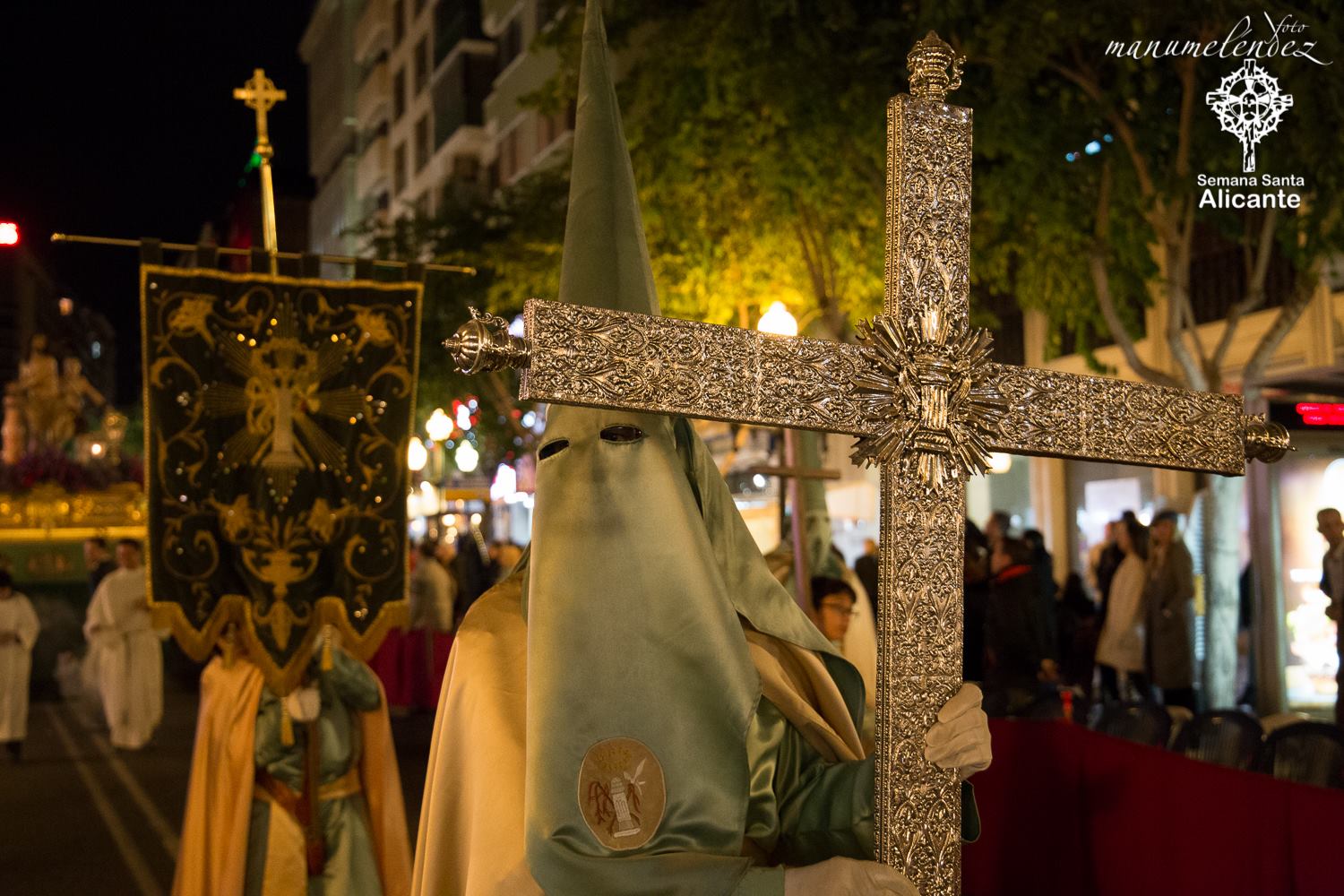
At the centre of the emblem is the Sacred Column to which Jesus was bound before being scourged. Arranged diagonally are the instruments used during the Holy Flagellation, together with the Roman soldier's lance. All these elements are framed by the Crown of Thorns, a symbol of Christ's Passion which also gives its name to the Brotherhood's principal Marian image.
PROCESSIONAL ATTIRE AND BROTHERHOOD IDENTITY
Processional attire
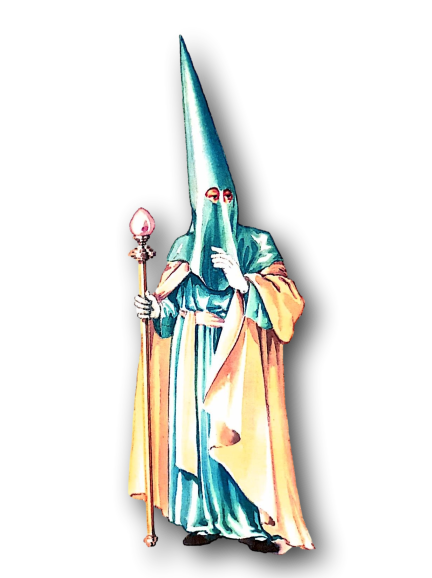
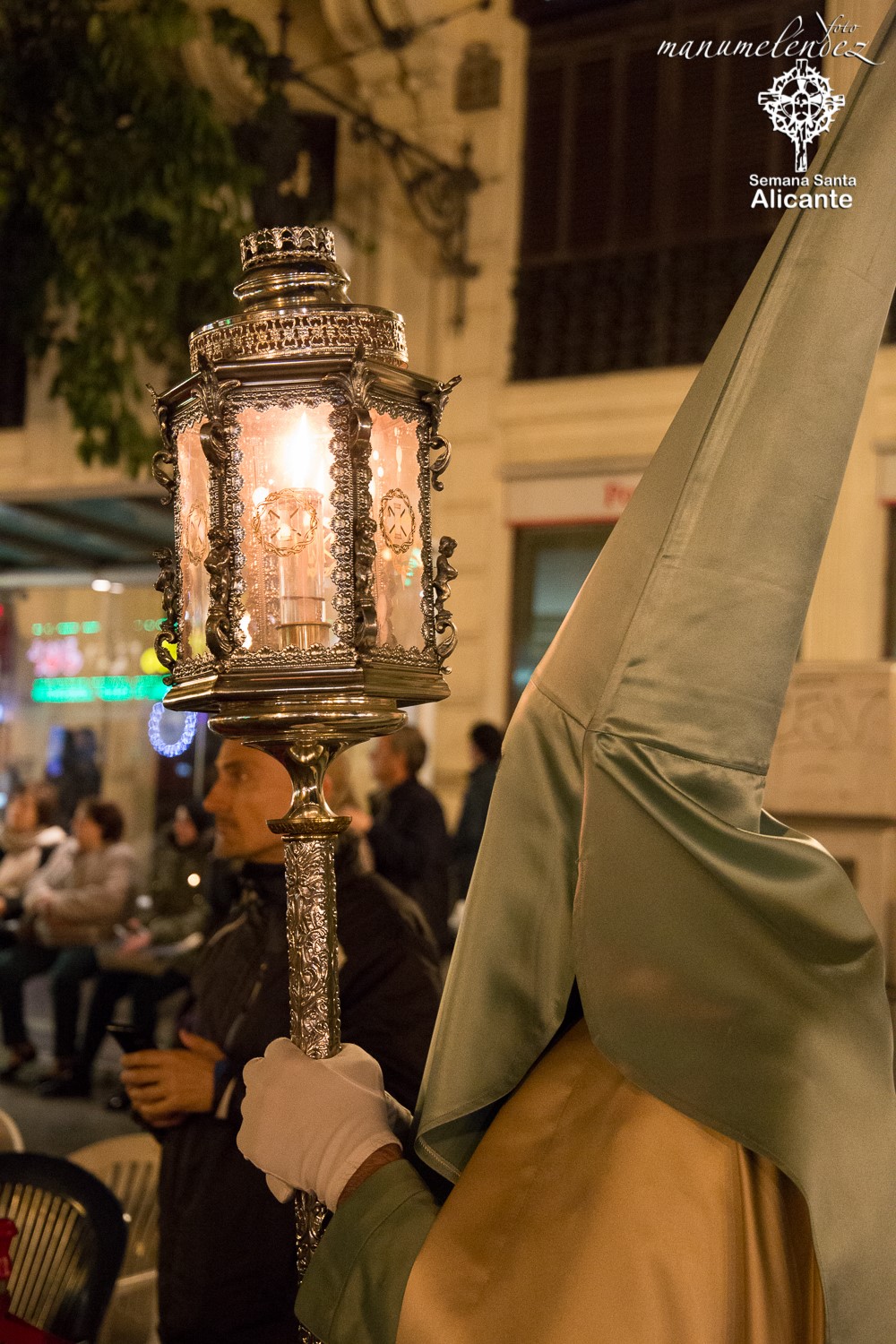
The traditional attire of this Brotherhood consists of an aquamarine satin tunic and hood, together with an ivory-coloured satin cape and sash. Members also wear white gloves, black footwear and the Brotherhood's medal.
ORIGINS AND HISTORY
History of the Brotherhood
Founded in 1885, the processional float was a work of great artistic quality. It was kept in St Mary's Church, beside the altar dedicated to Saint Peter and Saint Paul. It was transferred to the Church of Our Lady of Mount Carmel, from where it departed to join the General Procession of the Holy Burial on Good Friday afternoon, taking its place between the floats of Saint Peter and the Ecce Homo.
In 1931 the Brotherhood was dissolved. It was not until 1951 that it was reorganised, thanks to the efforts of Mr Ravelló Montesinos and Mr Sánchez Esteve. A magnificent processional group was acquired from the Alicante sculptor Juan Giner Masegosa. It consisted of three figures: Christ, a Roman soldier and an executioner scourging Jesus. From that moment on, the Brotherhood once again took to the streets of Alicante, this time on Holy Monday, departing from the convent church of the Reverend Capuchin Mothers.
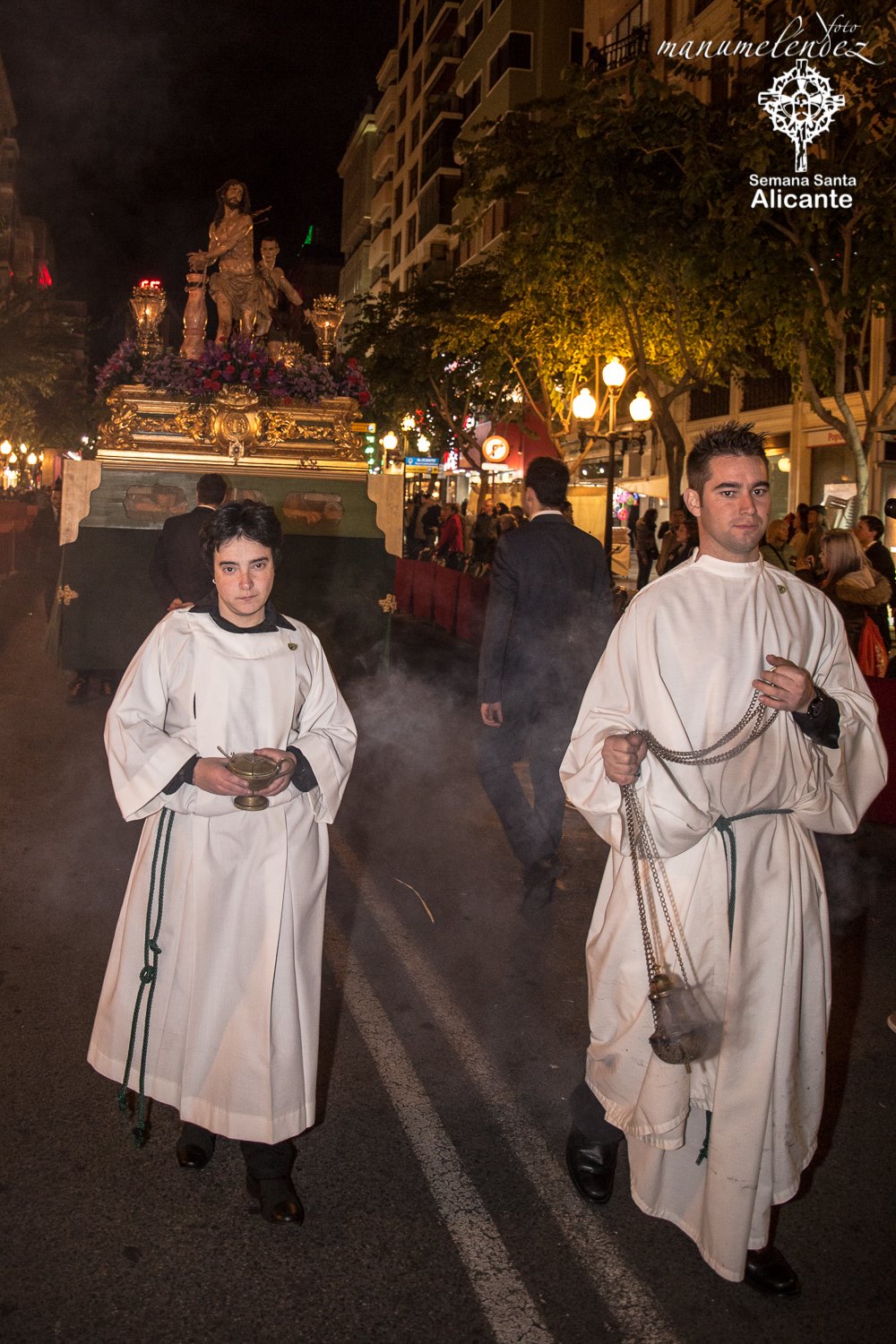
In 1956, the Brotherhood unveiled a new carved throne decorated with gold leaf, the work of the Blanco Brothers. This is the same float that the Brotherhood uses in its processions today.
In 1966 the Brotherhood stopped taking part in processions and was dissolved. It was re-established in 1968, departing from the Parish Church of Mary Help of Christians. The Brotherhood was dissolved once again, and all its belongings and possessions were placed in storage. A fire later destroyed almost everything kept there, except for the carved throne made by the Blanco Brothers and an artistic embroidered banner created in the workshops of Mr Tomás Valcárcel.
In 1988 the Brotherhood was definitively reorganised at the parish church in Alicante's San Blas neighbourhood. On this occasion, it processed on Palm Sunday afternoon, featuring new images acquired from the Murcian sculptor Antonio García Mengual. Two further processional groups were also introduced: Our Lady of the Crown of Thorns, which had already processed with the Ecce Homo Brotherhood in the 1950s and is an anonymous 20th-century sculpture, and the Sorrowful Meeting of Christ with His Mother, also the work of García Mengual.
Between 2013 and 2015, the Brotherhood replaced the sculptures by Antonio García Mengual, with the exception of the Virgin, with newly created works by Antonio Martín Nieto.
Musical contributions to Alicante Holy Week
- Palm Sunday Afternoon · Francisco Sanz. Penitential Brotherhood of Jesus Bound to the Column of San Blas. December 1997.
- Crown of Thorns · José Aparicio Peiró. Dedicated to the Penitential Brotherhood of the Holy Flagellation on its 10th anniversary. Date handwritten on the score: December 1997.
IN PICTURES
Photo gallery
The procession, its sacred images and the traditions of Palm Sunday.