 ECH
HOLY TUESDAY · ALICANTE
Most Illustrious, Penitential and Franciscan Brotherhood of the Most Holy Ecce Homo and Our Lady of Bitterness
RELIGIOUS SCULPTURE
Principal sacred images
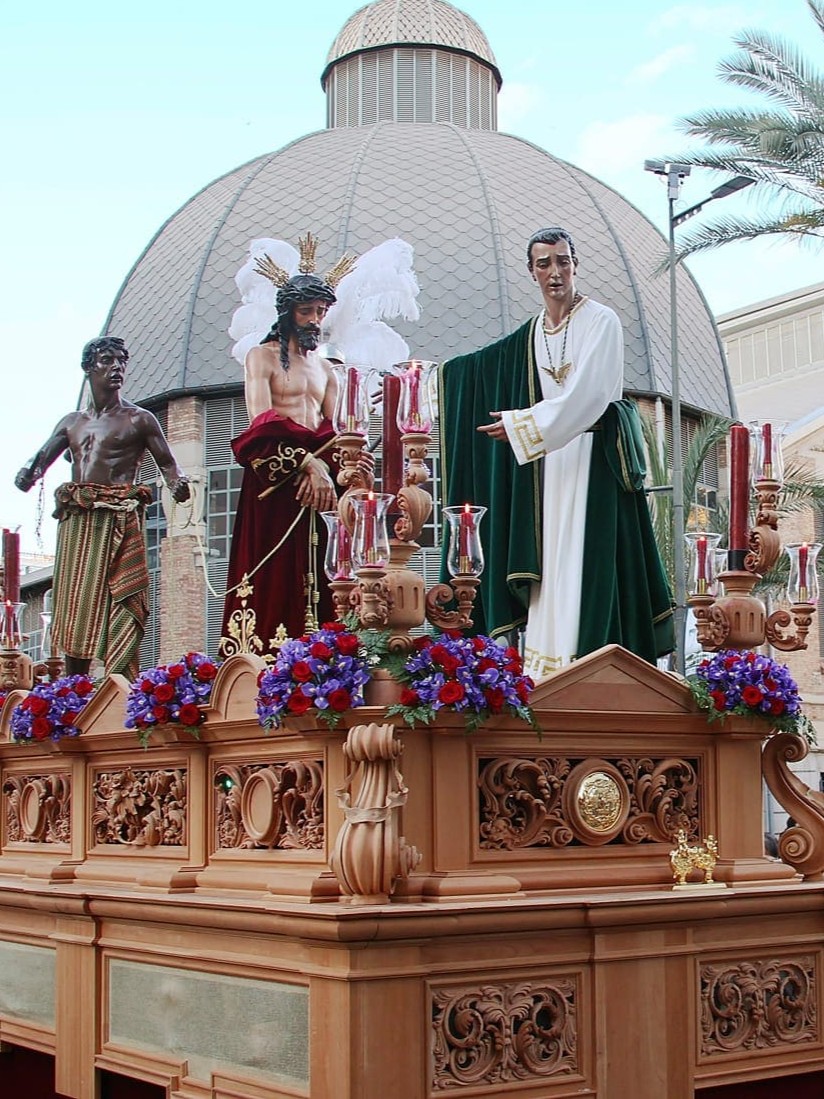
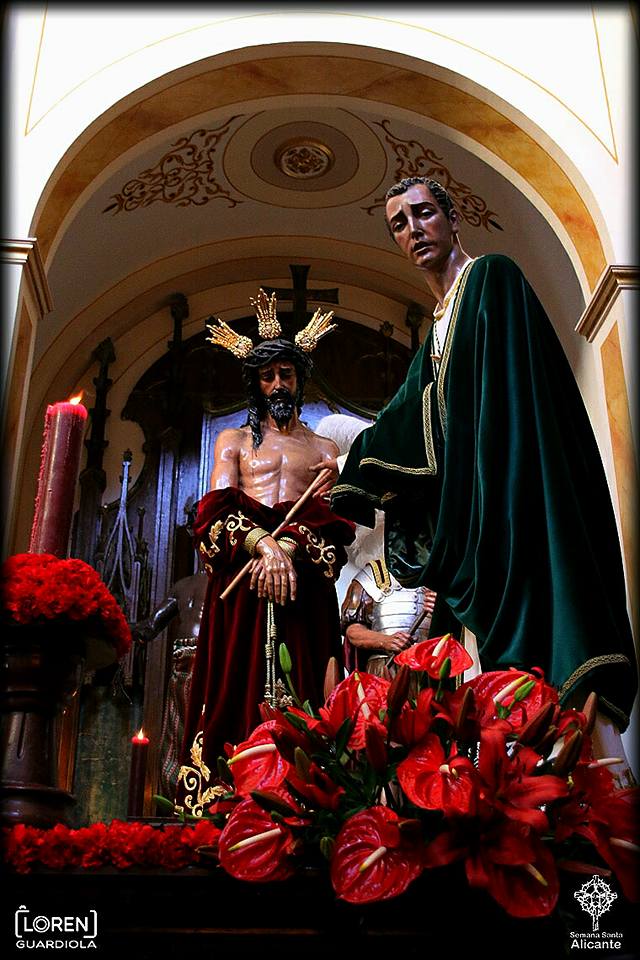
Sculptural group
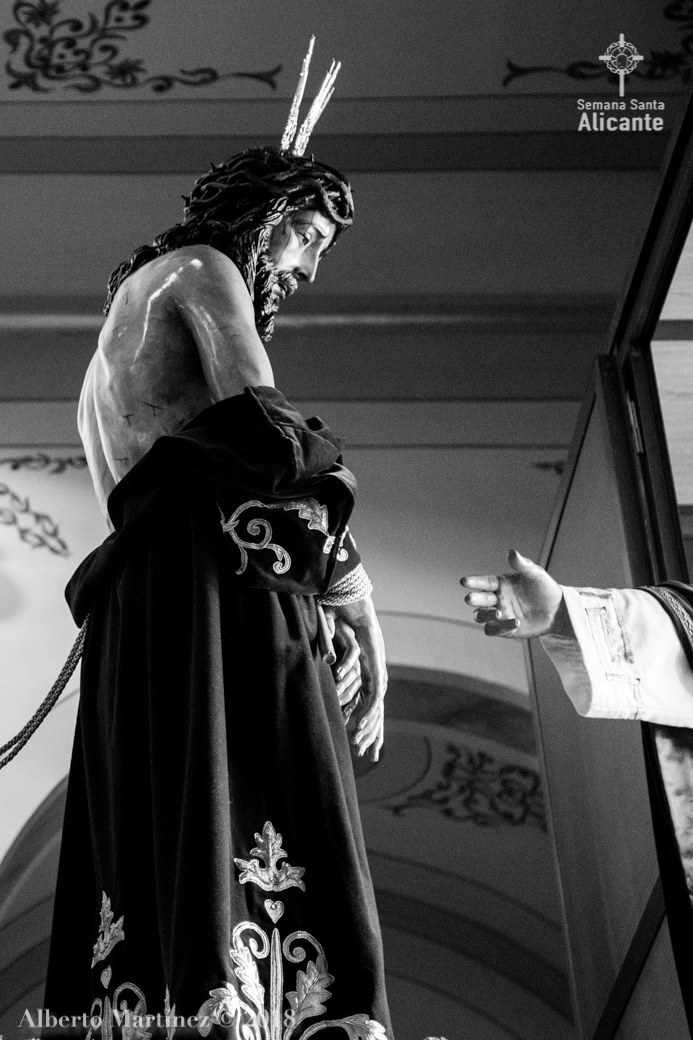
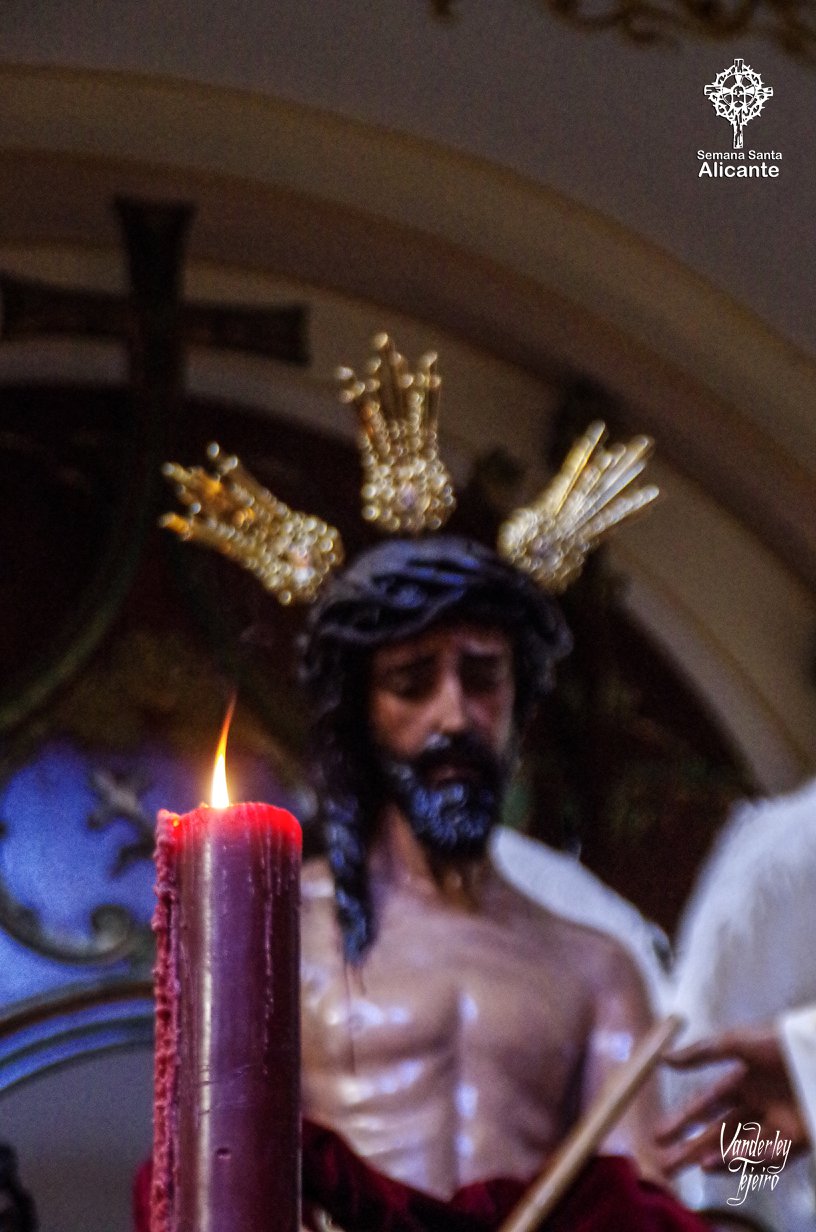
Most Holy Ecce Homo · Antonio Castillo Lastrucci, 1954
Pontius Pilate, Roman Soldier · Antonio Castillo Lastrucci, 1954
Executioner · Antonio Castillo Lastrucci, 1960
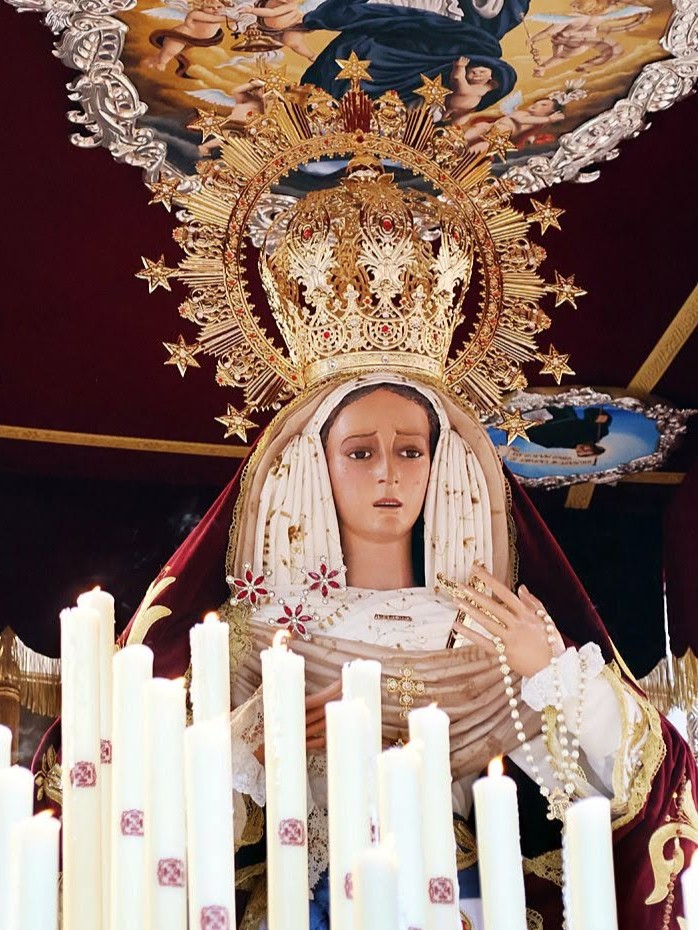
Marian image
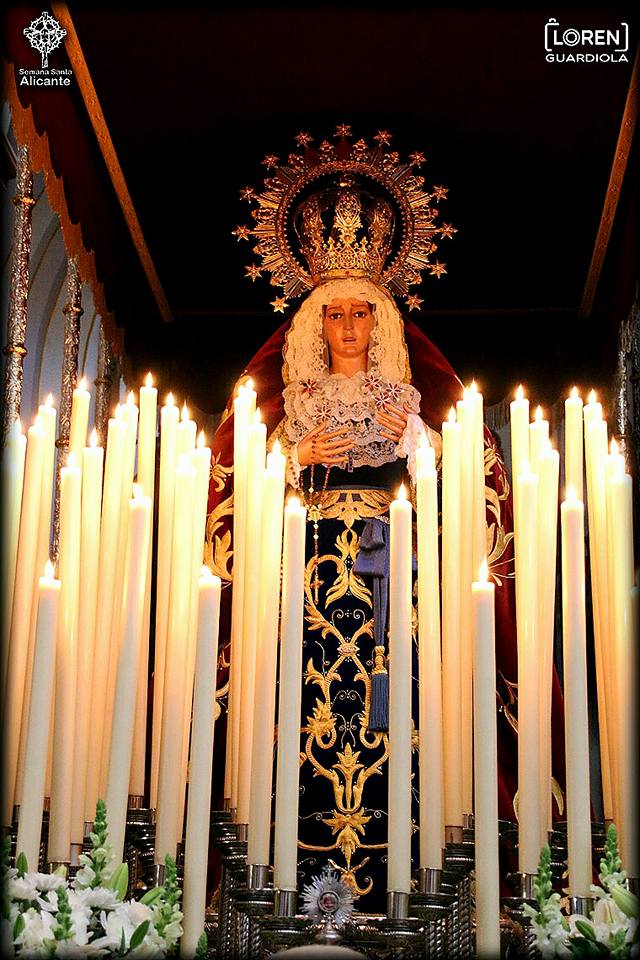
Our Lady of Bitterness · Antonio Castillo Lastrucci, 1960
IDENTITY AND SYMBOLISM
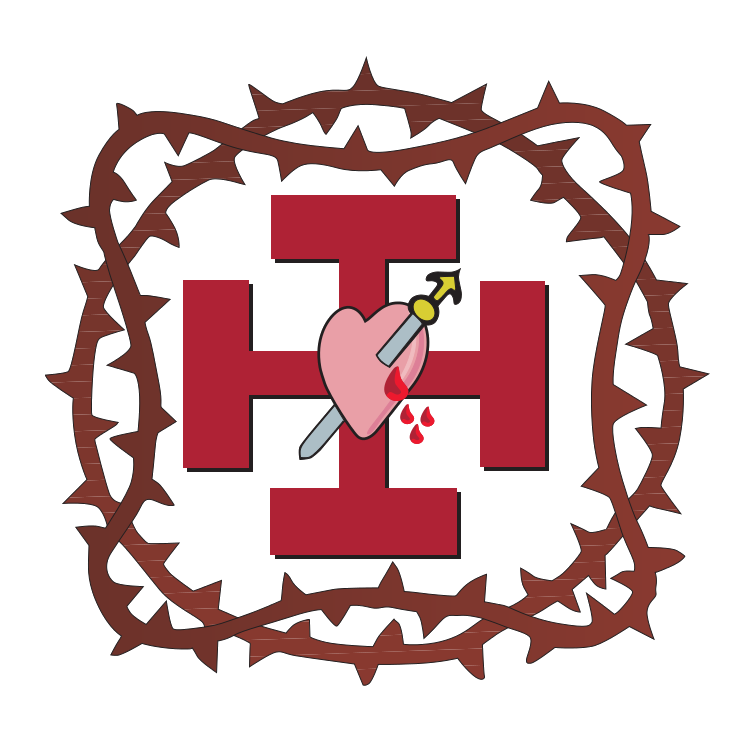
The coat of arms
At the centre is a burgundy potent cross, the Brotherhood's colour, in reference to the Brotherhood of the Holy Redemption (a branch of this Brotherhood). Above the cross appears a heart pierced by a dagger, recalling the pain and bitterness suffered by the Blessed Virgin. The entire emblem is framed by the Crown of Thorns, a symbol of Christ's Passion and an instrument used to humiliate Him before He was presented to the people. This scene is represented by the Brotherhood's principal image, the Most Holy Ecce Homo.
PROCESSIONAL ATTIRE AND BROTHERHOOD IDENTITY
Processional attire
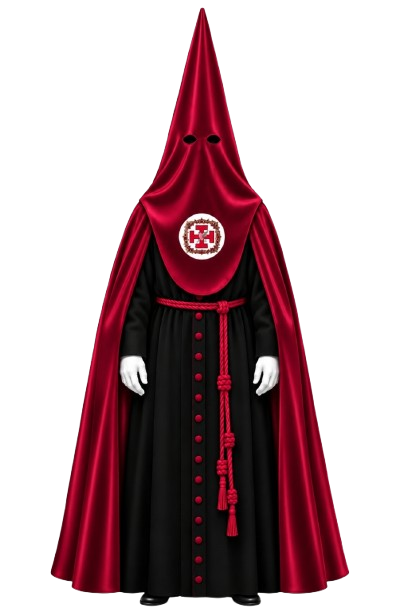
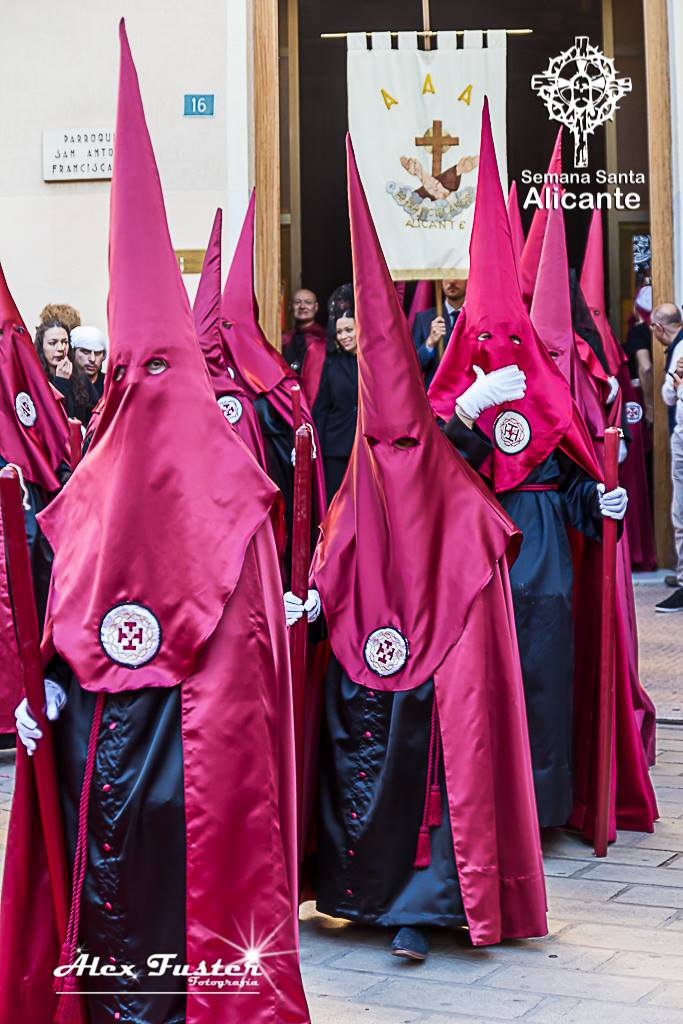
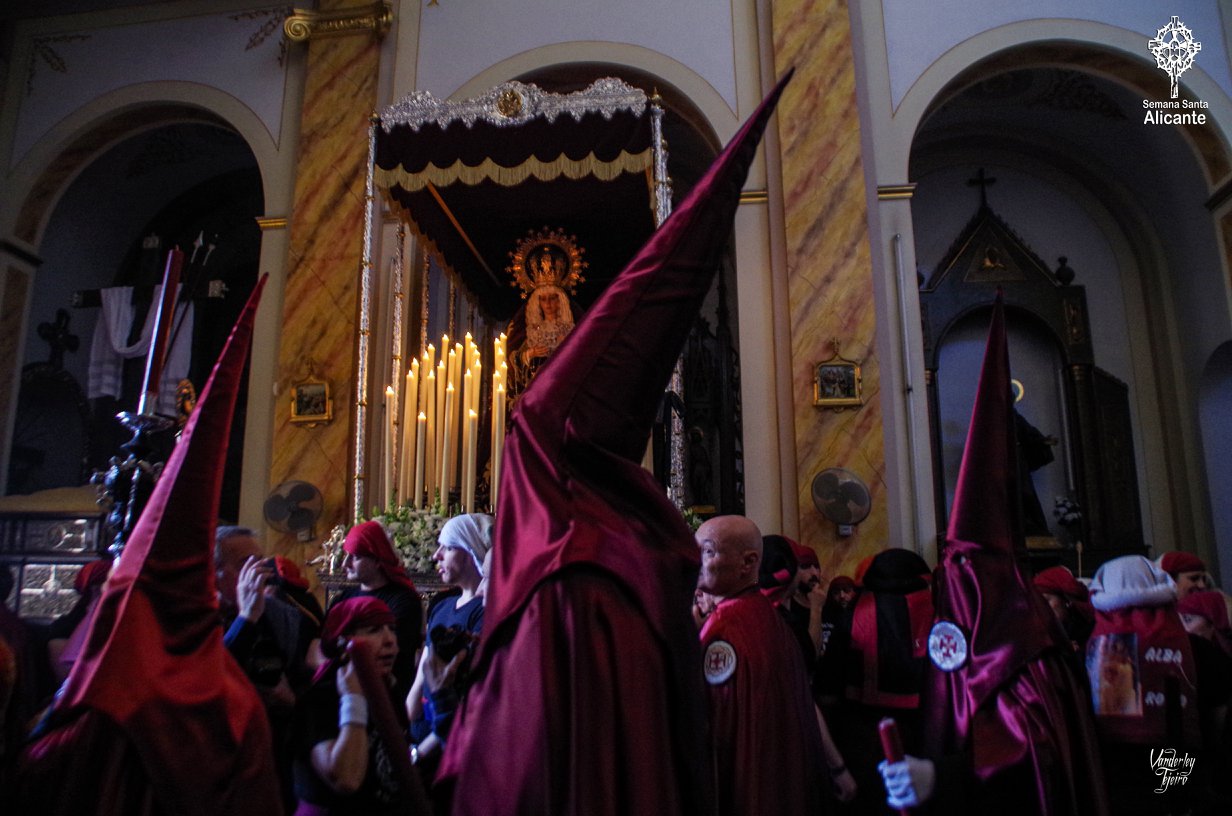
The traditional attire of this Brotherhood consists of a black tunic with cardinal-red buttons, together with a hood and cape in the same colour. The Brotherhood's emblem is embroidered on the hood. The outfit is completed with a cardinal-red silk cord, white gloves and socks, and black shoes.
ORIGINS AND HISTORY
History of the Brotherhood
Documents confirm the existence of the Ecce Homo Brotherhood in the 18th century, although its origins may date back at least another century. Devotion to the Ecce Homo in our city has always been closely linked to the veneration of Our Lady of Solitude, "La Marinera", at the Convent of the Sisters of the Blood, and to the long history of this Marian devotion.
There are records of an image that took part in the general Good Friday procession in the early 20th century and which departed from the Convent of the Capuchin Nuns.
During a gathering of former Franciscan pupils in 1946, the idea arose of founding a brotherhood under the devotions of the Ecce Homo and Our Lady of Bitterness. The Brotherhood was established at the Franciscan convent and school, and its founding statutes were drawn up based on those of other brotherhoods in the city.
After everything had been lost, on 4 November 1946 the devotion to the Ecce Homo, also popularly known in our city as "Cristo de la Canyeta", was restored to Alicante. The initiative to establish the Brotherhood was led by the Franciscan Father Pedro Lozano, together with a group of former pupils of the school.
Three principal images have taken part in this Brotherhood's processions throughout its history. The first was the work of Juan Martínez Mataix and was lent for the procession by its owner, Don Luis Sánchez Esteve, who was also a member of the Brotherhood's governing board. In 1952, it was replaced by a sculpture by Juan Giner Masegosa, which cost the Brotherhood 17,000 pesetas. This was the first image it owned. Finally, dissatisfied with the quality of the sculpture, in 1954 the Brotherhood commissioned the definitive work from sculptor Antonio Castillo Lastrucci, which has survived to the present day. The work cost 35,000 pesetas and was completed in 1960 with the addition of an executioner figure, costing 11,000 pesetas.
The second processional float used by the Brotherhood was also commissioned from Castillo Lastrucci in 1959, at a cost of 7,500 pesetas.
Until 1974, the Ecce Homo Brotherhood took part in the procession on Holy Monday. In 1975 it moved to Holy Wednesday, and from 1976 onwards it has processed on Holy Tuesday.
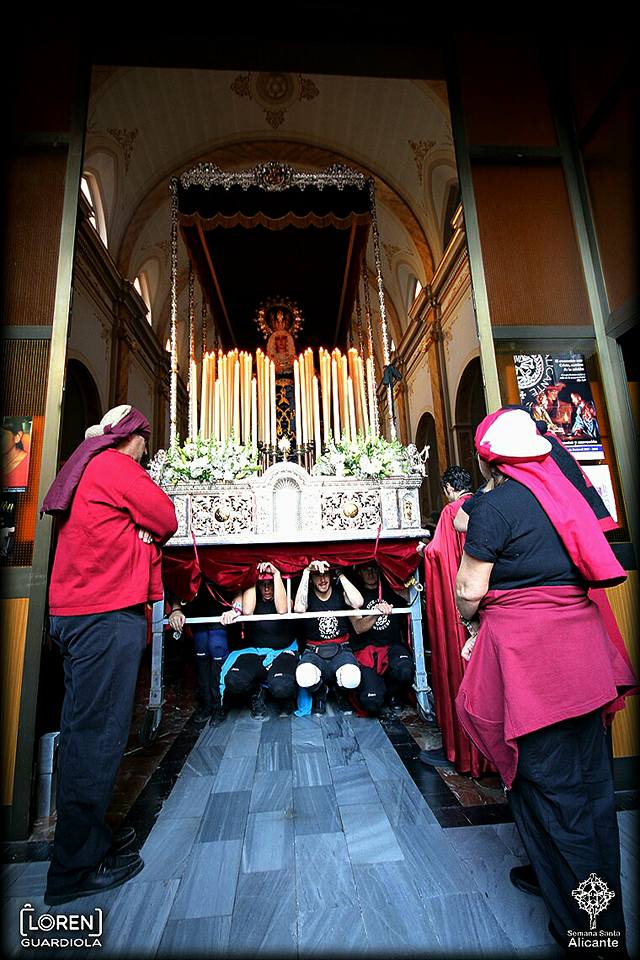
The Ecce Homo float has been carried on wheels, on the shoulders of bearers positioned inside it, and, since 2003, using the costal carrying technique. The image of the Virgin was replaced in 1959 by a new sculpture by Antonio Castillo Lastrucci, under the title of Our Lady of Bitterness. This float has also been carried on shoulders and on wheels, and since 2013 it has processed using the costal technique.
Musical contributions to Alicante Holy Week
- Way of the Cross of Cristo de la Canyeta · Felipe Sanchís Berná. Premiered on 21 February 2007 at the Church of Saint Anthony
- Bitterness of Alicante · Luis Molina. Premiered on 9 April 2011 at the Co-Cathedral of Saint Nicholas
- Ecce Homo of Alicante · Luis Molina. Processional march dedicated to the Brotherhood. Premiered on 8 February 2020
Website:
Most Illustrious, Penitential and Franciscan Brotherhood of the Most Holy Ecce Homo and Our Lady of BitternessIN PICTURES
Photo gallery
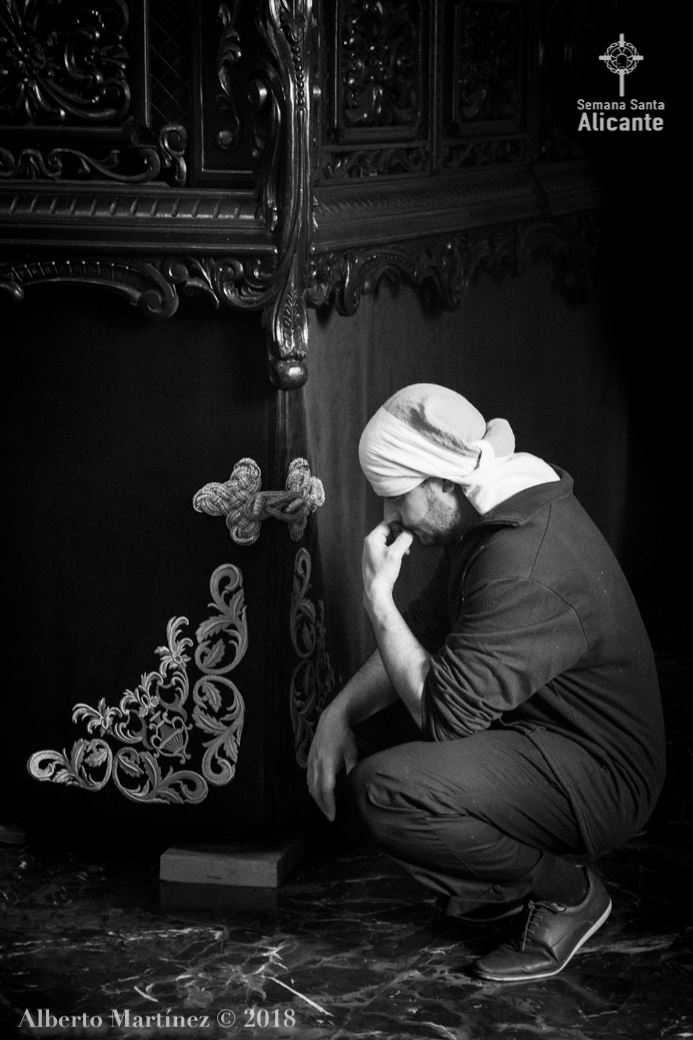
The procession, its sacred images and the traditions of Holy Tuesday.