 SDJ
EASTER SUNDAY · ALICANTE
Glorious Brotherhood of Our Lady of Joy
SACRED IMAGES
Principal Images
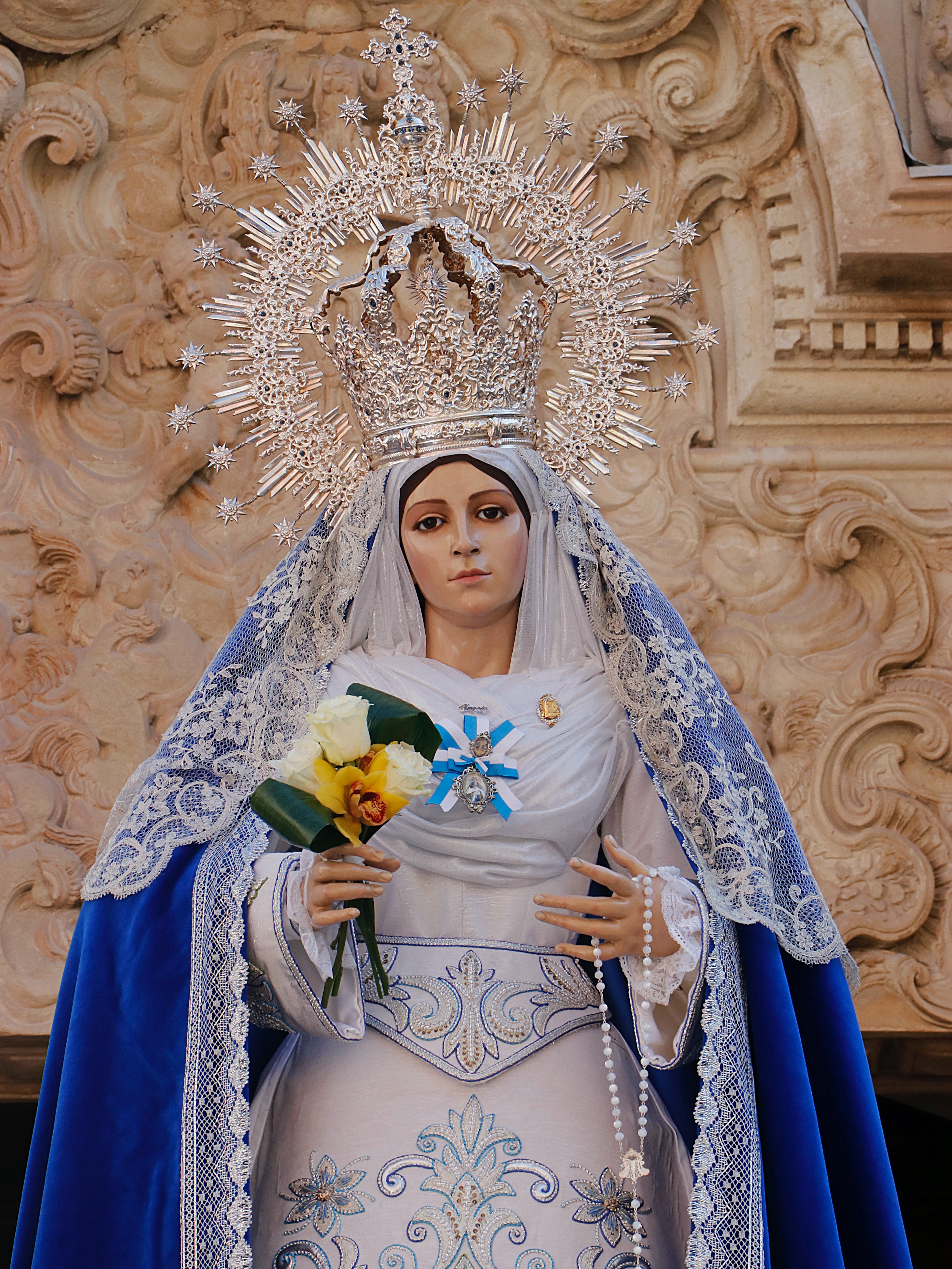
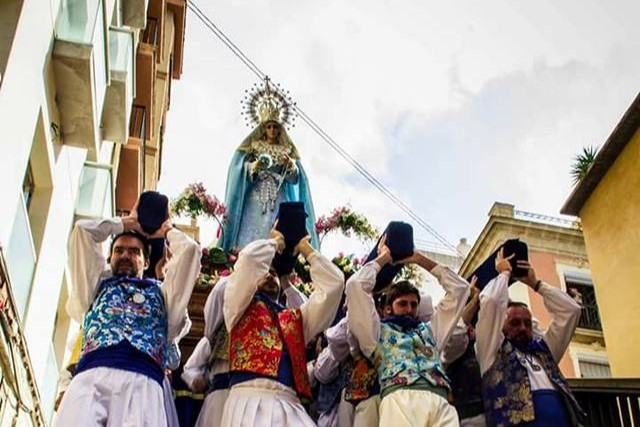
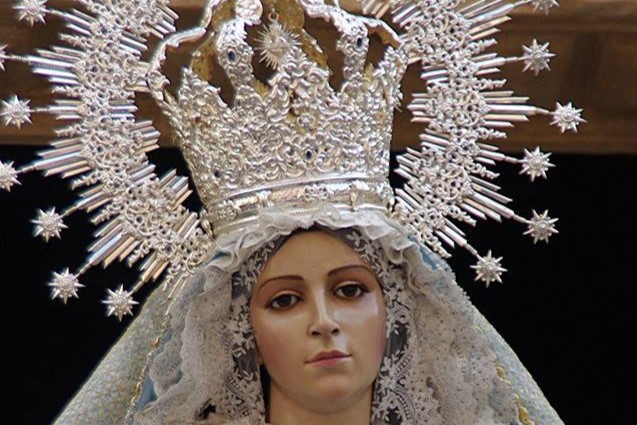
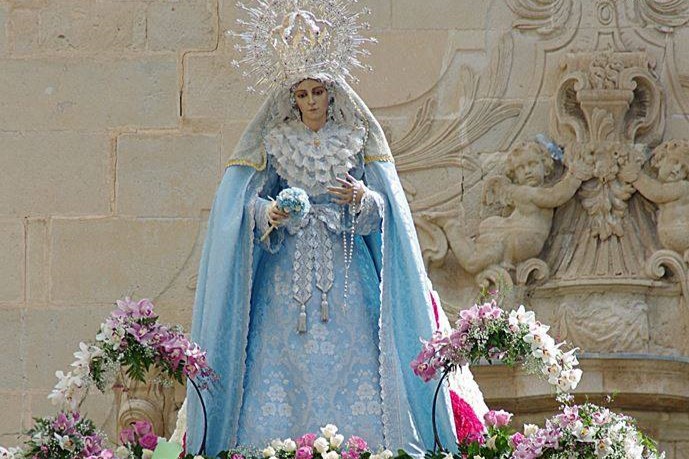
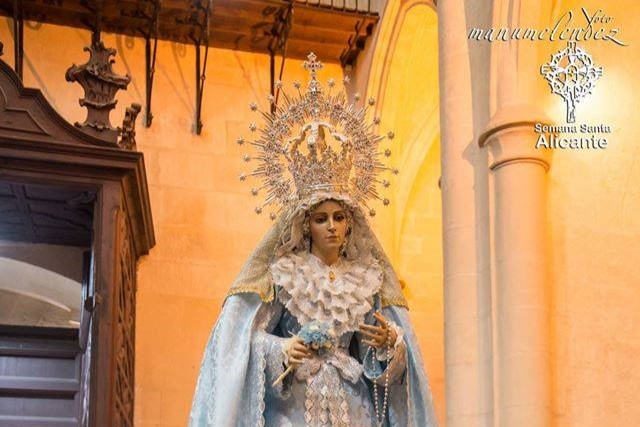
Our Lady of Joy
José María Leal Bernáldez, 2016
IDENTITY AND SYMBOLISM
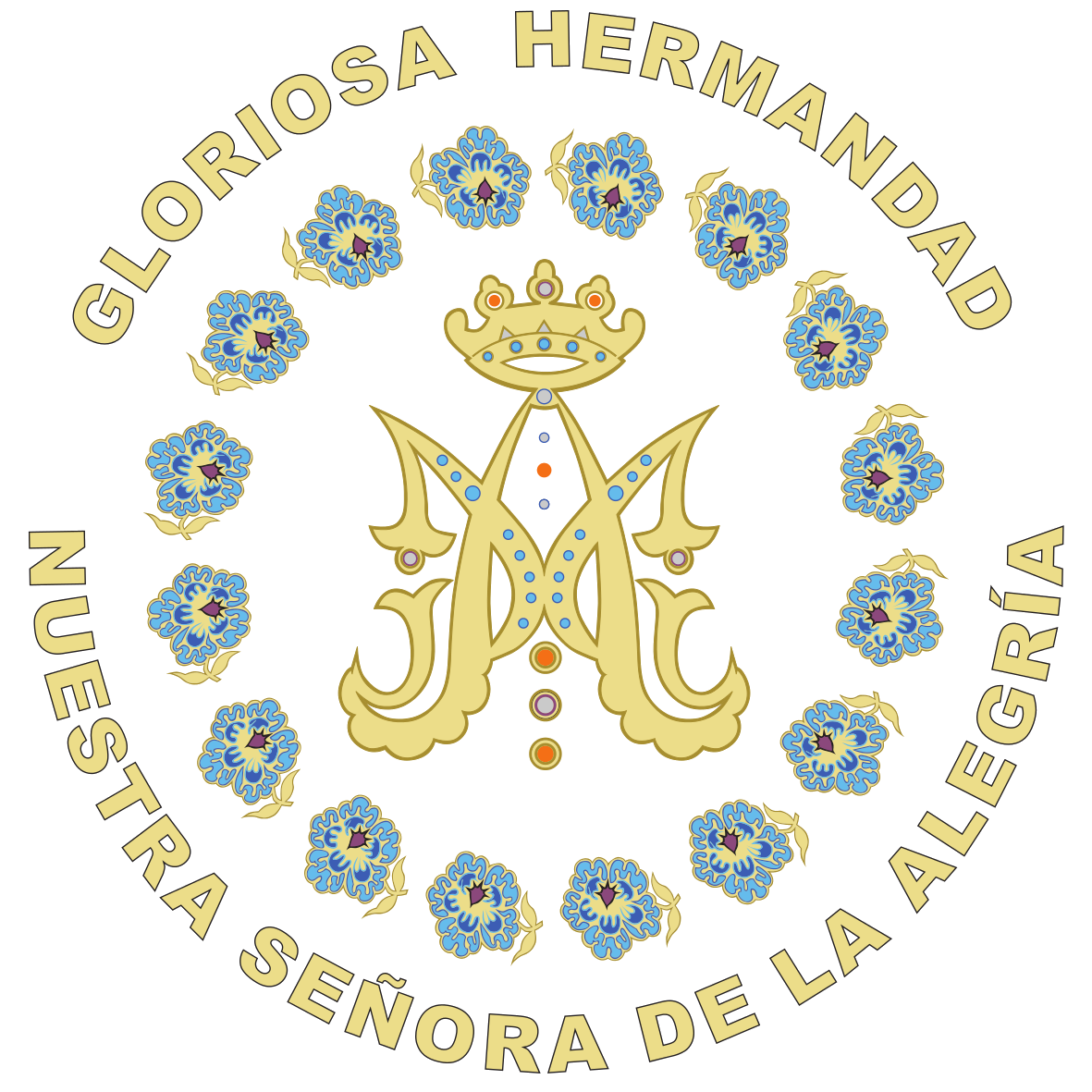
The Emblem
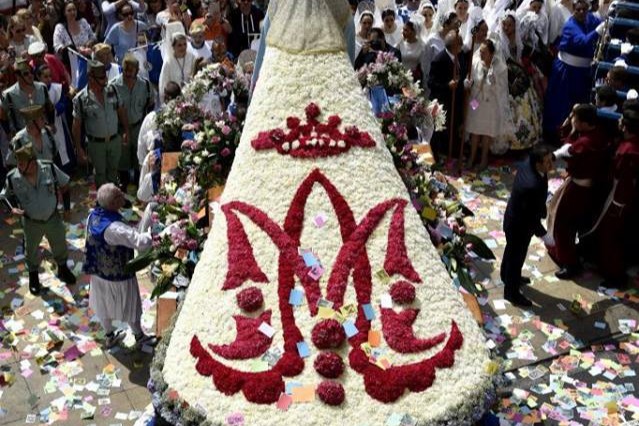
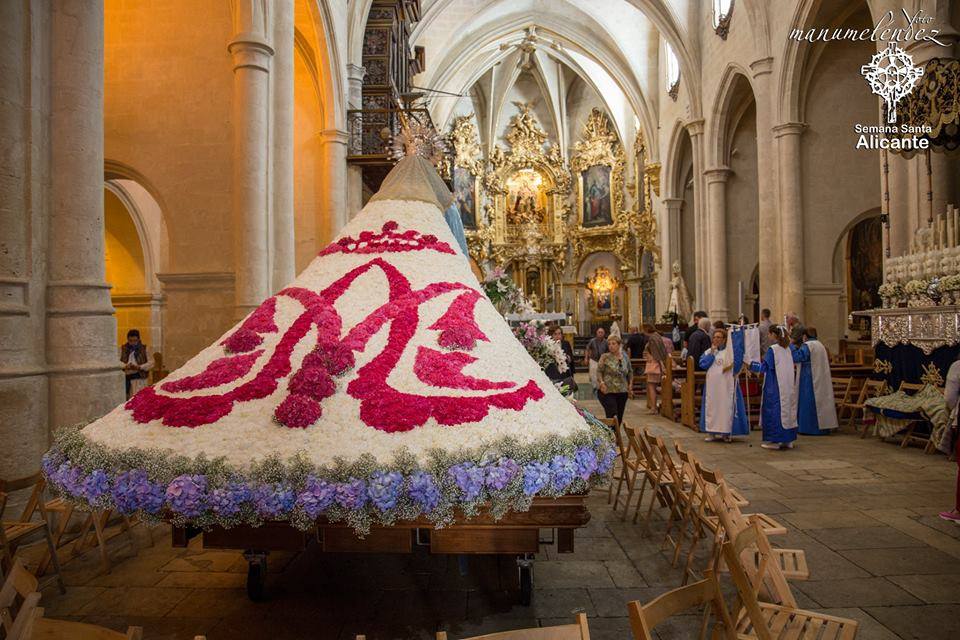
At the centre is the monogram of the Virgin Mary, as this Brotherhood has a single Marian titular image. Flowers, symbolising joy, form a halo around the monogram. The Brotherhood's name appears around the circular edge of the emblem.
HABIT AND BROTHERHOOD IDENTITY
Processional Dress
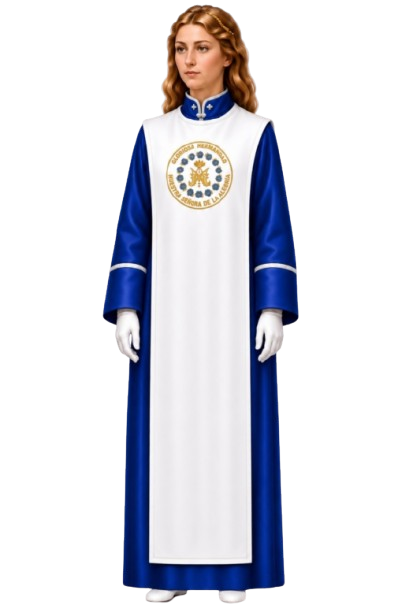
The Brotherhood traditionally wears an Alicante-blue tunic with a raised collar and no hood. A white scapular, symbolising purity and embroidered with the Brotherhood's emblem, is worn over the tunic. The outfit is completed with white gloves and footwear.
ORIGINS AND HISTORY
History of the Brotherhood
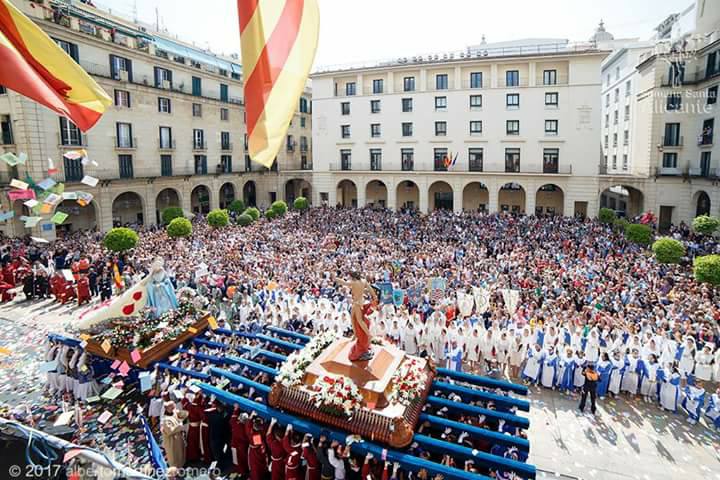
After the Board of Holy Week Brotherhoods restored the Procession of the Risen Christ in 1993, the idea emerged to organise the Easter Encounter, which had also been celebrated in Alicante.
José Ángel Guirao Sánchez, a man closely involved with the Hogueras de San Juan festivities, took up this idea and envisioned the creation of a Brotherhood bringing together the men and women involved in Alicante's official festivities. It would reflect the bond between the two most important events in the city's life: Holy Week and the Hogueras de San Juan.
The idea came to fruition, but José Ángel Guirao's dream was accompanied by a long illness that eventually led to the death of the founder of the Glorious Brotherhood of Our Lady of Joy. The arrangements for the Encounter between the Risen Christ and Our Lady of Joy were established in 1997, the year of the first Encounter. However, the origins of this Glorious Brotherhood and its defining characteristics are closely linked to the Hogueras commissions and barracas (festival associations and traditional festival venues).
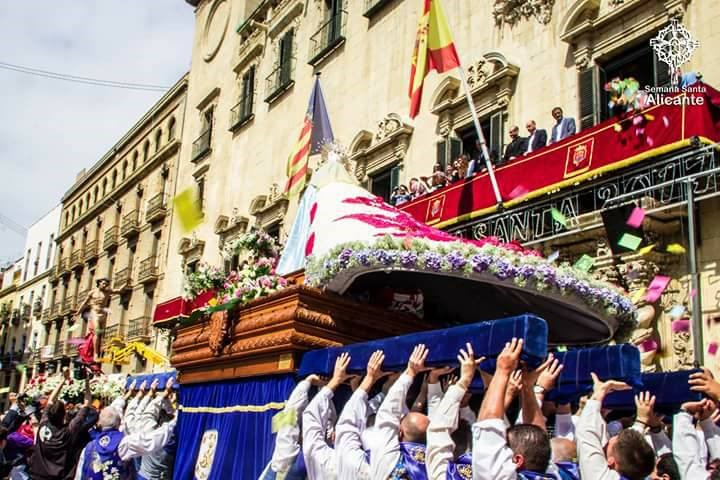
The whole of 1996 was devoted to consolidating the Brotherhood, preserving Alicante's tradition of celebrating the “Encounter”, and reviving the Aleluyas (printed religious images) that were once thrown from balconies and terraces when the Church celebrated Holy Saturday.
In 1997, drawings and texts from the early 20th century that made up the Aleluyas were recovered from the Municipal Archive and printed once again.
Musical Contributions to Holy Week
- L’Alegría · Juli Micó. “Processó de Gloria”. The score was included in the 2002 publication “10 anys de Festa en Festa. Colla de dolçaina i tabalet de Sant Antoni”. It was recorded on “Somnis d’Aixa. Nuestra Música: dolçaina i tabalet” in 1999. Dedicated to Our Lady of Joy.
- Virgen de la Alegría · Miguel Ángel Ivorra Olmedo. Processional march “IN MEMORIAM de José Ángel Guirao (founding President of the Glorious Brotherhood of Our Lady of Joy) and all fellow members of the Brotherhood.” February 2006.
IN PICTURES
Photo Gallery
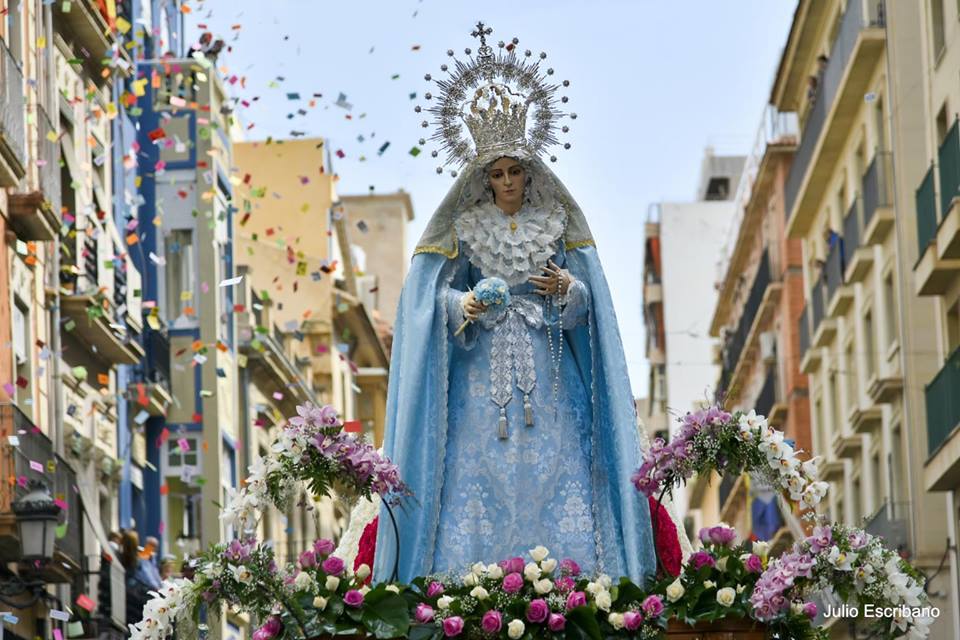
The procession, its sacred images and the traditions of Easter Sunday.