 CDA
HOLY WEDNESDAY · ALICANTE
Sacramental Brotherhood of the Christ of Divine Love and Our Lady of Solitude “La Marinera”
RELIGIOUS SCULPTURE
Principal sacred images
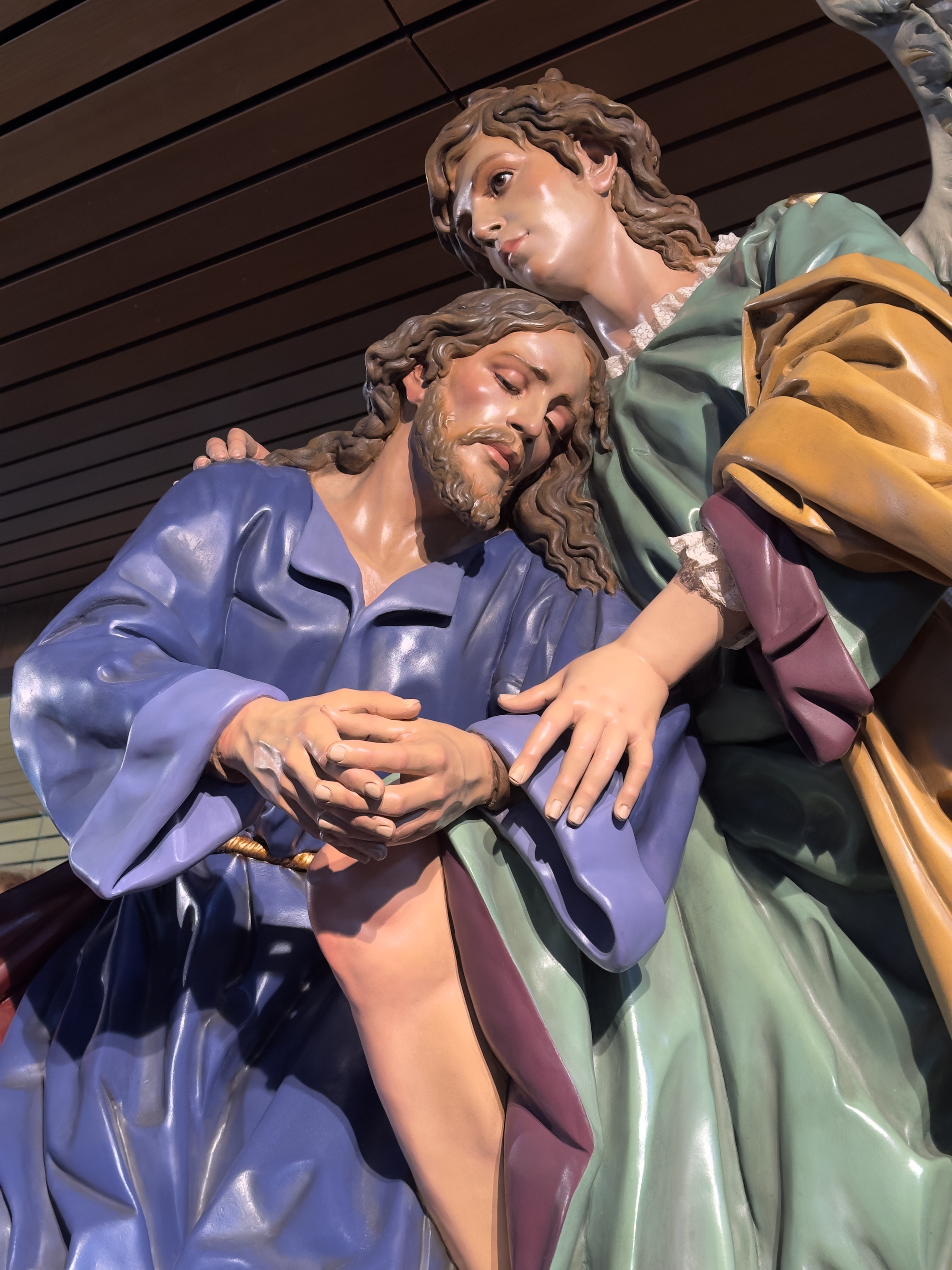
Jesus Comforted
José María Leal, 2026
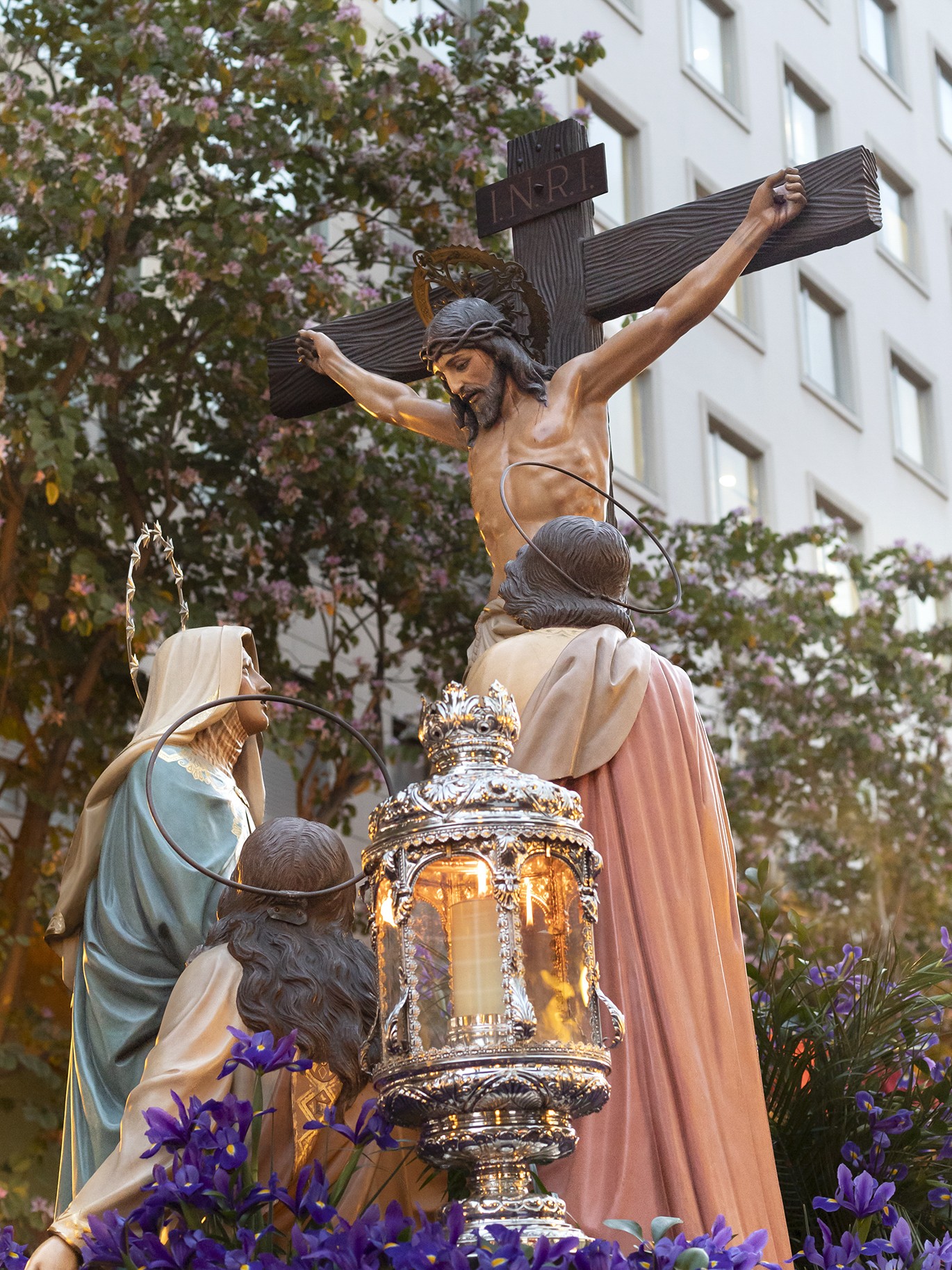
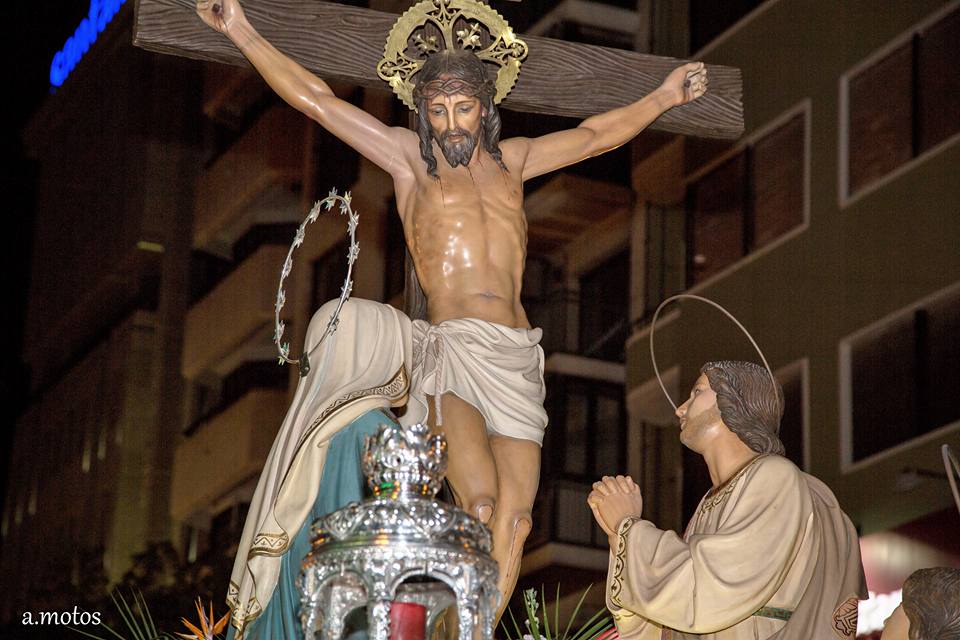
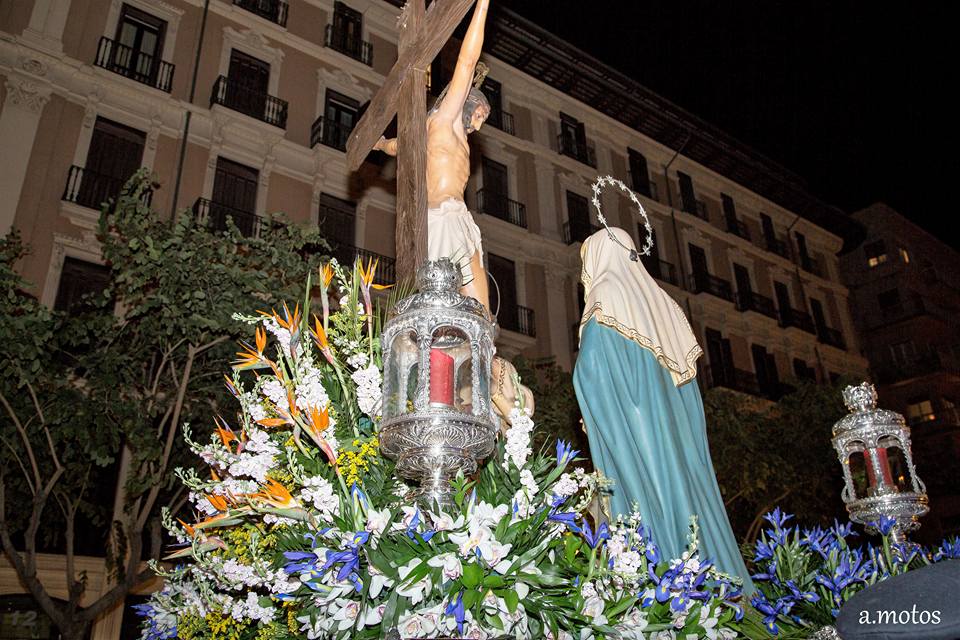
Christ of Divine Love
Most Holy Christ of Divine Love · Miguel Castellanas, Olot, 1942
Virgin Mary, Saint John · Miguel Castellanas, Olot, 1942
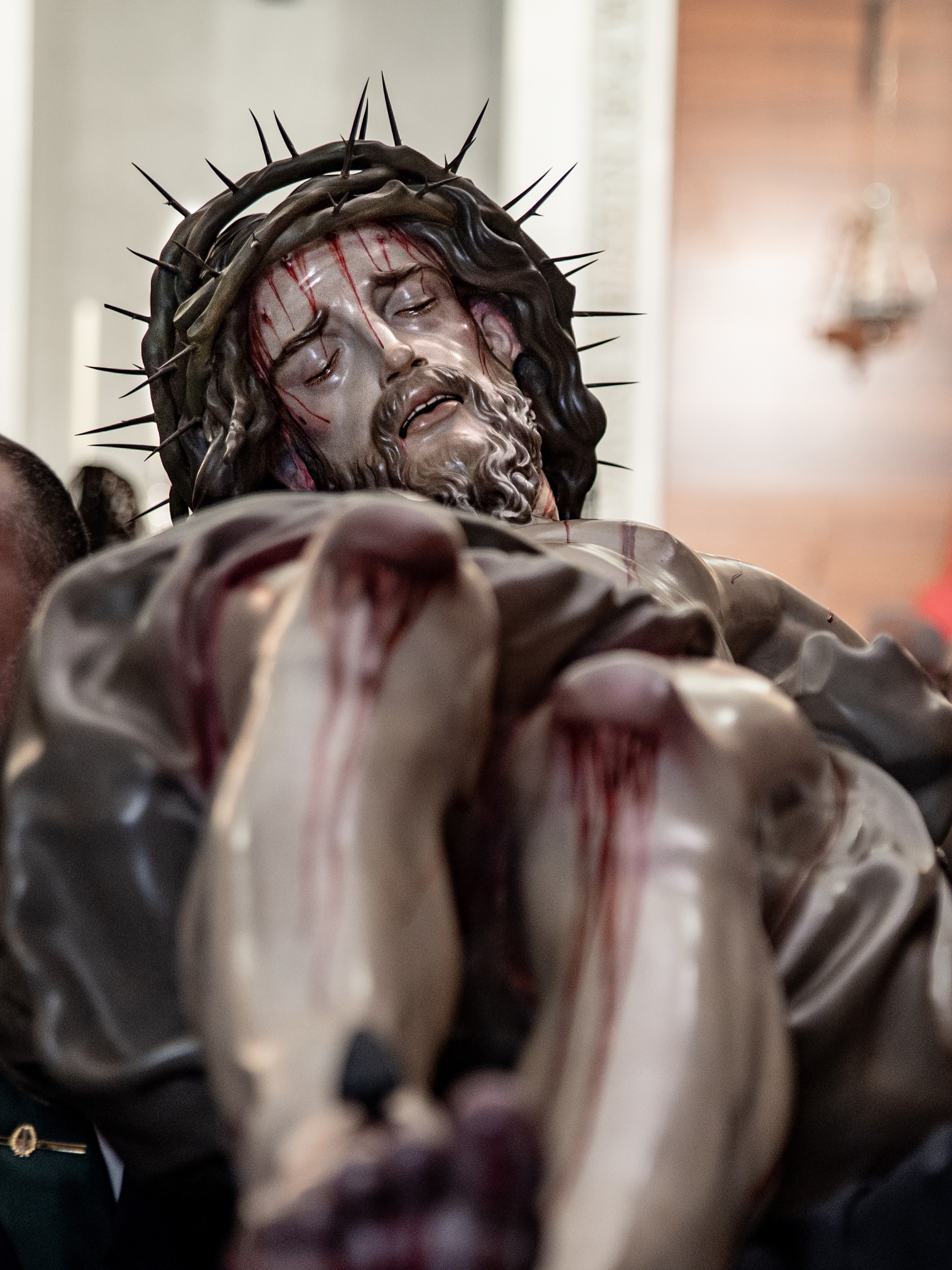
Christ of the Blood
Antonio Luis Troya Román, 2020
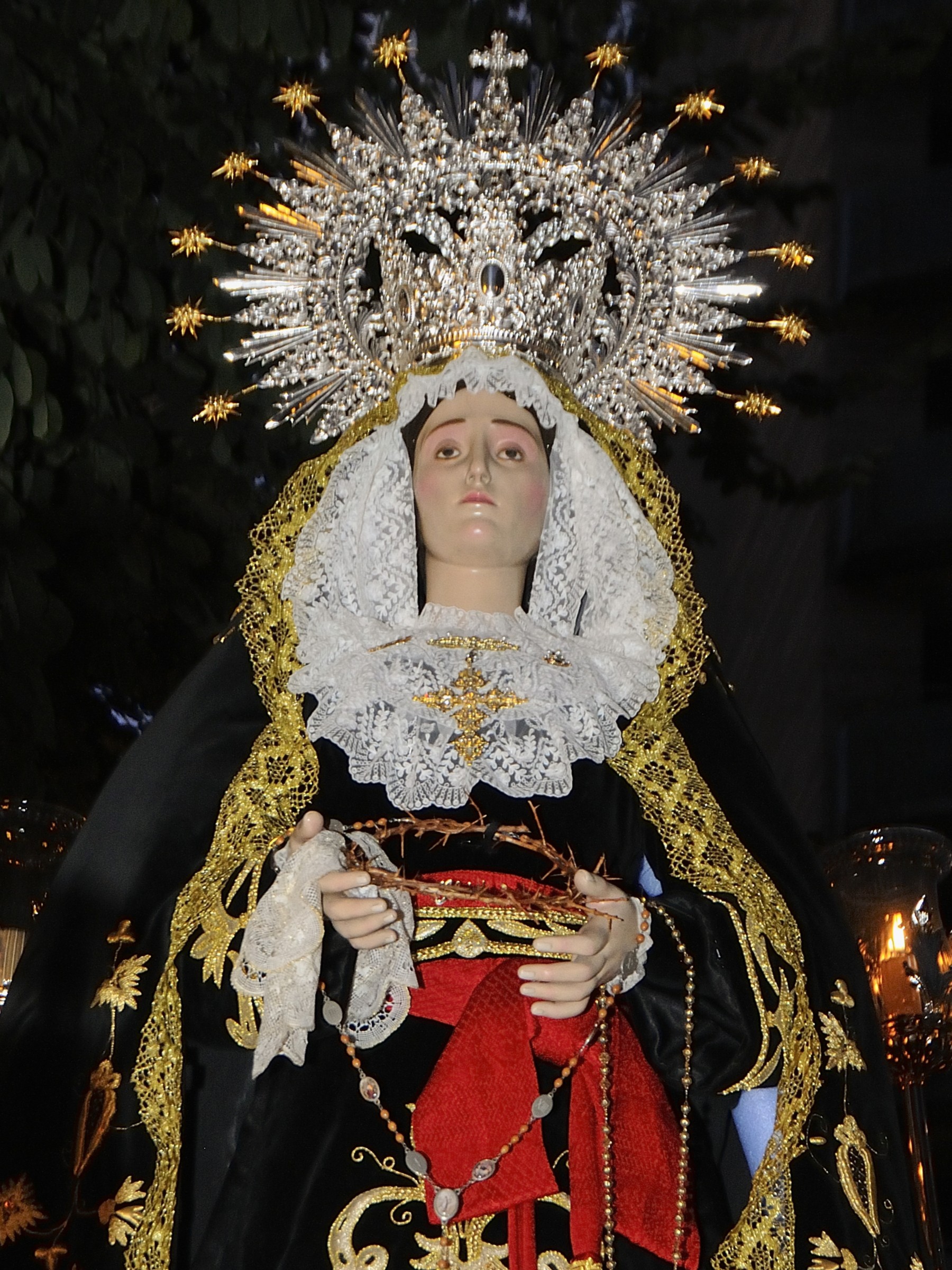
Marian Image
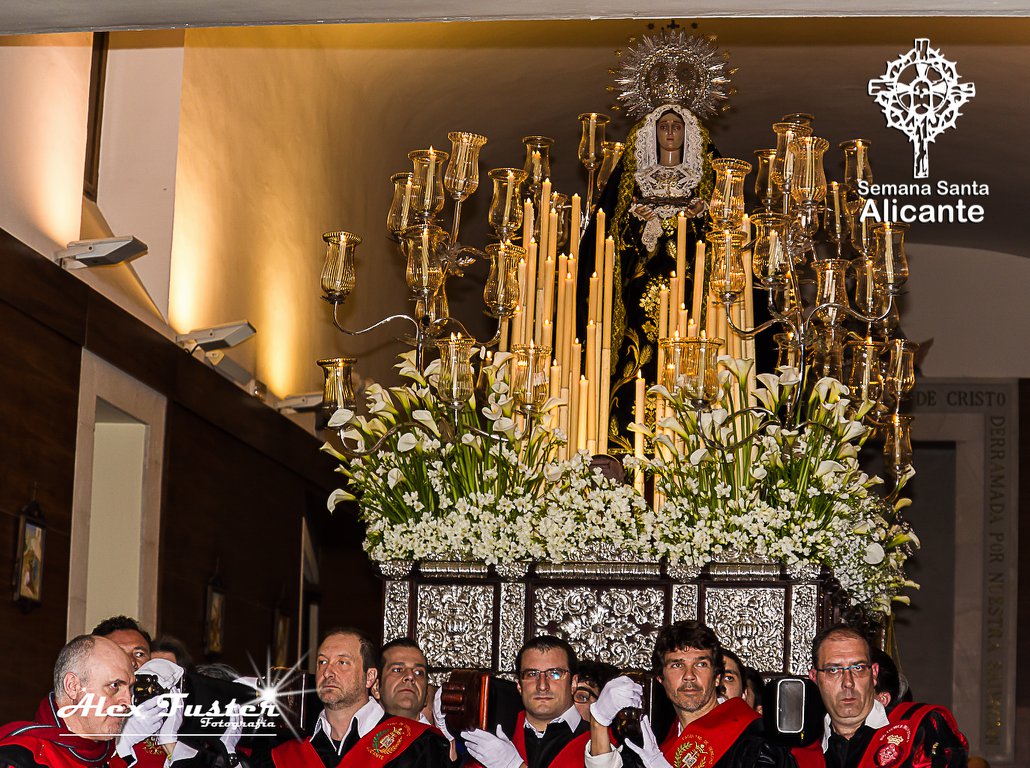
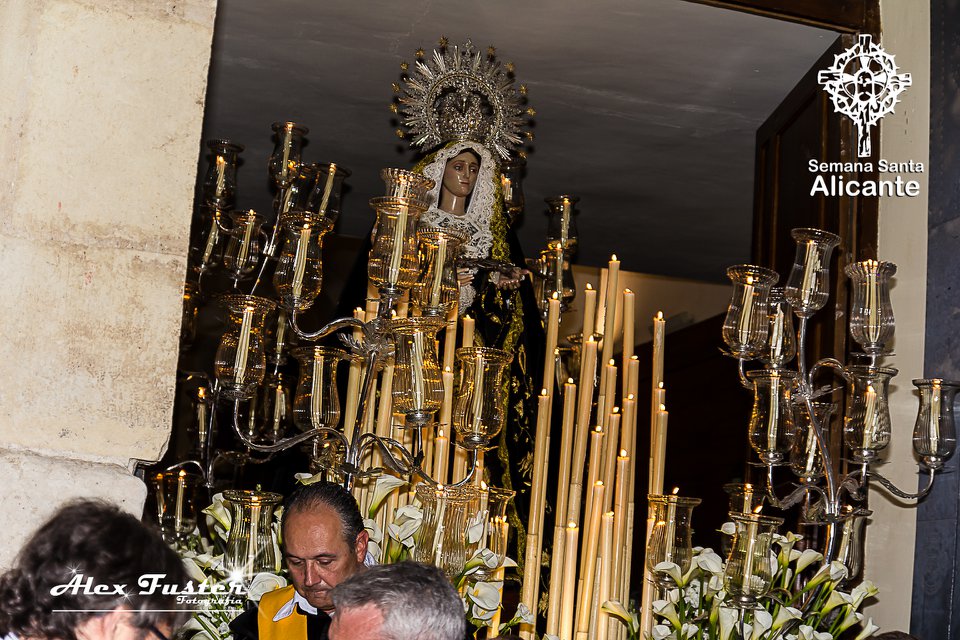
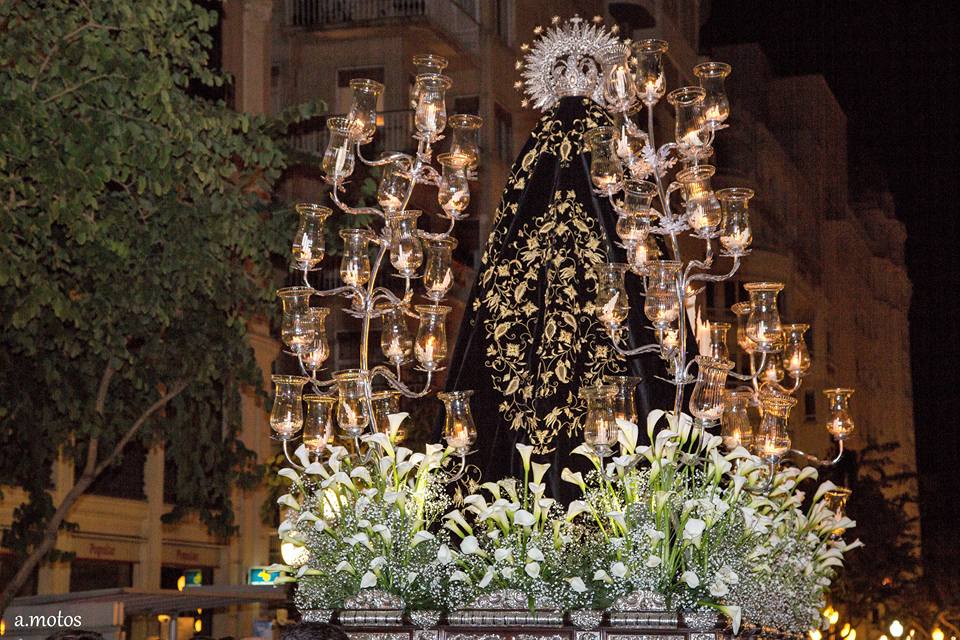
Our Lady of Solitude Crowned “La Marinera” · Bautista Vera, 1710
IDENTITY AND SYMBOLISM
The coat of arms
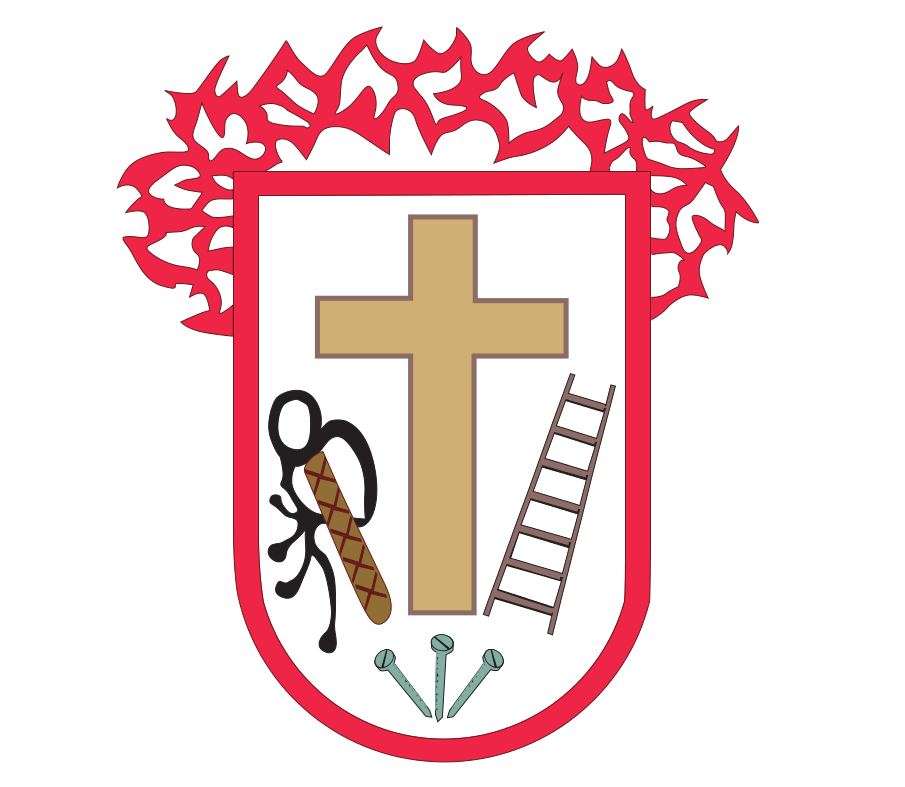
The main elements of the coat of arms refer to the Passion of Jesus Christ. At its centre is a cross, the symbol of salvation. On either side are a whip, representing the Passion, and a ladder, recalling the scene of the Descent from the Cross. At the foot of the cross are the three nails of Jesus Christ. The entire composition is framed by a plain red border and topped with a crown of thorns. The blood-red colour is a tribute to the Brotherhood's canonical seat, the convent of the Reverend Augustinian Sisters of the Most Holy Blood of Christ.
PROCESSIONAL ATTIRE AND BROTHERHOOD IDENTITY
Processional attire
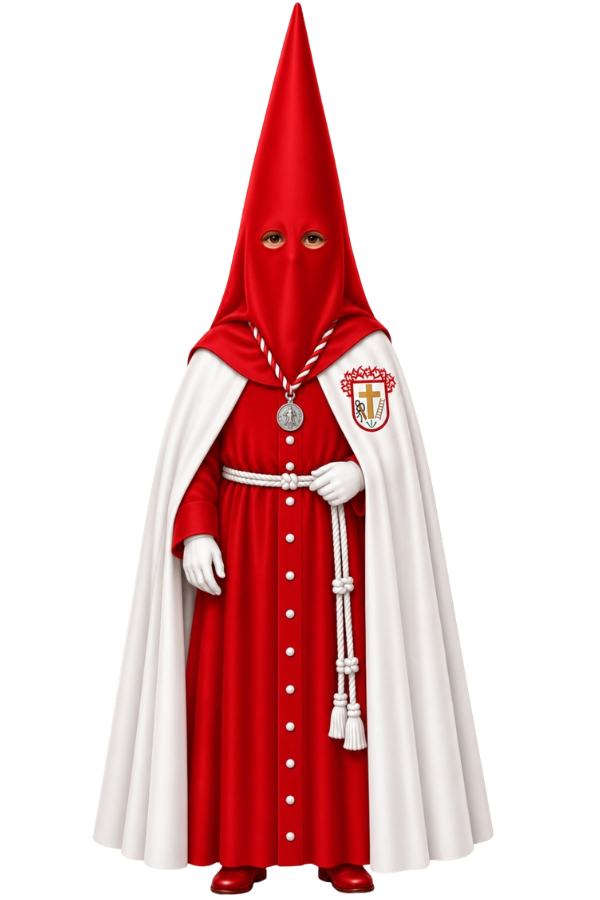
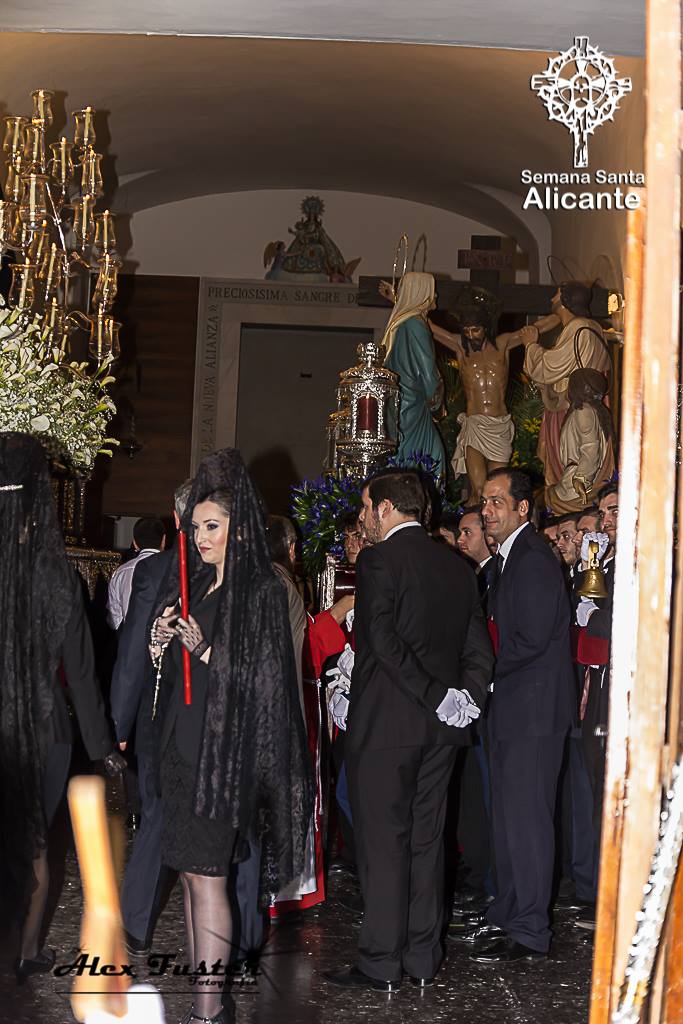
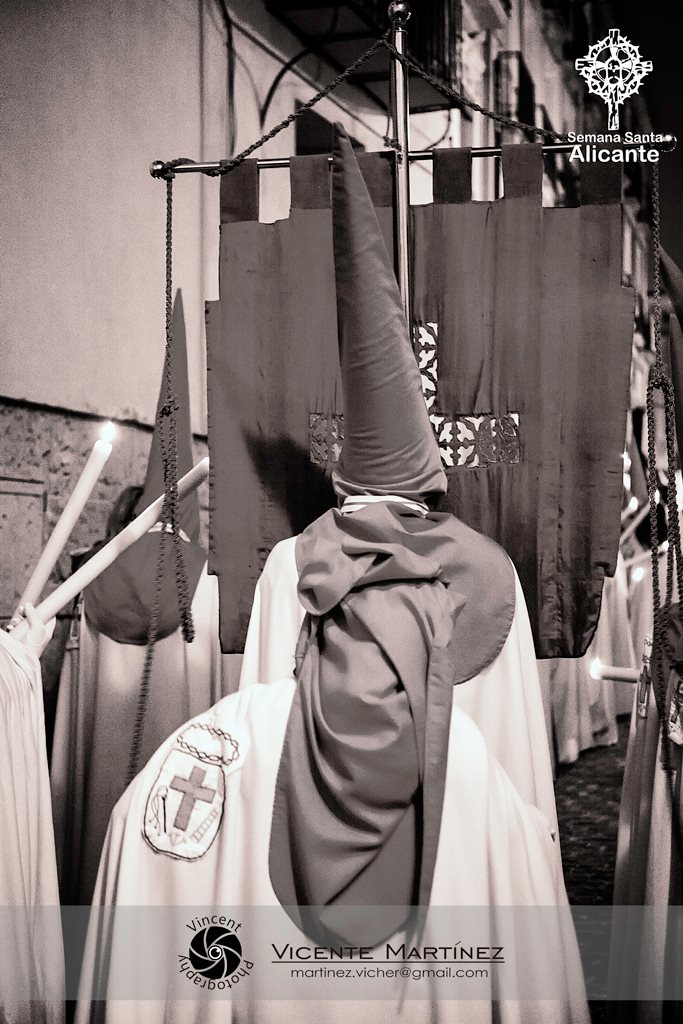
The traditional attire of this Brotherhood consists of a blood-red satin tunic and hood. Members also wear a white satin cape, with the organisation's embroidered coat of arms on the left shoulder. A white cord is worn around the waist. The outfit is completed with white gloves and socks, and red footwear.
ORIGINS AND HISTORY
History of the Brotherhood
In 1600, according to Viravens' Chronicle, there was a chapel for prisoners condemned to death. It housed an image of the Virgin under the title of Our Lady of Solitude. This image was deeply venerated: the sick believed they could be cured by touching the veil or the rosary hanging from her small, delicate hands; sailors invoked her protection to avoid being captured by pirates. So many favours were attributed to her that the local people replaced the title of Solitude with that of Our Lady of La Marinera.
Over the course of four centuries, the image suffered two serious acts of desecration. The first took place when the English entered the city, when it was rescued from among the filth on 8 August 1706. The second occurred in 1931, when its remains were found among a pile of ashes and rubble. To this day, her face, and especially her eyes, bear the memory of those events.
According to the "Chronicle" by Dean Bendicho, we know that the Brotherhood of the "Blood of Christ" had been established at the Convent of the Reverend Augustinian Canonesses and enjoyed the protection of the city.
"for the City grants its support by ordering its officials and councillors to attend and accompany the procession held by the Brotherhood on Good Friday, each with a white wax candle paid for by the City"
However, in light of the information revealed by the "Foundation Book" of the Convent of the Blood of Christ in the city of Alicante, it is clear that the Brotherhood existed before the convent was founded.
The foundation record states that, at the beginning of the 17th century, some religious figures and gentlemen sought to gather several city councillors, the Dean and Chapter of the Collegiate Church, and other gentlemen in the town hall. Their purpose was to express their wish that "a convent of nuns be established in this city, so that they might fulfil their good intentions without being obliged to leave the area, given the difficulties and inconveniences that this would entail."
After considering the reasons, it was decided that the convent should be built, that it would be subject to the Ordinary, and that the Bishop of Orihuela, Don Andrés Balaguer, should be asked for permission and for guidance on the religious order to be followed. The appointed representatives were Dean Miguel Zaragoza; Canon and Commissioner of the Holy Inquisition Tomás Pérez; Canon and Vicar Jaime Galante; Father Master Fray Jerónimo Gracián de la Madre de Dios, of the Order of Our Lady of Mount Carmel; Don Juan Vich, Bailiff of the Government of Orihuela; and the gentleman Jerónimo Vallebrera.
During the pastoral visit that the Bishop made to the city in April 1606, he granted the requested permission and imposed certain conditions. These were later recorded in the deed drawn up by the notary Don Juan Torres on 16 May 1606. The deed granted powers to Canon Pedro Ivarra and Jerónimo Vallebrera to establish the monastery in his name, bring the founding nuns from the Monastery of San Cristóbal in Valencia, and purchase the house or houses and other necessities for the foundation.
In fulfilment of the agreement, they gathered the stewards and members of the Brotherhood of the Blood of Christ and "asked them for the church and other houses belonging to the said Brotherhood, as the most suitable place in which to establish the said monastery. And all, unanimously and in agreement, consented to such a just request and donated them for that purpose, subject to certain conditions, as recorded in a deed before Francisco Pérez, notary."
On 16 July 1606, the founding nuns arrived, and on the 18th of the same month and year they took up residence in what would become known as the Convent of the Blood of Christ.
All the above suggests that the origins of the Brotherhood of the Blood of Christ in Alicante may date back to the 16th century, although its exact foundation date remains unknown. If the convent was founded in 1606 and the Brotherhood already owned a church and adjoining houses, it is clear that it had long possessed an administrative organisation (the Foundation Book refers to the existence of a stewardship), as well as religious services and ceremonies in honour of the images of the Ecce Homo and Our Lady of Solitude. This also confirms the statement recorded by Viravens in his Chronicle, where he writes that "around the year 1600 there was a sanctuary that served as a chapel for prisoners condemned to the ultimate penalty."
Another clue that helps date the existence of this Brotherhood of the Blood is the devotion to this title throughout the Kingdom of Valencia. It was linked to the revival of the groups of flagellants who accompanied Saint Vincent Ferrer on his travels and preaching missions. It is worth remembering that Saint Vincent Ferrer preached in Alicante in 1411. This coincided with the flourishing of the Brotherhoods of the True Cross in Castile and Andalusia, which venerated the relic of the Lignum Crucis. From the 15th century onwards, devotion to the Blood of Christ also began to spread throughout the Kingdom of Valencia.
In his work IIlice Ilustrada, Juan Bautista Maltés gives a detailed account of the devotion in Alicante to the images at the Convent of the Blood: the Ecce Homo (an iconography that in the Kingdom of Valencia represented devotion to the Most Holy Blood of Christ, as in Manises, Pego and Elche) and Our Lady of Solitude, "La Marinera".
A remarkable event said to have taken place in Mislata is considered to be the origin of devotion to the Most Precious Blood of Jesus Christ. After this feast spread to Valencia, a Brotherhood was founded in the parish of Saint Michael and Saint Dionysius, in the suburb of Villa Nueva. Its statutes were approved on 15 March 1535 by Gaspar Rubió, Doctor of Canon Law and Vicar General. Pope Paul III instituted the feast in a Bull dated 14 April 1540. The foundation of this Brotherhood has also been documented in various towns throughout the Kingdom of Valencia.
The statue of the Virgin is one of the oldest in Alicante Holy Week. Although it was burned during the unrest of 1931, its head was rescued from the rubble and ashes by D. Julio Parreño, who restored it and added a mannequin-style body. During the Spanish Civil War, the image was hidden in Mr Parreño's house, where he protected it from an uncertain fate. Once the war had ended, he was able to return it to the convent.
In 1942, the Brotherhood was re-established under the name of the Christ of Divine Love and Our Lady of Solitude, La Marinera. It brought together members of the Official Colleges of Solicitors, Doctors, Pharmacists and Healthcare Practitioners. In addition to the float bearing Our Lady of Solitude, "La Marinera", the Brotherhood acquired a new float: a Calvary scene of remarkable craftsmanship and exceptional realism.
Musical contributions to Holy Week
- Divine Love and Solitude · José Aparicio Peiró. Processional march. Dedicated to the Brotherhood of the Christ of Divine Love and Our Lady of Solitude. 30 March 1996
- Solitude (song) · Carlos Berrueco
IN PICTURES
Photo gallery
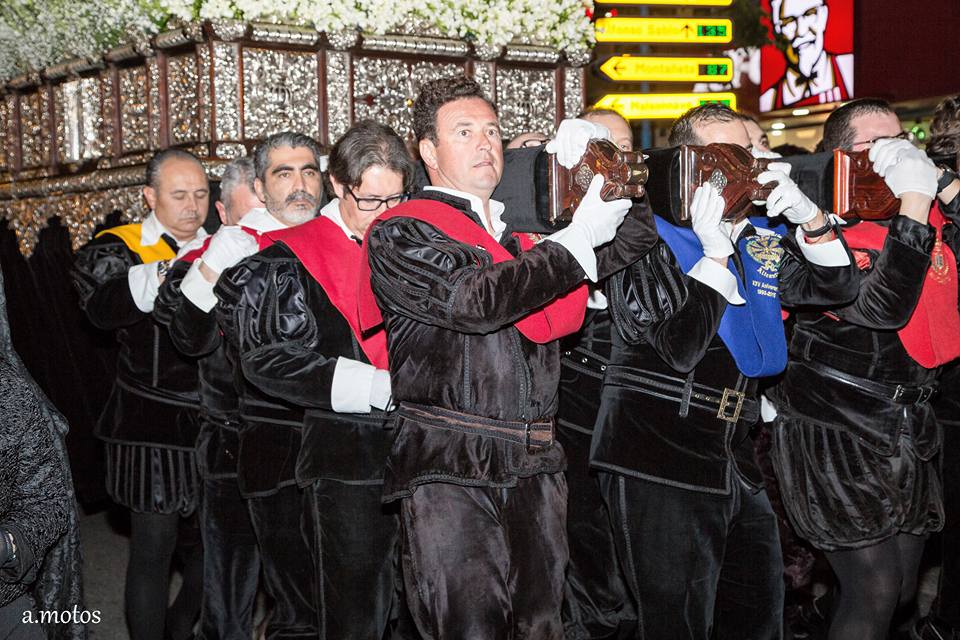
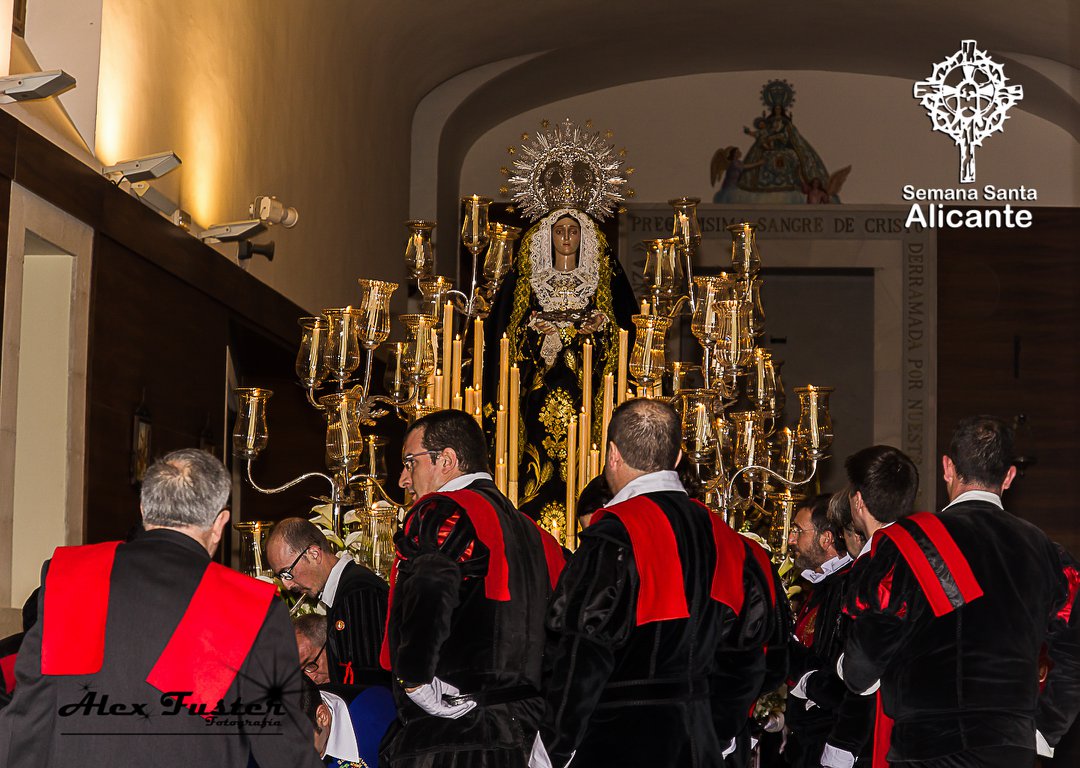
The procession, its sacred images and the traditions of Holy Wednesday.